- BPM
- 65
- Key
- B♭ Major
- Camelot
- 6B
Alman by Thomas Simpson, Ulsamer Collegium, Josef Ulsamer Song Details
Thomas Simpson, Ulsamer Collegium, Josef Ulsamer's ' "Alman" was released on its scheduled release date, January 1, 1994. With This song being less than two minutes long, at 1:46, we are fairly confident that this song is not explicit and is safe for all ages. Based on the duration of this song, this song duration is much smaller than the average song duration. The song is number 7 out of 135 in Dance Music Through the Ages: Renaissance; Early Baroque; High Baroque; Rococo; Viennese Classical Period; Biedermeier Period by Konrad Ragossnig, Ulsamer Collegium, Ensemble Eduard Melkus, Josef Ulsamer. Going off of the ISRC code of this track, we detected that the origin of this track is from Germany. Alman is unknown right now. Based on the vibe, this track doesn't seem to be that danceable, however its valence properties can make this some somewhat danceable.
BPM and Tempo
The tempo marking of Alman by Thomas Simpson, Ulsamer Collegium, Josef Ulsamer is Larghetto (rather broadly), since this song has a tempo of 65 BPM. With that information, we can conclude that the song has a slow tempo. The time signature for this track is 4/4.
Music Key
This song has a musical key of B♭ Major. This also means that this song has a camelot key of 6B. So, the perfect camelot match for 6B would be either 6B or 7A. While, 7B can give you a low energy boost. For moderate energy boost, you would use 3B and a high energy boost can either be 8B or 1B. Though, if you want a low energy drop, you should looking for songs with either a camelot key of 6A or 5B will give you a low energy drop, 9B would be a moderate one, and 4B or 11B would be a high energy drop. Lastly, 3A allows you to change the mood.
Want to find the BPM and music key for other songs? Check out our BPM and Key Finder page!
- Popularity
- 0%
- Loudness
- -20.867 dB
- Acousticness
- 90%
- Danceability
- 32%
- Energy
- 12%
- Instrumentalness
- 3%
- Liveness
- 24%
- Loudness
- 65%
- Speechiness
- 5%
- Valence
- 50%
Recommendations
| Track | Artist | Key | Energy | Camelot | BPM | ||
|---|---|---|---|---|---|---|---|
 | In convertendo Dominus | Sébastien de Brossard, Ensemble Baroque De Limoges, Christophe Coin | A Major | 2 | 11B | 151 BPM | |
 | Ciaccona for 2 Treble Instruments & Continuo, Op. 12 No. 20 | Tarquinio Merula, Leila Schayegh, La Centifolia | B Major | 2 | 1B | 80 BPM | |
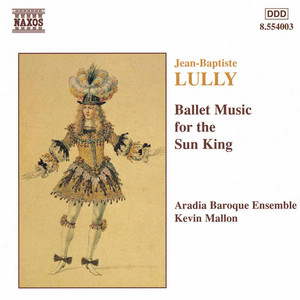 | Intermedes de Xerxes: Air pour les Esclaves dansans (minuet and passepied versions) | Jean-Baptiste Lully, Mary Enid Haines, Sharla Nafziger, Aradia Ensemble, Kevin Mallon | D♭ Major | 0 | 3B | 180 BPM | |
 | Sonate in A Minor: I. Preludio | Johann Heinrich Schmelzer, Hélène Schmitt, Jan Krigovsky, Stephan Rath, Jörg-Andreas Bötticher | A♭ Minor | 4 | 1A | 134 BPM | |
 | Ancor che col partire | Antonio de Cabezón, Yoann Moulin | A Minor | 1 | 8A | 135 BPM | |
 | Sinfonia, Op. 1 No. 4 | Bartolomeo Montalbano, Clas Pehrsson, Jakob Lindberg | B♭ Minor | 1 | 3A | 165 BPM | |
 | Neuwer Pavanen, Galliarden, Couranten unnd Volten, a 5, Op. 30: Courante and Volta in D Minor a 5 | Thomas Simpson, Weser-Renaissance Bremen, Manfred Cordes | A♭ Minor | 1 | 1A | 97 BPM | |
 | Galliard (Frankfurt, 1610, No. 18) | Thomas Simpson, The Parley of Instruments, Peter Holman | B♭ Major | 1 | 6B | 168 BPM | |
 | Chacony in G minor Z 730 | Henry Purcell, Musica Antiqua Köln, Reinhard Goebel | F♯ Minor | 1 | 11A | 106 BPM | |
 | Sonata da camera in G Minor, "O Haupt voll Blut und Wunden": III. Adagio | Johann Gottlieb Janitsch, Il Gardellino | E Major | 1 | 12B | 60 BPM | |
 | Zarabanda detta la favorita | Giovanni Paolo Foscarini, Private Musicke | F Major | 1 | 7B | 145 BPM | |
 | Sonata à 6, doi violini e quattro tromboni | Giovanni Battista Buonamente, Musica Fiata, Roland Wilson | G Major | 1 | 9B | 97 BPM | |
 | Concerti á 5 for Little Flaut, Due Violini, Alto et Basso, No. 4 in D Major: III. Allegro | Bartolomeo Bernardi, Giuseppe Torelli, Höör Barock, Emelie Roos | D♭ Major | 2 | 3B | 134 BPM | |
 | Violin Sonata in E Major, Op. 5 No. 11 (Transcr. for Viola da Gamba and Continuo by Teodoro Baù): II. Allegro | Arcangelo Corelli, Teodoro Baù, Andrea Buccarella | D♭ Major | 4 | 3B | 63 BPM | |
 | Sacrae symphoniae: Sonata pian e forte a 8 (Arr. E. Crees) | Giovanni Gabrieli, London Symphony Brass, Eric Crees | A Minor | 1 | 8A | 96 BPM | |
 | Dominus regnavit: Parata sedes | Jean-Joseph Cassanéa De Mondonville, Ann Monoyios, Michele DeBoer, Tafelmusik Baroque Orchestra, Ivars Taurins | D♭ Major | 0 | 3B | 62 BPM | |
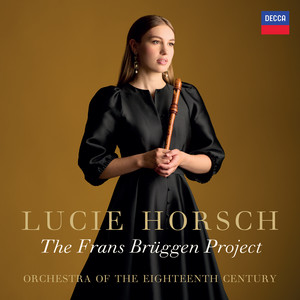 | Sonata for Flute and Violin, Op. 51 No. 2: IV. Gigha - Performed on Recorder | Joseph Bodin de Boismortier, Lucie Horsch, Rachel Podger | E♭ Major | 0 | 5B | 72 BPM | |
 | Mystery Sonata No. 3 "The Nativity": III. Adagio | Heinrich Ignaz Franz von Biber, Sirkka-Liisa Kaakinen-Pilch, Battalia | B♭ Minor | 0 | 3A | 80 BPM | |
 | Violin Sonata No. 1 in D Minor: I. Adagio | Élisabeth Jacquet de La Guerre, David Plantier, Daniela Dolci | D♭ Minor | 1 | 12A | 125 BPM | |
 | Byrd: Christe redemptor a 4 | William Byrd, Fretwork | B♭ Major | 0 | 6B | 95 BPM | |
 | Sonata à 2 in D Minor | Antonio Bertali, Ecco la musica | E♭ Major | 1 | 5B | 112 BPM | |
 | Canzoni da suonare, Op. 17: No. 18, La Cavagliera | Tarquinio Merula, InAlto, Lambert Colson | F♯ Major | 1 | 2B | 54 BPM | |
 | Concerto IX in A Major: I. Grave | António Pereira da Costa, Ensemble Bonne Corde, Diana Vinagre | C Major | 4 | 8B | 134 BPM | |
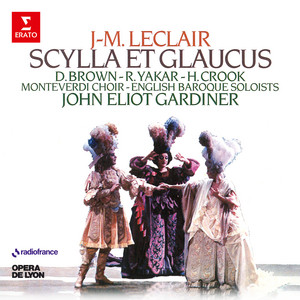 | Leclair: Scylla et Glaucus, Op. 11, Prologue: Air gracieux | Jean-Marie Leclair, John Eliot Gardiner, English Baroque Soloists | A♭ Minor | 0 | 1A | 68 BPM | |
 | Suite in G Minor: IV. Muzette | Michel Richard Delalande, Vincent Dumestre, Le Poème Harmonique | F Minor | 2 | 4A | 87 BPM |
- ISRC
- DEF057301480
- Label
- L-M Records/RCA Records