- BPM
- 115
- Key
- C Major
- Camelot
- 8B
String Quartet No. 2: II. Tema con variazioni: Moderato by Erwin Schulhoff, Aviv Quartet Song Details
"String Quartet No. 2: II. Tema con variazioni: Moderato" by Erwin Schulhoff, Aviv Quartet had its release date on April 27, 2010. Since This song is still less than 10 minute long, it is still considered a pretty long duration song compared to the average song length. This song does not appear to be explicit due to the lack of the "E" tag. There are a total of 13 in the song's album "Schulhoff: String Quartets Nos. 1 and 2 - 5 Pieces for String Quartet". In this album, this song's track order is #11. Furthermore, we believe that the track originated from Hong Kong. In terms of popularity, String Quartet No. 2: II. Tema con variazioni: Moderato is currently unknown. Although the tone can be danceable to some, this track does projects more of a negative sound rather than a postive one.
BPM and Tempo
With String Quartet No. 2: II. Tema con variazioni: Moderato by Erwin Schulhoff, Aviv Quartet having a BPM of 115 with a half-time of 58 BPM and a double-time of 230 BPM, we would consider this track to have a Moderato (at a moderate speed) tempo marking. Because of this, we believe that the song has an overall moderate tempo. Looking at the BPM of this song, this song might go great with walking. The time signature for this track is 4/4.
Music Key
C Major is the music key of this track. Or for those who are familiar with the camelot wheel, this song has a camelot key of 8B. So, the perfect camelot match for 8B would be either 8B or 9A. While, 9B can give you a low energy boost. For moderate energy boost, you would use 5B and a high energy boost can either be 10B or 3B. Though, if you want a low energy drop, you should looking for songs with either a camelot key of 8A or 7B will give you a low energy drop, 11B would be a moderate one, and 6B or 1B would be a high energy drop. Lastly, 5A allows you to change the mood.
Want to find the BPM and music key for other songs? Check out our BPM and Key Finder page!
- Popularity
- 0%
- Loudness
- -20.041 dB
- Acousticness
- 97%
- Danceability
- 45%
- Energy
- 33%
- Instrumentalness
- 89%
- Liveness
- 8%
- Loudness
- 67%
- Speechiness
- 8%
- Valence
- 17%
Recommendations
| Track | Artist | Key | Energy | Camelot | BPM | ||
|---|---|---|---|---|---|---|---|
 | 7 Haikus: III. Poco andante | Benet Casablancas, Ensemble New Babylon, Lorenzo Ferrándiz Carillo | A♭ Major | 0 | 4B | 86 BPM | |
 | Violin Concerto: II. Sonata | Maya Badian, Florin Paul, Romanian National Orchestra, Ludovic Bacs | G Minor | 2 | 6A | 94 BPM | |
 | Svanevit Suite, Op. 54: III. Tärnorna med rosor | Jean Sibelius, Finnish Radio Symphony Orchestra, Nicholas Collon | C Major | 1 | 8B | 85 BPM | |
 | Damase: Berceuse pour cor et piano, Op. 19 | Jean-Michel Damase, David Pyatt, Martin Jones | B♭ Major | 0 | 6B | 69 BPM | |
 | Ives: Set No. 6 for Chamber Orchestra "From the Side Hill": I. Mists | Charles Ives, Ensemble Modern, Ingo Metzmacher | E♭ Major | 1 | 5B | 131 BPM | |
 | Piano Trio No. 1 in C Minor, Op. 8 | Dmitri Shostakovich, Vladimir Ashkenazy, Zsolt-Tihamér Visontay, Mats Lidström | G Major | 0 | 9B | 87 BPM | |
 | Symphony No. 1, Op. 9: III. Andante tranquillo | Samuel Barber, Leonard Slatkin, St. Louis Symphony | B♭ Major | 3 | 6B | 93 BPM | |
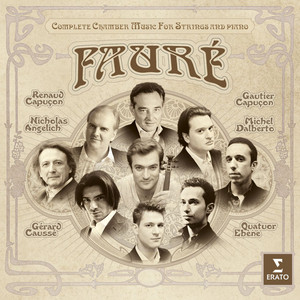 | Fauré: String Quartet in E Minor, Op. 121: I. Allegro moderato | Gabriel Fauré, Quatuor Ébène | C Major | 1 | 8B | 108 BPM | |
 | 3 Romances for Violin and Piano, Op. 22: II. Allegretto: Mit zartem Vortrage | Clara Schumann, Koji Morishita | G Major | 1 | 9B | 104 BPM | |
 | String Octet in C Major, Op. 7 (Version for String Orchestra): II. Très fougueux | George Enescu, Tabea Zimmermann, Ensemble Resonanz | E♭ Major | 0 | 5B | 78 BPM | |
 | Bartók: String Quartet No. 2 in A Minor, Op. 17, Sz. 67: II. Allegro molto capriccioso | Béla Bartók, Belcea Quartet | G Major | 2 | 9B | 98 BPM | |
 | Sonata for Flute and Piano: I. Allegro moderato | Erwin Schulhoff, Sarah Rumer, Ulrich Koella | G Minor | 1 | 6A | 108 BPM | |
 | Tempus fugit: I. Part 1 | Magnus Lindberg, NDR Elbphilharmonie Orchester, Alan Gilbert | A Major | 2 | 11B | 123 BPM | |
 | Estudio De Concerto. Op. 14, No.4. Romance Sans Paroles (Romanza Sin Palabras) - Duo-Art 6363 | Ernesto Drangosch, Corina Henriquez de Lima, Peter Phillips | D Major | 0 | 10B | 136 BPM | |
 | Lakes, Mists, Bats, Daggers and Fountains: IV. Always light and airy | Laurence Osborn, 12 Ensemble | D Major | 0 | 10B | 136 BPM | |
 | Suite No. 3, Op. 19 No. 1: II. Pantomim: Moderato | Kurt Atterberg, Henning Kraggerud, Dalasinfoniettan, Bjarte Engeset | E Minor | 1 | 9A | 76 BPM | |
 | 5 Pieces for String Quartet: No. 3, Alla Czeca | Erwin Schulhoff, Aviv Quartet | C Major | 3 | 8B | 115 BPM | |
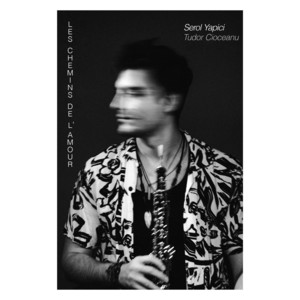 | Les chemins de l'amour, FP 106 (Arr. for Oboe and Piano by Serol Yapici) | Francis Poulenc, Serol Yapici, Tudor Cioceanu | D Major | 0 | 10B | 136 BPM | |
 | Neon Trails | Nomad Skies | D Major | 0 | 10B | 136 BPM | |
 | Shostakovich: Piano Quintet in G Minor, Op. 57: II. Fugue. Adagio | Dmitri Shostakovich, Borodin Quartet, Elisabeth Leonskaja | C Minor | 0 | 5A | 90 BPM | |
 | Concerto for 2 Pianos, FP. 61: III. Allegro molto | Francis Poulenc, Leonard Bernstein, New York Philharmonic, Artur Gold, Robert Fizdale | A Minor | 3 | 8A | 100 BPM | |
 | Landschaften, Op. 26: No. 3, Demut faltet den Raum. Ruhig und einfach | Erwin Schulhoff, Doris Soffel, Deutsches Symphonie-Orchester Berlin, Gerd Albrecht | F Major | 3 | 7B | 158 BPM | |
 | Sonata for Violin and Piano in A: 3. Recitativo - Fantasia (Ben moderato - Largamente - Molto vivace) | César Franck, Kaja Danczowska, Krystian Zimerman | D Major | 0 | 10B | 81 BPM | |
 | String Quartet No. 2, Op. 26: IV. Libero e rapsodico | Alberto Ginastera, Miró Quartet | D♭ Major | 0 | 3B | 82 BPM | |
 | Emily — No Prisoner Be: No. 8, A Bee I personally knew (Scherzo No. 1) | Kevin Puts, Time For Three | D Major | 0 | 10B | 136 BPM |
- ISRC
- HKI190905411
- Label
- L-M Records/RCA Records