- BPM
- 139
- Key
- B Minor
- Camelot
- 10A
展覧会の絵:V- たまごのからをつけたひなの踊り by Modest Mussorgsky, エリアフ・インバル, フランス国立管弦楽団 Song Details
"展覧会の絵:V- たまごのからをつけたひなの踊り" by Modest Mussorgsky, エリアフ・インバル, フランス国立管弦楽団 had its release date on 1989. With This song being less than two minutes long, at 1:18, we are fairly confident that this song is not explicit and is safe for all ages. Based on the duration of this song, this song duration is much smaller than the average song duration. There is only one song in ムソルグスキー (ラヴェル編):展覧会の絵, so we believe that "展覧会の絵:V- たまごのからをつけたひなの踊り" is a single. Based on our statistics, 展覧会の絵:V- たまごのからをつけたひなの踊り's popularity is unknown right now. In our opinion, the overall tone is not very danceable and projects negative sounds, such as being sad, depressed, or angry.
BPM and Tempo
The tempo marking of 展覧会の絵:V- たまごのからをつけたひなの踊り by Modest Mussorgsky, エリアフ・インバル, フランス国立管弦楽団 is Allegro (fast, quick, and bright), since this song has a tempo of 139 BPM. With that information, we can conclude that the song has a fast tempo. This song can go great with walking. The time signature for this track is 4/4.
Music Key
This song is in the music key of B Minor. This also means that this song has a camelot key of 10A. So, the perfect camelot match for 10A would be either 10A or 9B. While, a low energy boost can consist of either 10B or 11A. For moderate energy boost, you would use 7A and a high energy boost can either be 12A or 5A. However, if you are looking for a low energy drop, finding a song with a camelot key of 9A would be a great choice. Where 1A would give you a moderate drop, and 8A or 3A would be a high energy drop. Lastly, 1B allows you to change the mood.
Want to find the BPM and music key for other songs? Check out our BPM and Key Finder page!
- Popularity
- 0%
- Loudness
- -20.422 dB
- Acousticness
- 85%
- Danceability
- 18%
- Energy
- 7%
- Instrumentalness
- 19%
- Liveness
- 12%
- Loudness
- 66%
- Speechiness
- 4%
- Valence
- 4%
Recommendations
| Track | Artist | Key | Energy | Camelot | BPM | ||
|---|---|---|---|---|---|---|---|
 | Brahms: Violin Concerto in D Major, Op. 77: III. Allegro giocoso, ma non troppo vivace | Johannes Brahms, Itzhak Perlman, Carlo Maria Giulini, Chicago Symphony Orchestra | G Major | 3 | 9B | 87 BPM | |
 | Pictures at an Exhibition (Orch. Ravel): IX. The Hut on Fowl's Legs "Baba-Yaga" | Modest Mussorgsky, London Symphony Orchestra, Claudio Abbado | E Minor | 2 | 9A | 125 BPM | |
 | Symphonie fantastique, Op. 14, H 48: IV. Marche au supplice | Hector Berlioz, London Symphony Orchestra, Sir Colin Davis | B♭ Major | 1 | 6B | 155 BPM | |
 | Sibelius: Symphony No. 5 in E-Flat Major, Op. 82: I. Tempo molto moderato | Jean Sibelius, Sakari Oramo, City Of Birmingham Symphony Orchestra | E♭ Major | 1 | 5B | 83 BPM | |
 | Pelléas et Mélisande, Op. 80 (Arr. C. Koechlin): III. Andante moderato | Gabriel Fauré, Radio Sinfonieorchester Stuttgart des SWR, Heinz Holliger | N/A | N/A | N/A | 0 BPM | |
 | Concerto for Orchestra, Sz. 116: I. Introduzione (Andante non troppo - Allegro vivace) | Béla Bartók, Chicago Symphony Orchestra, Pierre Boulez | D Major | 1 | 10B | 73 BPM | |
 | Pictures at an Exhibition (Orch. Ravel): VI. Samuel Goldenberg und Schmuÿle | Modest Mussorgsky, Wiener Philharmoniker, Gustavo Dudamel | F♯ Minor | 1 | 11A | 114 BPM | |
 | The Rite of Spring: Part One: Adoration of the Earth: Introduction | Igor Stravinsky, Teodor Currentzis, musicAeterna | B Minor | 0 | 10A | 87 BPM | |
 | Prince Igor / Act 2: Dance of the Polovtsian Maidens | Alexander Borodin, Bavarian Radio Symphony Orchestra, Esa-Pekka Salonen | F Major | 1 | 7B | 100 BPM | |
 | Gli uccelli (The Birds), P. 154: V. Il cucu. Allegro | Ottorino Respighi, Chamber Orchestra of New York, Salvatore Di Vittorio | A Major | 1 | 11B | 181 BPM | |
 | Hungarian Dance No.1 in G minor - Orchestrated by Brahms: Allegro molto | Johannes Brahms, Chicago Symphony Orchestra, Daniel Barenboim | G Minor | 2 | 6A | 65 BPM | |
 | Symphony No. 1, Op. 25 in D "Classical": Allegro con brio | Sergei Prokofiev, Yuri Temirkanov | E Minor | 0 | 9A | 99 BPM | |
 | Petrushka: Danse Russe | Robert Groslot, Belgian Radio and Television Philharmonic Orchestra, Igor Stravinsky | D Minor | 5 | 7A | 80 BPM | |
| Pictures at an Exhibition (Orch. Ravel): III. Tuileries Gardens | Modest Mussorgsky, Wiener Philharmoniker, Gustavo Dudamel | E♭ Minor | 0 | 2A | 97 BPM | |
 | Prince Igor: Polovtsian Dances (Remastered): No. 17a, Polovtsian Dance. Introduzione. Andantino | Alexander Borodin, Leonard Bernstein, New York Philharmonic | A Major | 1 | 11B | 78 BPM | |
 | Gayane Suite No. 3: V. Solo - Love Duet | Aram Khachaturian, St. Petersburg State Symphony Orchestra, Andre Anichanov | D Major | 3 | 10B | 175 BPM | |
| The Rite of Spring: Part One: Adoration of the Earth: The Augurs of Spring - Dance of the Young Girls | Igor Stravinsky, Teodor Currentzis, musicAeterna | B♭ Major | 3 | 6B | 120 BPM | |
 | Also sprach Zarathustra, Op. 30: II. Von den Hinterweltlern | Richard Strauss, Berliner Philharmoniker, Herbert von Karajan | A♭ Major | 0 | 4B | 78 BPM | |
 | Symphony No. 9 in E-Flat Major, Op. 70: I. Allegro | Dmitri Shostakovich, Berliner Philharmoniker, Kirill Petrenko | B♭ Major | 4 | 6B | 136 BPM | |
 | 8 Slavonic Dances, Op.46, B.83: No.2 in E Minor (Allegretto scherzando) | Antonín Dvořák, Czech Philharmonic Orchestra, Jiří Bělohlávek | G Major | 2 | 9B | 138 BPM | |
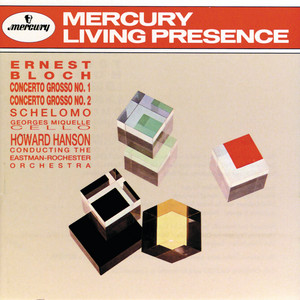 | Concerto grosso No.1: 1. Prelude: Allegro energico e pesante | Ernest Bloch, Eastman-Rochester Orchestra, Howard Hanson | B♭ Major | 3 | 6B | 129 BPM | |
| Concerto for Orchestra, Sz. 116: IV. Intermezzo interrotto (Allegretto) | Béla Bartók, Chicago Symphony Orchestra, Pierre Boulez | D Major | 1 | 10B | 73 BPM | |
 | Piano Concerto No. 3, BB 127, Sz. 119: I. Allegretto | Béla Bartók, Géza Anda, Deutsches Symphonie-Orchester Berlin, Ferenc Fricsay | B Major | 2 | 1B | 150 BPM | |
 | Symphony No. 6 in B Minor, Op. 74 "Pathétique": III. Allegro molto vivace | Pyotr Ilyich Tchaikovsky, Berliner Philharmoniker, Kirill Petrenko | G Major | 3 | 9B | 81 BPM | |
 | Japanese Suite, Op. 33, H. 126: II. Ceremonial Dance | Gustav Holst, Ulster Orchestra, Joann Falletta | C Minor | 3 | 5A | 103 BPM |
- ISRC
- JPCO08945580
- Label
- L-M Records/RCA Records