- BPM
- 87
- Key
- F♯ Minor
- Camelot
- 11A
Des Jona Sendung (Jonah's Mission): Herr Gott. Des die Rache, die Rache ist [Psalm of Vengeance] [Altos and Children's Chorus] by Rudolf Tobias, Pille Lill, Urve Tauts, Peter Svensson, Mati Palm, Ines Maidre, Oratorio Choir, Tallinn Boys Choir, Estonian Philharmonic Chamber Choir, Estonian State Symphony Orchestra, Neeme Järvi Song Details
"Des Jona Sendung (Jonah's Mission): Herr Gott. Des die Rache, die Rache ist [Psalm of Vengeance] [Altos and Children's Chorus]" by Rudolf Tobias, Pille Lill, Urve Tauts, Peter Svensson, Mati Palm, Ines Maidre, Oratorio Choir, Tallinn Boys Choir, Estonian Philharmonic Chamber Choir, Estonian State Symphony Orchestra, Neeme Järvi had its release date on August 31, 1995. With this song being around four minutes long, at 4:00, the duration of this song is pretty average compared to other songs. This track is safe for children and doesn't appear to contain any foul language, since the "Explicit" tag was not present in this track. There are a total of 38 in the song's album "Tobias: Des Jona Sendung (Jonah's Mission)". In this album, this song's track order is #1. Furthermore, we believe that the track originated from Sweden. Des Jona Sendung (Jonah's Mission): Herr Gott. Des die Rache, die Rache ist [Psalm of Vengeance] [Altos and Children's Chorus] is unknown right now. In our opinion, the overall tone is not very danceable and projects negative sounds, such as being sad, depressed, or angry.
BPM and Tempo
With Des Jona Sendung (Jonah's Mission): Herr Gott. Des die Rache, die Rache ist [Psalm of Vengeance] [Altos and Children's Chorus] by Rudolf Tobias, Pille Lill, Urve Tauts, Peter Svensson, Mati Palm, Ines Maidre, Oratorio Choir, Tallinn Boys Choir, Estonian Philharmonic Chamber Choir, Estonian State Symphony Orchestra, Neeme Järvi having a BPM of 87 with a half-time of 44 BPM and a double-time of 174 BPM, we would consider this track to have a Andante (at a walking pace) tempo marking. Because of this, we believe that the song has an overall slow tempo. Looking at the BPM of this song, this song might go great with yoga or pilates. The time signature for this track is 4/4.
Music Key
This song has a musical key of F♯ Minor. Or for those who are familiar with the camelot wheel, this song has a camelot key of 11A. So, the perfect camelot match for 11A would be either 11A or 10B. While, a low energy boost can consist of either 11B or 12A. For moderate energy boost, you would use 8A and a high energy boost can either be 1A or 6A. However, if you are looking for a low energy drop, finding a song with a camelot key of 10A would be a great choice. Where 2A would give you a moderate drop, and 9A or 4A would be a high energy drop. Lastly, 2B allows you to change the mood.
Want to find the BPM and music key for other songs? Check out our BPM and Key Finder page!
- Popularity
- 0%
- Loudness
- -33.188 dB
- Acousticness
- 95%
- Danceability
- 11%
- Energy
- 2%
- Instrumentalness
- 2%
- Liveness
- 8%
- Loudness
- 45%
- Speechiness
- 4%
- Valence
- 4%
Recommendations
| Track | Artist | Key | Energy | Camelot | BPM | ||
|---|---|---|---|---|---|---|---|
 | Great Mass in C Minor, K. 427: II. Gloria: Laudamus te | Wolfgang Amadeus Mozart, Traditional, Jordi Savall, Marianne Beate Kielland, Le Concert Des Nations | D♭ Minor | 1 | 12A | 138 BPM | |
 | The Dream of Gerontius, Op. 38, Pt.2: But hark! Low-born clods of brute earth | Sir Edward Elgar, Paul Groves, Alice Coote, Sir Mark Elder, Hallé | E♭ Major | 2 | 5B | 123 BPM | |
 | Mass in D Major, Op. 123 "Missa Solemnis": Agnus Dei: Presto | Ludwig van Beethoven, Gundula Janowitz, Christa Ludwig, Fritz Wunderlich, Walter Berry, Berliner Philharmoniker, Herbert von Karajan, Wiener Singverein | B♭ Major | 0 | 6B | 120 BPM | |
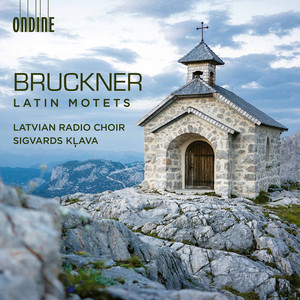 | Christus factus est, WAB 11 | Anton Bruckner, Latvian Radio Choir, Sigvards Kļava | D Minor | 1 | 7A | 83 BPM | |
 | 3 Liriche, P. 099a (Orch. Salvatore Di Vittorio): No. 1, Notte | Ottorino Respighi, Alessandra Visentin, Chamber Orchestra of New York, Salvatore Di Vittorio | F Major | 1 | 7B | 75 BPM | |
 | Requiem, Op. 9: Sanctus | Maurice Duruflé, Ivan Repušić, Bavarian Radio Chorus, Munich Radio Orchestra | G Minor | 1 | 6A | 139 BPM | |
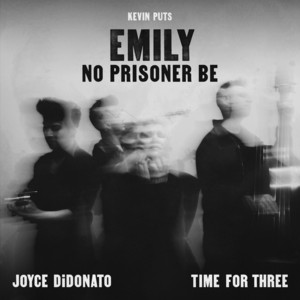 | Emily — No Prisoner Be: No. 4, Again — his voice is at the door | Kevin Puts, Time For Three, Joyce DiDonato | D♭ Minor | 1 | 12A | 138 BPM | |
 | Misatango, Misa a Buenos Aires: I. Kyrie | MartÍn Palmeri, Chœur régional Vittoria d'Ile de France, Orchestre Pasdeloup, Michel Piquemal, Sophie Hanne, Gilberto Pereyra | C Minor | 2 | 5A | 90 BPM | |
 | Missa pro defuncto Archiepiscopo Sigismundo, "Mass for the death of Archbishop Sigismund": Hostias | Michael Haydn, Ibolya Verebics, Judit Nemeth, Martin Kleitmann, József Moldvay, Hungarian Radio and Television Chorus, Franz Liszt Chamber Orchestra, Helmuth Rilling | G Minor | 1 | 6A | 99 BPM | |
 | Das Sühnopfer des neuen Bundes, Pt. 1: No. 3, Da nun Jesus war zu Bethanien | Carl Loewe, Monika Mauch, L'Arpa Festante Baroque Orchestra, Thomas Gropper | E♭ Major | 1 | 5B | 168 BPM | |
![Des Jona Sendung (Jonah's Mission): Wo soll ich hingehn vor Deinem Geist [Tenor and Chorus] by Rudolf Tobias, Pille Lill, Urve Tauts, Peter Svensson, Mati Palm, Ines Maidre, Oratorio Choir, Tallinn Boys Choir, Estonian Philharmonic Chamber Choir, Estonian State Symphony Orchestra, Neeme Järvi](https://i.scdn.co/image/ab67616d00001e028d9a8ab86e2fddb279e3b9ba) | Des Jona Sendung (Jonah's Mission): Wo soll ich hingehn vor Deinem Geist [Tenor and Chorus] | Rudolf Tobias, Pille Lill, Urve Tauts, Peter Svensson, Mati Palm, Ines Maidre, Oratorio Choir, Tallinn Boys Choir, Estonian Philharmonic Chamber Choir, Estonian State Symphony Orchestra, Neeme Järvi | F♯ Minor | 0 | 11A | 87 BPM | |
 | Grande Messe des Morts: X. Sequentia: Quid sum miser - Lento | Francois-Joseph Gossec, Roberta Invernizzi, Maite Arruabarrena, Howard Crook, Claude Darbellay, Radio Svizzera Choir, Lugano, Radio Svizzera Italiana Orchestra, Diego Fasolis | F Major | 0 | 7B | 75 BPM | |
 | Thou Knowest, Lord, the Secrets of Our Hearts, Z. 58c | Henry Purcell, Simon Preston, Francis Grier, Christ Church Cathedral Choir, Oxford | E♭ Major | 1 | 5B | 130 BPM | |
 | Messe de Minuit, H. 9: Gloria | Marc-Antoine Charpentier, Sébastien Daucé, Ensemble Corrrespondances, Randol Rodriguez, Etienne Bazola, Marie-Frédérique Girod, Caroline Weynants | C Major | 2 | 8B | 94 BPM | |
 | Requiem, Op. 9: VI. Agnus Dei | Maurice Duruflé, Maîtrise de Saint-Christophe de Javel, Yves Castagnet, Henri Chalet | B♭ Major | 0 | 6B | 131 BPM | |
 | Stabat mater, op.58: 5. Coro "Tui nati vulnerati" | Antonín Dvořák, Chor der Sächsischen Staatsoper Dresden; see Dresden State Opera Chorus, Matthias Brauer, Staatskapelle Dresden, Giuseppe Sinopoli | D Major | 1 | 10B | 147 BPM | |
 | Requiem: III. Domine | Anton Bruckner, Elke Janssens, Penelope Turner, Roel Willems, Arnout Malfliet, Laudantes Consort, Guy Janssens | A Major | 2 | 11B | 88 BPM | |
 | Joonas, Scene 2: Nii kui Joonas kord kolm päeva (Chorus) | Rudolf Tobias, Tallinn Chamber Orchestra, Tõnu Kaljuste, Chorus Mysticus | A Major | 1 | 11B | 92 BPM | |
 | XIV. Lebe, teurer Leopold! | Georg Philipp Telemann, Elena Harsányi, Georg Poplutz, Thomas Bonni, Kölner Akademie, Michael Alexander Willens | E Major | 1 | 12B | 102 BPM | |
 | Die Jahreszeiten, Hob. XXI:3, Der Sommer: VIb. Arie und Rezitativ: Der munt’re Hirt versammelt nun (Simon, Hanne) | Joseph Haydn, Gottfried van Swieten, Jordi Savall, Lina Johnson, Matthias Winckhler, Le Concert Des Nations | C Major | 3 | 8B | 105 BPM | |
 | Gossec: Messe des morts: XXII. Pie Jesu | Francois-Joseph Gossec, Louis Devos, Howard Crook, Kurt Widmer, Maastricht Conservatory Chamber Choir, Musica Polyphonica | B Major | 2 | 1B | 119 BPM | |
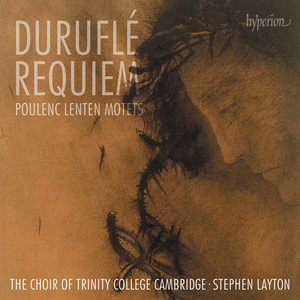 | 4 Motets pour un temps de pénitence, FP 97: No. 3, Tenebrae factae sunt | Francis Poulenc, The Choir Of Trinity College, Cambridge, Stephen Layton | G Minor | 1 | 6A | 75 BPM | |
 | Te Deum, WAB 45: III. Aeterna fac cum sanctis tuis | Anton Bruckner, Anna Tomowa-Sintow, Agnes Baltsa, Peter Schreier, José van Dam, Berliner Philharmoniker, Herbert von Karajan, Wiener Singverein, Rudolf Scholz | B♭ Major | 2 | 6B | 116 BPM | |
 | Mass No. 7 in B-Flat Major, Hob. XXII:7, "Missa brevis Sancti Joannis de Deo", "Kleine Orgelsolomesse" (Little Organ Mass): Credo | Joseph Haydn, Ann Hoyt, Trinity Church Choir, New York, Dongsok Shin, Rebel Baroque Orchestra, Owen Burdick | G Minor | 2 | 6A | 121 BPM | |
 | The Third Booke of Songes: No. 2, Time Stands Still | John Dowland, Reginald Mobley, Brandon J. Acker, Douglas Balliett | A♭ Major | 0 | 4B | 66 BPM |
- ISRC
- SEAEH9532010
- Label
- L-M Records/RCA Records