- BPM
- 73
- Key
- B Major
- Camelot
- 1B
Bernstein: Wonderful Town, Act II: Quiet Incidental (Eileen, Ruth) by Leonard Bernstein, Sir Simon Rattle, Birmingham Contemporary Music Group Song Details
Leonard Bernstein, Sir Simon Rattle, Birmingham Contemporary Music Group's ' "Bernstein: Wonderful Town, Act II: Quiet Incidental (Eileen, Ruth)" was released on its scheduled release date, 1999. With This song being less than a minute long, we are pretty confident that this song does not contain any foul language. That being said, this song is pretty short compared to other songs. The track order of this song in Leonard Bernstein, Sir Simon Rattle, Birmingham Contemporary Music Group's "Leonard Bernstein: Wonderful Town" album is number 15 out of 20. On top of that, United Kingdom appears to be the country where this track was created. Bernstein: Wonderful Town, Act II: Quiet Incidental (Eileen, Ruth) is unknown right now. Since there is more of a neutral sound being played, this makes the track somewhat danceable.
BPM and Tempo
We consider the tempo marking of Bernstein: Wonderful Town, Act II: Quiet Incidental (Eileen, Ruth) by Leonard Bernstein, Sir Simon Rattle, Birmingham Contemporary Music Group to be Adagio (slowly with great expression) because the track has a tempo of 73 BPM, a half-time of 36BPM, and a double-time of 146 BPM. Based on that, the speed of the song's tempo is slow. The time signature for this track is 4/4.
Music Key
This song is in the music key of B Major. This also means that this song has a camelot key of 1B. So, the perfect camelot match for 1B would be either 1B or 2A. While, 2B can give you a low energy boost. For moderate energy boost, you would use 10B and a high energy boost can either be 3B or 8B. Though, if you want a low energy drop, you should looking for songs with either a camelot key of 1A or 12B will give you a low energy drop, 4B would be a moderate one, and 11B or 6B would be a high energy drop. Lastly, 10A allows you to change the mood.
Want to find the BPM and music key for other songs? Check out our BPM and Key Finder page!
- Popularity
- 0%
- Loudness
- -9.637 dB
- Acousticness
- 88%
- Danceability
- 46%
- Energy
- 51%
- Instrumentalness
- 2%
- Liveness
- 18%
- Loudness
- 84%
- Speechiness
- 23%
- Valence
- 55%
Recommendations
| Track | Artist | Key | Energy | Camelot | BPM | ||
|---|---|---|---|---|---|---|---|
 | Holberg Suite, Op. 40: II. Sarabande. Andante | Edvard Grieg, Gothenburg Symphony Orchestra, Neeme Järvi | G Major | 0 | 9B | 75 BPM | |
 | La Mer, L.109: 1. From Dawn Till Noon On The Sea (De l'aube à midi sur la mer) | Claude Debussy, Orchestre Symphonique de Montréal, Charles Dutoit | F♯ Major | 1 | 2B | 61 BPM | |
 | Finlandia, Op. 26 | Jean Sibelius, Thomas Søndergård, BBC National Orchestra Of Wales | A♭ Major | 2 | 4B | 70 BPM | |
 | Requiem in D Minor, K. 626: 3. Sequentia: Confutatis - Live | Wolfgang Amadeus Mozart, Claudio Abbado, Berliner Philharmoniker, Swedish Radio Choir, Kay Johannsen | F Major | 0 | 7B | 70 BPM | |
 | Symphony No. 2 "The Age of Anxiety": Pt. 2a, The Dirge. Largo | Leonard Bernstein, Philippe Entremont, New York Philharmonic | A Major | 2 | 11B | 65 BPM | |
 | Humperdinck : Hänsel und Gretel : Overture to Act 1 | Engelbert Humperdinck, Donald Runnicles, Bavarian Radio Symphony Orchestra | C Major | 0 | 8B | 92 BPM | |
 | Symphony No. 5: IV. Adagietto. Sehr langsam | Gustav Mahler, Wiener Philharmoniker, Pierre Boulez | F Major | 0 | 7B | 87 BPM | |
 | Airborne Symphony: VIII. Morning Poem | Marc Blitzstein, Leonard Bernstein, New York Philharmonic, Orson Welles | F Major | 2 | 7B | 79 BPM | |
 | Symphony No. 4 in F Minor: IVb. Epilogo fugato | Ralph Vaughan Williams, Leonard Bernstein, New York Philharmonic | B♭ Major | 0 | 6B | 131 BPM | |
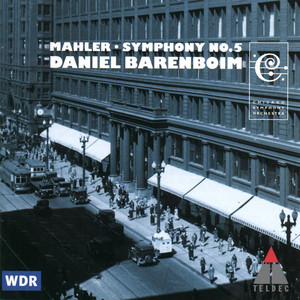 | Mahler: Symphony No. 5 in C-Sharp Minor: IV. Adagietto. Sehr langsam | Gustav Mahler, Daniel Barenboim, Chicago Symphony Orchestra | F Major | 1 | 7B | 82 BPM | |
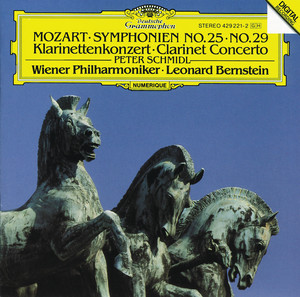 | Symphony No. 29 in A Major, K. 201: I. Allegro moderato | Wolfgang Amadeus Mozart, Wiener Philharmoniker, Leonard Bernstein | A Major | 1 | 11B | 124 BPM | |
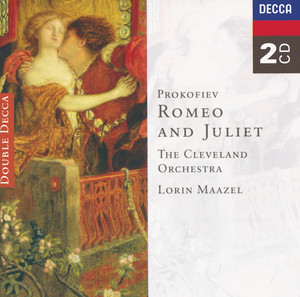 | Romeo and Juliet, Op. 64 / Act 1: Dance Of The Knights | Sergei Prokofiev, The Cleveland Orchestra, Lorin Maazel | B♭ Major | 6 | 6B | 124 BPM | |
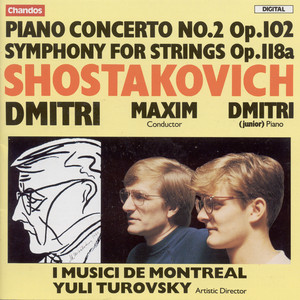 | Piano Concerto No. 2 in F Major, Op. 102: II. Andante | Dmitri Shostakovich, I Musici de Montréal, Maxim Shostakovich | C Minor | 0 | 5A | 177 BPM | |
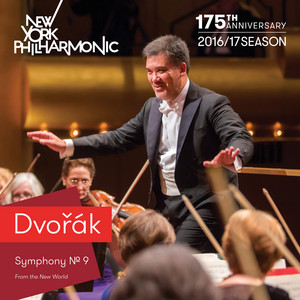 | Symphony No. 9 in E Minor, Op. 95 "From the New World": II. Largo | Antonín Dvořák, New York Philharmonic, Alan Gilbert | D♭ Major | 0 | 3B | 87 BPM | |
 | Pictures At An Exhibition: Gnomus | Modest Mussorgsky, Chicago Symphony Orchestra, Carlo Maria Giulini | B Major | 0 | 1B | 99 BPM | |
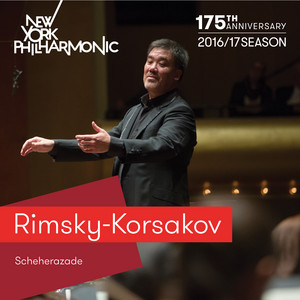 | Scheherazade, Op. 35: III. Andantino quasi allegretto "The Young Prince and The Young Princess" | Nikolai Rimsky-Korsakov, New York Philharmonic, Alan Gilbert, Lawrence Rock | G Major | 1 | 9B | 97 BPM | |
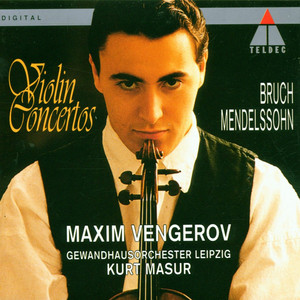 | Bruch : Violin Concerto No.1 in G minor Op.26 : III Finale - Allegro energico | Max Bruch, Maxim Vengerov, Kurt Masur, Gewandhausorchester Leipzig | G Major | 2 | 9B | 90 BPM | |
 | Schoenberg: Verklärte Nacht, Op. 4: IV. Adagio (1943 Version) | Arnold Schoenberg, Daniel Barenboim, Chicago Symphony Orchestra | D Major | 1 | 10B | 82 BPM | |
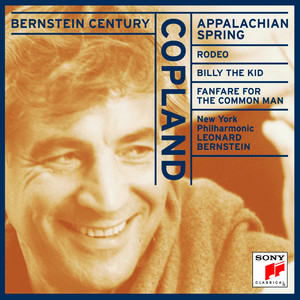 | Appalachian Spring: VII. Doppio movimento | Aaron Copland, Leonard Bernstein, New York Philharmonic | D♭ Major | 1 | 3B | 78 BPM | |
 | Prince Igor: Polovtsian Dances (Remastered): No. 17a, Polovtsian Dance. Introduzione. Andantino | Alexander Borodin, Leonard Bernstein, New York Philharmonic | A Major | 1 | 11B | 78 BPM | |
| Bruch: Violin Concerto No. 1 in G Minor, Op. 26: I. Prelude. Allegro moderato | Max Bruch, Maxim Vengerov, Kurt Masur, Gewandhausorchester | E♭ Major | 1 | 5B | 113 BPM | |
 | Vier letzte Lieder, TrV 296: 2. September | Richard Strauss, Jessye Norman, Gewandhausorchester, Kurt Masur | D Major | 1 | 10B | 153 BPM | |
 | The Planets, Op. 32: IV. Jupiter, the Bringer of Jollity | Gustav Holst, Leonard Bernstein, New York Philharmonic | C Minor | 3 | 5A | 60 BPM | |
 | Symphony in C Major, WD 33: IV. Allegro vivace | Georges Bizet, Leonard Bernstein, New York Philharmonic | C Major | 3 | 8B | 149 BPM | |
 | Hungarian Dance No.1 in G minor - Orchestrated by Brahms: Allegro molto | Johannes Brahms, Chicago Symphony Orchestra, Daniel Barenboim | G Minor | 2 | 6A | 65 BPM |
- ISRC
- GBAYC9802858
- Label
- L-M Records/RCA Records