- BPM
- 99
- Key
- E Minor
- Camelot
- 9A
Joueurs de flûte, Op. 27: No. 2, Tityre by Albert Roussel, Jayn Rosenfeld, Bernard Rose Song Details
Albert Roussel, Jayn Rosenfeld, Bernard Rose's ' "Joueurs de flûte, Op. 27: No. 2, Tityre" was released on its scheduled release date, October 5, 2010. With This song being less than two minutes long, at 1:10, we are fairly confident that this song is not explicit and is safe for all ages. Based on the duration of this song, this song duration is much smaller than the average song duration. There are a total of 14 in the song's album "Roussel: Chamber Music with Flute". In this album, this song's track order is #5. Furthermore, we believe that the track originated from United States. In terms of popularity, Joueurs de flûte, Op. 27: No. 2, Tityre is currently unknown. Since there is more of a neutral sound being played, this makes the track somewhat danceable.
BPM and Tempo
With Joueurs de flûte, Op. 27: No. 2, Tityre by Albert Roussel, Jayn Rosenfeld, Bernard Rose having a BPM of 99 with a half-time of 50 BPM and a double-time of 198 BPM, we would consider this track to have a Andante (at a walking pace) tempo marking. Because of this, we believe that the song has an overall slow tempo. The time signature for this track is 4/4.
Music Key
E Minor is the music key of this track. Which also means that the camelot key for this song is 9A. So, the perfect camelot match for 9A would be either 9A or 8B. While, a low energy boost can consist of either 9B or 10A. For moderate energy boost, you would use 6A and a high energy boost can either be 11A or 4A. However, if you are looking for a low energy drop, finding a song with a camelot key of 8A would be a great choice. Where 12A would give you a moderate drop, and 7A or 2A would be a high energy drop. Lastly, 12B allows you to change the mood.
Want to find the BPM and music key for other songs? Check out our BPM and Key Finder page!
- Popularity
- 0%
- Loudness
- -22.699 dB
- Acousticness
- 99%
- Danceability
- 52%
- Energy
- 22%
- Instrumentalness
- 81%
- Liveness
- 11%
- Loudness
- 62%
- Speechiness
- 5%
- Valence
- 46%
Recommendations
| Track | Artist | Key | Energy | Camelot | BPM | ||
|---|---|---|---|---|---|---|---|
 | Symphony No. 1, GMW 11: Ic. Sehr gemächlich | Gustav Mahler, Tonhalle-Orchester Zürich, Paavo Järvi | D Major | 4 | 10B | 87 BPM | |
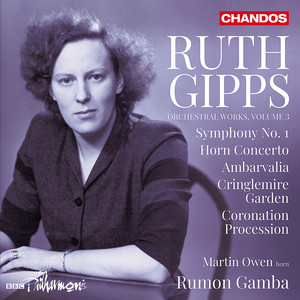 | Horn Concerto, Op. 58: II. Scherzo | Ruth Gipps, Martin Owen, BBC Philharmonic, Rumon Gamba | F Minor | 0 | 4A | 47 BPM | |
 | Martinu: Piano Quartet No. 1, H. 287: II. Adagio | Bohuslav Martinů, Domus | D Minor | 1 | 7A | 85 BPM | |
 | Dolly Suite, Op. 56 (arr. H. Rabaud): III. Le Jardin de Dolly | Henri Rabaud, Gabriel Fauré, RTE Sinfonietta, John Georgiadis | E Major | 0 | 12B | 64 BPM | |
 | Les chemins de l'amour, FP 106 (Arr. for Oboe and Piano by Serol Yapici) | Francis Poulenc, Serol Yapici, Tudor Cioceanu | A Major | 2 | 11B | 142 BPM | |
 | Pulcinella, K 034: IX. Finale | Igor Stravinsky, Orquestra De Cambra Teatre Lliure, Josep Pons | C Minor | 0 | 5A | 77 BPM | |
![Epigrammák (Epigrams): No. 1, Lento [arr. L. Lencses] by Zoltán Kodály, Lajos Lencsés, Budapest Strings](https://i.scdn.co/image/ab67616d00001e02c5a574a0e9716bb5b360b95b) | Epigrammák (Epigrams): No. 1, Lento [arr. L. Lencses] | Zoltán Kodály, Lajos Lencsés, Budapest Strings | A♭ Major | 1 | 4B | 130 BPM | |
 | Serenade for String Orchestra in C Minor, Op. posth.: III. Allegro | Max Bruch, George Hanson, Sinfonieorchester Wuppertal | A Minor | 1 | 8A | 88 BPM | |
 | Bizet: Petite suite des "Jeux d'enfants", Op. 22, WD 39: II. Berceuse "La poupée" | Georges Bizet, Scottish National Orchestra, Alexander Gibson | A Major | 2 | 11B | 142 BPM | |
| Symphony No. 1, GMW 11: IIa. Kräftig bewegt, doch nicht zu schnel | Gustav Mahler, Tonhalle-Orchester Zürich, Paavo Järvi | B Minor | 1 | 10A | 68 BPM | |
 | Le marchand de sable qui passe, Op. 13: IV. Scène finale (Version for Piano) | Albert Roussel, Jean-Pierre Armengaud | A Major | 0 | 11B | 109 BPM | |
 | Badian: Concerto for Piano & Orchestra, Pt. 3 (Live) | Maya Badian, Winnipeg Symphony Orchestra, Peter Tiefenbach | G Minor | 5 | 6A | 74 BPM | |
 | Neon Waves | Lumi Risto | D Major | 1 | 10B | 130 BPM | |
 | The Music Makers, Op. 69: I. Introduction. Moderato | Edward Elgar, Sarah Connolly, Greg Beardsell, Bournemouth Symphony Chorus, Bournemouth Symphony Orchestra, Simon Wright | G Major | 2 | 9B | 85 BPM | |
| Bizet: Petite suite des "Jeux d'enfants", Op. 22, WD 39: IV. Duo "Petit mari, petite femme" | Georges Bizet, Alexander Gibson, Scottish National Orchestra | A Major | 2 | 11B | 142 BPM | |
 | Cello Concerto in C Minor, Op. 43: I. Adagio | Mieczysław Weinberg, Kristina Reiko Cooper, Constantine Orbelian, Kaunas City Symphony Orchestra | A Major | 2 | 11B | 142 BPM | |
 | Falla: El sombrero de tres picos, Pt. 2: Danza final | Manuel de Falla, Sir Neville Marriner, Academy of St. Martin in the Fields | A Major | 2 | 11B | 142 BPM | |
 | La Cinquième Saison, Op. 15: I. Le Secret des feuilles: L'arbre aux légendes 2 | Corentin Apparailly, Julien Martineau, Orchestre Victor Hugo, Jean-François Verdier | A Major | 2 | 11B | 142 BPM | |
 | Symphony No. 3 in E Flat Major, Op. 90: III. Menuetto. Moderato - Trio I - Trio II | Ferdinand Ries, Tapiola Sinfonietta, Janne Nisonen | E♭ Major | 0 | 5B | 174 BPM | |
 | Violin Sonata in E Minor, P. 85: IV. Giga. Vivace assai (After J.S. Bach's BWV 1023) | Ottorino Respighi, Ilkka Talvi, Seattle Symphony Orchestra, Gerard Schwarz | E Minor | 0 | 9A | 121 BPM | |
 | Le Tombeau de Couperin, M. 68a: I. Prélude. Vif | Maurice Ravel, Les Siècles, François-Xavier Roth | F♯ Major | 0 | 2B | 74 BPM | |
 | Delius: Irmelin Prelude | Frederick Delius, Sir John Barbirolli, London Symphony Orchestra | D Major | 1 | 10B | 87 BPM | |
 | Le festin de l`araignée, Op. 17: No. 21, Danse de l'éphémère | Albert Roussel, Yan Pascal Tortelier, BBC Philharmonic | D Major | 1 | 10B | 182 BPM | |
 | Roumanian Folk Dances for Orchestra, BB 76 (Sz. 68): 4. Horn Dance (from Bisztra) | Béla Bartók, Chicago Symphony Orchestra, Sir Georg Solti | D Major | 1 | 10B | 170 BPM | |
 | Aleko: Introduction | Sergei Rachmaninoff, Gianandrea Noseda, BBC Philharmonic Orchestra | G Minor | 0 | 6A | 64 BPM |
- ISRC
- US8271010635
- Label
- L-M Records/RCA Records