- BPM
- 88
- Key
- A Minor
- Camelot
- 8A
Serenade for String Orchestra in C Minor, Op. posth.: III. Allegro by Max Bruch, George Hanson, Sinfonieorchester Wuppertal Song Details
"Serenade for String Orchestra in C Minor, Op. posth.: III. Allegro" by Max Bruch, George Hanson, Sinfonieorchester Wuppertal had its release date on February 1, 2002. The duration of This song is about two minutes long, specifically at 2:41. This song does not appear to have any foul language. Serenade for String Orchestra in C Minor, Op. posth.: III. Allegro's duration is considered a little bit shorter than the average duration of a typical track. The song is number 19 out of 22 in Bruch: Orchestral Works by Max Bruch, George Hanson, Sinfonieorchester Wuppertal. Going off of the ISRC code of this track, we detected that the origin of this track is from Germany. Serenade for String Orchestra in C Minor, Op. posth.: III. Allegro is not that popular right now. In our opinion, the overall tone is not very danceable and projects negative sounds, such as being sad, depressed, or angry.
BPM and Tempo
The tempo marking of Serenade for String Orchestra in C Minor, Op. posth.: III. Allegro by Max Bruch, George Hanson, Sinfonieorchester Wuppertal is Andante (at a walking pace), since this song has a tempo of 88 BPM. With that information, we can conclude that the song has a slow tempo. This song can go great with yoga or pilates. The time signature for this track is 4/4.
Music Key
This song is in the music key of A Minor. Because this track belongs in the A Minor key, the camelot key is 8A. So, the perfect camelot match for 8A would be either 8A or 7B. While, a low energy boost can consist of either 8B or 9A. For moderate energy boost, you would use 5A and a high energy boost can either be 10A or 3A. However, if you are looking for a low energy drop, finding a song with a camelot key of 7A would be a great choice. Where 11A would give you a moderate drop, and 6A or 1A would be a high energy drop. Lastly, 11B allows you to change the mood.
Want to find the BPM and music key for other songs? Check out our BPM and Key Finder page!
- Popularity
- 9%
- Loudness
- -21.436 dB
- Acousticness
- 95%
- Danceability
- 22%
- Energy
- 12%
- Instrumentalness
- 0%
- Liveness
- 9%
- Loudness
- 64%
- Speechiness
- 4%
- Valence
- 8%
Recommendations
| Track | Artist | Key | Energy | Camelot | BPM | ||
|---|---|---|---|---|---|---|---|
 | Serenade for String Orchestra in C Major, Op. 48, TH 48: II. Walzer: Moderato (Tempo di valse) | Pyotr Ilyich Tchaikovsky, Bavarian Radio Symphony Orchestra, Sir Colin Davis | G Major | 1 | 9B | 124 BPM | |
 | Quintet (Sinfonia spirituosa) In D Major TWV 44:1, For 2 Violins, Viola And Basso Continuo: 2. Largo | Georg Philipp Telemann, Musica Antiqua Köln, Reinhard Goebel | E Major | 1 | 12B | 99 BPM | |
 | Scottish Fantasy, Op. 46: 4. Finale (Allegro guerriero) | Max Bruch, Nicola Benedetti, BBC Scottish Symphony Orchestra, Rory Macdonald | E♭ Major | 1 | 5B | 102 BPM | |
 | Concerto For Oboe And Strings: 2. Minuet & Musette | Ralph Vaughan Williams, Neil Black, English Chamber Orchestra, Daniel Barenboim | G Minor | 2 | 6A | 88 BPM | |
 | 6 Keyboard Concertos, Op. 3: No. 6 in E-Flat Major: III. Rondo. Allegro (Performed on Harp) | Johann Samuel Schroeter, Silke Aichhorn, Südwestdeutsches Kammerorchester Pforzheim, Douglas Bostock | E♭ Major | 2 | 5B | 90 BPM | |
 | Das Sühnopfer des neuen Bundes, Pt. 1: No. 7, Larghetto con moto | Carl Loewe, L'Arpa Festante Baroque Orchestra, Thomas Gropper | G Major | 0 | 9B | 74 BPM | |
 | Bagatellen Op. 47: I. Allegretto scherzando | Antonín Dvořák, NOG Ensemble | G Minor | 1 | 6A | 96 BPM | |
 | String Quintet in A Minor: I. Allegro | Max Bruch, Vadim Gluzman, Sandis Steinbergs, Maxim Rysanov, Ilze Klava, Reinis Birznieks | A Minor | 1 | 8A | 82 BPM | |
 | Symphony No. 8 in B Minor, D. 759 "Unfinished": II. Andante con moto | Franz Schubert, Gewandhausorchester, Herbert Blomstedt | E Major | 0 | 12B | 82 BPM | |
 | Violin Concerto in D Minor, Op. 47: II. Adagio di molto | Jean Sibelius, Janine Jansen, Oslo Philharmonic Orchestra, Klaus Mäkelä | B♭ Major | 1 | 6B | 87 BPM | |
 | Britten: Four Sea Interludes from Peter Grimes, Op. 33a: No. 2, Sunday Morning | Benjamin Britten, André Previn, London Symphony Orchestra | C Major | 2 | 8B | 114 BPM | |
 | Suite for Viola & Orchestra, Group 1: I. Prelude. Allegro moderato | Ralph Vaughan Williams, Timothy Ridout, Jamie Phillips, Orchestre de Chambre de Lausanne | C Major | 1 | 8B | 76 BPM | |
 | Sonata for Violin and Piano in A: 4. Allegretto poco mosso | César Franck, Kaja Danczowska, Krystian Zimerman | E Major | 0 | 12B | 87 BPM | |
 | Overture (Suite) In G Minor, TWV 55: G4: II. Rondeau: Gayement | Cologne Chamber Orchestra, Georg Philipp Telemann | B♭ Major | 3 | 6B | 134 BPM | |
 | Radiant Moments | Veridia | B Major | 1 | 1B | 172 BPM | |
 | Concerto in C Major, H.117, Op. 7: I. Francese Presto | Francesco Geminiani, Café Zimmermann | B Major | 3 | 1B | 112 BPM | |
 | Violin Concerto in D Major, Op. 3, No. 1: Adagio | Joseph Boulogne Chevalier de Saint-Georges, Zhou Qian, Toronto Chamber Orchestra, Kevin Mallon | D Minor | 0 | 7A | 96 BPM | |
 | Albinoni: Oboe Concerto in D Minor, Op. 9 No. 2: I. Allegro e non presto (Transcr. for Piccolo Trumpet and Baroque Orchestra by Simon Wright) | Tomaso Albinoni, Alison Balsom, Pinnock’s Players, Trevor Pinnock | D♭ Minor | 6 | 12A | 103 BPM | |
 | Concerto For 2 Cellos In G Minor, RV 531: I. Allegro | Antonio Vivaldi, Tafelmusik Baroque Orchestra, Jeanne Lamon | F♯ Minor | 2 | 11A | 119 BPM | |
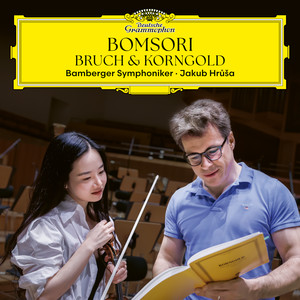 | Violin Concerto No. 1 in G Minor, Op. 26: III. Finale. Allegro energico | Max Bruch, Bomsori, Bamberger Symphoniker, Jakub Hrůša | G Major | 1 | 9B | 95 BPM | |
 | Irish Isles Suite: I. Achill Island | Ailbhe McDonagh, RTE Concert Orchestra, David Brophy | A Minor | 1 | 8A | 72 BPM | |
 | 8 Pieces, Op. 83: I. Andante | Max Bruch, Philon Trio | F♯ Minor | 0 | 11A | 78 BPM | |
 | Music from The Fairy Queen (1) (after Shakespeare: A Midsummer Night's Dream): Prelude | Henry Purcell, Emil Klein | G Minor | 2 | 6A | 136 BPM | |
 | Cello Concerto No. 2 in D Major, Hob. VIIb: II. Adagio | Joseph Haydn, Alisa Weilerstein, TrondheimSolistene | G Major | 0 | 9B | 70 BPM | |
 | Handel: Saul, HWV 53, Act III: Dead March | George Frideric Handel, Barry Rose, Central Band Of The Royal Air Force, Roy Edward Charles Davies | E♭ Major | 3 | 5B | 110 BPM |
- ISRC
- DEA140209619
- Label
- L-M Records/RCA Records