- BPM
- 126
- Key
- A Major
- Camelot
- 11B
Cello Concerto No. 2 in D Major, Hob. VIIb:2: II. Adagio by Joseph Haydn, Maximilian Hornung, Antonello Manacorda Song Details
"Cello Concerto No. 2 in D Major, Hob. VIIb:2: II. Adagio" by Joseph Haydn, Maximilian Hornung, Antonello Manacorda had its release date on January 23, 2015. With this song being about 5 minutes long, at This song is fairly a long song compared to the average song length. This song does not have an "Explicit" tag, making it safe for all ages. The track order of this song in Maximilian Hornung, Antonello Manacorda's "Haydn & Azarashvili: Cello Concertos" album is number 7 out of 8. On top of that, Germany appears to be the country where this track was created. Based on our statistics, Cello Concerto No. 2 in D Major, Hob. VIIb:2: II. Adagio's popularity is unknown right now. In our opinion, the overall tone is not very danceable and projects negative sounds, such as being sad, depressed, or angry.
BPM and Tempo
We consider the tempo marking of Cello Concerto No. 2 in D Major, Hob. VIIb:2: II. Adagio by Joseph Haydn, Maximilian Hornung, Antonello Manacorda to be Allegro (fast, quick, and bright) because the track has a tempo of 126 BPM, a half-time of 63BPM, and a double-time of 252 BPM. Based on that, the speed of the song's tempo is fast. Activities such as, walking, can go well with this song. The time signature for this track is 4/4.
Music Key
This song is in the music key of A Major. This also means that this song has a camelot key of 11B. So, the perfect camelot match for 11B would be either 11B or 12A. While, 12B can give you a low energy boost. For moderate energy boost, you would use 8B and a high energy boost can either be 1B or 6B. Though, if you want a low energy drop, you should looking for songs with either a camelot key of 11A or 10B will give you a low energy drop, 2B would be a moderate one, and 9B or 4B would be a high energy drop. Lastly, 8A allows you to change the mood.
Want to find the BPM and music key for other songs? Check out our BPM and Key Finder page!
- Popularity
- 0%
- Loudness
- -24.49 dB
- Acousticness
- 97%
- Danceability
- 22%
- Energy
- 1%
- Instrumentalness
- 17%
- Liveness
- 10%
- Loudness
- 59%
- Speechiness
- 5%
- Valence
- 7%
Recommendations
| Track | Artist | Key | Energy | Camelot | BPM | ||
|---|---|---|---|---|---|---|---|
 | Keyboard Concerto in F Major, Hob. XVIII:3: III. Finale. Presto | Joseph Haydn, Sebastian Knauer, Kolner Kammerorchester, Helmut Müller-Brühl | F Major | 2 | 7B | 140 BPM | |
 | Viola Concerto in D Major: III. Rondo. Allegro | Franz Anton Hoffmeister, Victoria Chiang, Baltimore Chamber Orchestra, Markand Thakar | C Minor | 1 | 5A | 111 BPM | |
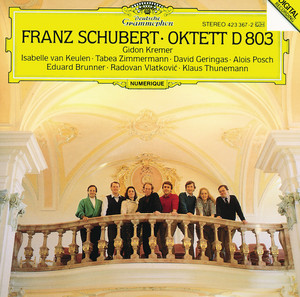 | Octet in F Major, D. 803: II. Adagio | Franz Schubert, Gidon Kremer, Isabelle van Keulen, Tabea Zimmermann, David Geringas, Alois Posch, Eduard Brunner, Radovan Vlatkovic, Klaus Thunemann | G Major | 0 | 9B | 133 BPM | |
 | El rapto de las Sabinas, Suite No. 2, Acto II, No. 14: Maestoso | Joan Enric Lluna, Moonwinds | E♭ Major | 1 | 5B | 135 BPM | |
 | ブルクミュラー25の練習曲: 16. ちょっとした悲しみ | Burgmuller, 神野明 | C Major | 2 | 8B | 134 BPM | |
 | Schubert: Symphony No. 5 in B-Flat Major, D. 485: III. Menuetto. Allegro molto - Trio | Franz Schubert, Ton Koopman, Netherlands Radio Chamber Orchestra | G Minor | 0 | 6A | 81 BPM | |
 | Sonata No. 5 in A Major, Op. 17, No. 5: II. Presto | Johann Christian Bach, Daniil Trifonov | A Major | 2 | 11B | 67 BPM | |
 | Concerto for Cello and Orchestra No. 1 in A Minor, Op. 33: I. Allegro non troppo | Camille Saint-Saëns, Hee-young Lim | C Major | 1 | 8B | 116 BPM | |
 | I. Adagio ma non troppo | Fanny Mendelssohn, Minguet Quartett | G Major | 2 | 9B | 79 BPM | |
 | Gluck: Orphée et Eurydice, Wq. 41, Act 1 Scene 1: Pantomime des nymphes et des bergers | Christoph Willibald Gluck, Orchestre de l'Opéra National de Lyon/Sir John Eliot Gardiner, John Eliot Gardiner, Orchestre De L'Opéra National De Lyon | B Major | 2 | 1B | 110 BPM | |
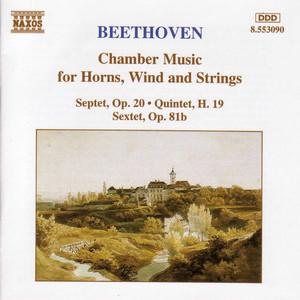 | Sextet in E-Flat Major, Op. 81b: I. Allegro con brio | Ludwig van Beethoven, János Keveházi, Jeno Kevehazi, Ildiko Hegyi, Peter Popa, Gyözö Máthé, Péter Szabó | E♭ Major | 0 | 5B | 131 BPM | |
 | Septet in E Flat Major, Op. 20: 2. Adagio cantabile | Ludwig van Beethoven, Berlin Philharmonic Octet | A♭ Major | 0 | 4B | 120 BPM | |
 | Clarinet Concerto No. 1 in F Minor, Op. 73: II. Adagio ma non troppo | Carl Maria von Weber, Andreas Ottensamer, Berliner Philharmoniker, Mariss Jansons | C Major | 0 | 8B | 72 BPM | |
 | Keyboard Sonata in E Major, Wq. 65/29, H. 83: III. Allegretto | Carl Philipp Emanuel Bach, Christopher Hinterhuber | E Major | 2 | 12B | 163 BPM | |
 | Symphony in G Major, Eisen G8: II. Andante | Leopold Mozart, Toronto Chamber Orchestra, Kevin Mallon | E Minor | 2 | 9A | 120 BPM | |
 | Cublai, gran kan de' Tartar Overture | Antonio Salieri, Matthias Bamert, London Mozart Players | D Major | 2 | 10B | 88 BPM | |
 | Symphony in D Major, Op. 18, No. 2: I. Grave - Allegro assai | Muzio Clementi, Chopin Chamber Orchestra, Winston Dan Vogel | D Major | 1 | 10B | 89 BPM | |
 | Keyboard Concerto in C Major, Wq. 20: II. Adagio ma non troppo | Carl Philipp Emanuel Bach, Michael Rische, Kammersymphonie Leipzig | C Major | 1 | 8B | 136 BPM | |
| La locandiera Overture: III. Presto | Antonio Salieri, Matthias Bamert, London Mozart Players | F Major | 0 | 7B | 78 BPM | |
 | Piano Concerto No. 2 in F Major: II. Largo | Giovanni Paisiello, Francesco Nicolosi, Collegium Philarmonicum Chamber Orchestra, Gennaro Cappabianca | C Major | 0 | 8B | 122 BPM | |
 | Symphony in C Major, Bryan C11 "Il comista": I. Allegro con brio | Johann Baptist Vanhal, Munich Philharmonic Chamber Orchestra, Michael Helmrath | E Major | 0 | 12B | 76 BPM | |
 | Suite for Orchestra No. 2 in B Minor, BWV 1067: Rondeau | Johann Sebastian Bach, Ton Koopman, Amsterdam Baroque Orchestra | A♭ Major | 3 | 4B | 114 BPM | |
 | Symphony in C Minor, Bryan Cm2: IV. Allegro molto | Johann Baptist Vanhal, Toronto Chamber Orchestra, Kevin Mallon | C Minor | 1 | 5A | 87 BPM | |
 | String Quartet in E Minor, Op. 44, No. 2: III. Andante | Felix Mendelssohn, Cecilia String Quartet | B Minor | 0 | 10A | 89 BPM | |
 | Sinfonia Concertante in C Major: II. Romance | Johann Wilhelm Wilms, Harmonie Universelle, Andreas Spering | E♭ Major | 0 | 5B | 92 BPM |
- ISRC
- DEE861400752
- Label
- L-M Records/RCA Records