- BPM
- 81
- Key
- G Minor
- Camelot
- 6A
Schubert: Symphony No. 5 in B-Flat Major, D. 485: III. Menuetto. Allegro molto - Trio by Franz Schubert, Ton Koopman, Netherlands Radio Chamber Orchestra Song Details
Franz Schubert, Ton Koopman, Netherlands Radio Chamber Orchestra's 'Schubert: Symphony No. 5 in B-Flat Major, D. 485: III. Menuetto. Allegro molto - Trio' had a release date set for October 6, 2024. With this song being around four minutes long, at 4:20, the duration of this song is pretty average compared to other songs. This track is safe for children and doesn't appear to contain any foul language, since the "Explicit" tag was not present in this track. The track order of this song in Ton Koopman, Antonio Vivaldi, Carl Philipp Emanuel Bach, Dietrich Buxtehude, Francis Poulenc, Franz Schubert, François Couperin, Georg Philipp Telemann, George Frideric Handel, Girolamo Frescobaldi, Heinrich Ignaz Franz von Biber, Henry Purcell, Johann Sebastian Bach, Joseph Haydn, Marc-Antoine Charpentier, Michael Praetorius, Wilhelm Friedemann Bach, Wolfgang Amadeus Mozart's "Itinerary of a HIP Musician" album is number 78 out of 166. On top of that, France appears to be the country where this track was created. Schubert: Symphony No. 5 in B-Flat Major, D. 485: III. Menuetto. Allegro molto - Trio is not that popular right now. In our opinion, the overall tone is not very danceable and projects negative sounds, such as being sad, depressed, or angry.
BPM and Tempo
We consider the tempo marking of Schubert: Symphony No. 5 in B-Flat Major, D. 485: III. Menuetto. Allegro molto - Trio by Franz Schubert, Ton Koopman, Netherlands Radio Chamber Orchestra to be Andante (at a walking pace) because the track has a tempo of 81 BPM, a half-time of 40BPM, and a double-time of 162 BPM. Based on that, the speed of the song's tempo is slow. The time signature for this track is 4/4.
Music Key
G Minor is the music key of this track. Because this track belongs in the G Minor key, the camelot key is 6A. So, the perfect camelot match for 6A would be either 6A or 5B. While, a low energy boost can consist of either 6B or 7A. For moderate energy boost, you would use 3A and a high energy boost can either be 8A or 1A. However, if you are looking for a low energy drop, finding a song with a camelot key of 5A would be a great choice. Where 9A would give you a moderate drop, and 4A or 11A would be a high energy drop. Lastly, 9B allows you to change the mood.
Want to find the BPM and music key for other songs? Check out our BPM and Key Finder page!
- Popularity
- 4%
- Loudness
- -23.235 dB
- Acousticness
- 98%
- Danceability
- 24%
- Energy
- 4%
- Instrumentalness
- 92%
- Liveness
- 11%
- Loudness
- 61%
- Speechiness
- 4%
- Valence
- 34%
Recommendations
| Track | Artist | Key | Energy | Camelot | BPM | ||
|---|---|---|---|---|---|---|---|
 | Rachmaninov: 10 Preludes, Op. 23: No. 5 in G Minor | Sergei Rachmaninoff, Nikolai Lugansky | G Minor | 1 | 6A | 113 BPM | |
 | Flute Sonata in E-Flat Major, BWV 1031: II. Siciliano (Arr. Kempff for Piano) | Johann Sebastian Bach, Wilhelm Kempff | G Minor | 0 | 6A | 106 BPM | |
 | Piano Sonata No. 12 in F Major, K. 332: II. Adagio | Wolfgang Amadeus Mozart, Maria João Pires | F Major | 0 | 7B | 73 BPM | |
 | Eccles: The Mad Lover: V. Aire. Ground (Arr. Diluka for Piano) | John Eccles, Shani Diluka | F Minor | 2 | 4A | 69 BPM | |
 | Slavonic Dance for Four Hands in E Minor, Op. 72/2: Dumka (Allegretto grazioso) | Antonín Dvořák, Khatia Buniatishvili | C Major | 0 | 8B | 77 BPM | |
 | Haydn: Cello Concerto No. 1 in C Major, Hob. VIIb, 1: I. Moderato (Cadenza by Britten) | Franz Joseph Haydn, Mstislav Rostropovich, Academy of St. Martin in the Fields | C Major | 1 | 8B | 68 BPM | |
 | Keyboard Sonata in D Minor, Kk. 1 | Domenico Scarlatti, Ivo Pogorelich | D Minor | 1 | 7A | 107 BPM | |
 | Piano Sonata No. 8 in C minor, Op. 13, "Pathétique": II. Adagio cantabile | Ludwig van Beethoven, Igor Levit | A♭ Major | 0 | 4B | 63 BPM | |
 | Saint-Saëns: Le carnaval des animaux, R 125: XIII. Le cygne | Camille Saint-Saëns, Güher Pekinel, Éric Levionnais, Süher Pekinel | E♭ Major | 1 | 5B | 82 BPM | |
 | The Seasons, Op. 37b: VI. June, "Barcarolle" | Pyotr Ilyich Tchaikovsky, Yefim Bronfman | G Minor | 0 | 6A | 87 BPM | |
 | Schwanengesang, S. 560: VII. Ständchen (2nd Version, After Schubert D. 957/4) | Franz Liszt, Angela Hewitt | A Major | 2 | 11B | 143 BPM | |
 | Souvenir d'un lieu cher, Op. 42: 3. Mélodie | Pyotr Ilyich Tchaikovsky, Janine Jansen, Mahler Chamber Orchestra, Daniel Harding | E♭ Major | 0 | 5B | 99 BPM | |
 | Schwanengesang, D. 957: No. 4, Ständchen (Transcr. for Cello and Piano) | Franz Schubert, Kian Soltani, Aaron Pilsan | D Minor | 0 | 7A | 72 BPM | |
 | Symphony No. 8 in B Minor, D. 759 "Unfinished": 1. Allegro moderato | Franz Schubert, Berliner Philharmoniker, Herbert von Karajan | B Minor | 1 | 10A | 107 BPM | |
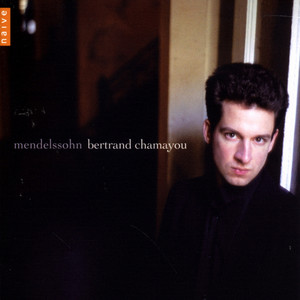 | Lied opus 34 no.2, transcription Franz Liszt: Auf Flügeln Des Gesanges | Felix Mendelssohn, Bertrand Chamayou | A♭ Major | 0 | 4B | 71 BPM | |
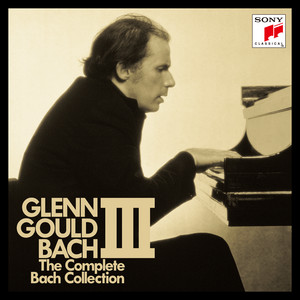 | Goldberg Variations, BWV 988: Aria | Johann Sebastian Bach, Glenn Gould | A♭ Major | 0 | 4B | 123 BPM | |
 | Piazzolla: Oblivion | Julian Lloyd Webber, John Lenehan | D Minor | 0 | 7A | 81 BPM | |
 | Canción | Manuel de Falla, Javier Perianes | C Minor | 0 | 5A | 76 BPM | |
 | 24 Preludes and Fugues, Op. 87: Fugue No. 7 in A Major | Dmitri Shostakovich, Igor Levit | A Major | 0 | 11B | 97 BPM | |
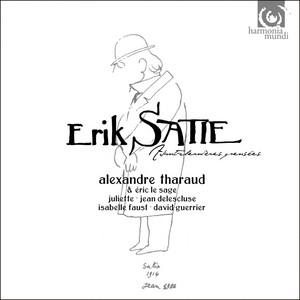 | Gnossiennes: n° 4 | Erik Satie, Alexandre Tharaud | A Minor | 0 | 8A | 85 BPM | |
 | Après un rêve, Op. 7: No. 1 | Gabriel Fauré, Joshua Bell, Frederic Chiu | G Minor | 2 | 6A | 91 BPM | |
 | Ständchen in D Minor (After Schubert), S. 560 | Franz Liszt, Lise de la Salle | D Major | 0 | 10B | 76 BPM | |
 | Bach, JS : Well-Tempered Clavier Book 1 : Prelude No.8 in E flat minor BWV853 | Daniel Barenboim | A♭ Minor | 0 | 1A | 70 BPM | |
 | Pièces Lyriques, Op. 47 No. 3: Mélodie | Edvard Grieg, Shani Diluka | F Major | 0 | 7B | 105 BPM | |
 | Myrthen, Op. 25 - Version for Cello and Piano: XXIV. Du bist wie eine Blume | Robert Schumann, Kian Soltani, Aaron Pilsan | F Major | 0 | 7B | 116 BPM |
- ISRC
- FRZ209411103
- Label
- L-M Records/RCA Records