- BPM
- 176
- Key
- D Minor
- Camelot
- 7A
Introduction and Rondo Capriccioso in A Minor, Op. 28 by Camille Saint-Saëns, Hollywood Bowl Symphony Orchestra, Felix Slatkin Song Details
Camille Saint-Saëns, Hollywood Bowl Symphony Orchestra, Felix Slatkin's ' "Introduction and Rondo Capriccioso in A Minor, Op. 28" was released on its scheduled release date, July 17, 2015. Since This song is still less than 10 minute long, it is still considered a pretty long duration song compared to the average song length. This song does not appear to be explicit due to the lack of the "E" tag. This song is part of Violin Greats by Various Artists. The song's track number on the album is #1 out of 9 tracks. Based on our data, United Kingdom was the country where this track was produced or recorded. The popularity of Introduction and Rondo Capriccioso in A Minor, Op. 28 is currently unknown right now. Based on the vibe, this track doesn't seem to be that danceable, however its valence properties can make this some somewhat danceable.
BPM and Tempo
Since Introduction and Rondo Capriccioso in A Minor, Op. 28 by Camille Saint-Saëns, Hollywood Bowl Symphony Orchestra, Felix Slatkin has a tempo of 176 beats per a minute, the tempo markings of this song would be Vivace (lively and fast). With Introduction and Rondo Capriccioso in A Minor, Op. 28 being at 176 BPM, the half-time would be 88 BPM with a double-time of 352 BPM.In addition, we consider the tempo speed to be pretty fast for this song. The time signature for this track is 3/4.
Music Key
D Minor is the music key of this track. Which also means that the camelot key for this song is 7A. So, the perfect camelot match for 7A would be either 7A or 6B. While, a low energy boost can consist of either 7B or 8A. For moderate energy boost, you would use 4A and a high energy boost can either be 9A or 2A. However, if you are looking for a low energy drop, finding a song with a camelot key of 6A would be a great choice. Where 10A would give you a moderate drop, and 5A or 12A would be a high energy drop. Lastly, 10B allows you to change the mood.
Want to find the BPM and music key for other songs? Check out our BPM and Key Finder page!
- Popularity
- 0%
- Loudness
- -13.821 dB
- Acousticness
- 90%
- Danceability
- 28%
- Energy
- 31%
- Instrumentalness
- 2%
- Liveness
- 11%
- Loudness
- 77%
- Speechiness
- 6%
- Valence
- 58%
Recommendations
| Track | Artist | Key | Energy | Camelot | BPM | ||
|---|---|---|---|---|---|---|---|
 | Les Contes d'Hoffmann / Act 4: Entr'acte (Barcarolle) | Jacques Offenbach, Staatskapelle Dresden, Silvio Varviso | D Major | 0 | 10B | 121 BPM | |
 | Borodin - String Quartet No.2 in D major: Notturno: Andante | Alexander Borodin, Borodin Quartet | A Major | 2 | 11B | 74 BPM | |
 | Salut d'Amour, Op. 12 | Edward Elgar, Yo-Yo Ma, Kathryn Stott | D Major | 0 | 10B | 73 BPM | |
 | Shostakovich: Fugue No. 7 In A Major | Dmitri Shostakovich, Joachim Kwetzinsky | A Major | 1 | 11B | 79 BPM | |
 | Violin Concerto No. 1 in G Minor, Op. 26: II. Adagio | Max Bruch, Itzhak Perlman, Bernard Haitink, Royal Concertgebouw Orchestra | E♭ Major | 1 | 5B | 87 BPM | |
 | Peer Gynt Suite No. 1, Op. 46: II. The Death of Åse - Recorded 1982 | Edvard Grieg, Berliner Philharmoniker, Herbert von Karajan | G Major | 0 | 9B | 45 BPM | |
 | Lalo: Cello Concerto in D Minor: II. Intermezzo - Allegro presto | Édouard Lalo, André Navarra, Charles Münch, Orchestre des Concerts Lamoureux | C Minor | 1 | 5A | 75 BPM | |
 | Orfeo ed Euridice, Act II: Dance of the Blessed Spirits, "Melodie" (Arr. I. Friedman) | Christoph Willibald Gluck, Yoonie Han | D Minor | 0 | 7A | 77 BPM | |
 | Introduction and Rondo capriccioso in A Minor | Camille Saint-Saëns, Dong-Suk Kang, Polish National Radio Symphony Orchestra, Antoni Wit | A Minor | 1 | 8A | 91 BPM | |
 | The Seasons, Op. 67: XIV. Petit Adagio | Alexander Glazunov, Neeme Järvi, Royal Scottish National Orchestra | A Major | 1 | 11B | 87 BPM | |
 | Thaïs, Act II: Méditation | Jules Massenet, Joshua Bell, Royal Philharmonic Orchestra, Andrew Litton | E Minor | 1 | 9A | 172 BPM | |
 | Cello Sonata in D Major, Op. 17: II. Andante tranquillo | Luise Adolpha Le Beau, Steven Isserlis, Connie Shih | B Minor | 1 | 10A | 86 BPM | |
 | Nocturnes n°7 en mi majeur | Francis Poulenc, Alexandre Tharaud | E♭ Major | 1 | 5B | 87 BPM | |
 | Humoresque No. 7 in G-flat Major, Op. 101 | Boston Symphony Orchestra, Yo-Yo Ma, Seiji Ozawa, Itzhak Perlman | F♯ Major | 1 | 2B | 83 BPM | |
 | Come, Sweet Death, BWV 478 (Arr. for 5 Cellos) | Sheku Kanneh-Mason, Hannah Roberts, Ben Davies, Desmond Neysmith, Max Ruisi | C Major | 0 | 8B | 122 BPM | |
 | Suite No. 3, P. 172: I. Italiana: Andantino | Ottorino Respighi, RTÉ National Symphony Orchestra | B♭ Major | 1 | 6B | 94 BPM | |
 | Adoration | Florence Beatrice Price, Randall Goosby, Zhu Wang | D Major | 1 | 10B | 75 BPM | |
 | Orchestral Suite No. 3 in D Major, BWV 1068: II. Air "on the G String" | Johann Sebastian Bach, David Bell, Berliner Philharmoniker, Herbert von Karajan | D Major | 1 | 10B | 113 BPM | |
 | Schluss | Fanny Mendelssohn, Heather Schmidt | E Major | 1 | 12B | 87 BPM | |
 | Unaccompanied Cello Suite No. 1 in G major, BWV 1007: I. Prélude | Johann Sebastian Bach, Yo-Yo Ma | G Major | 1 | 9B | 137 BPM | |
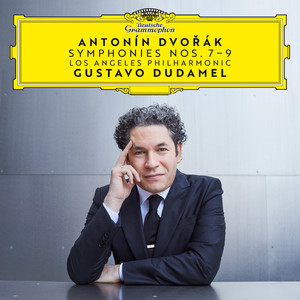 | Symphony No. 8 in G Major, Op. 88, B. 163: III. Allegretto grazioso - Molto vivace | Antonín Dvořák, Los Angeles Philharmonic, Gustavo Dudamel | C Major | 1 | 8B | 127 BPM | |
 | Carnaval, Op. 9: No. 12, Chopin | Robert Schumann, Boris Giltburg | B♭ Minor | 0 | 3A | 92 BPM | |
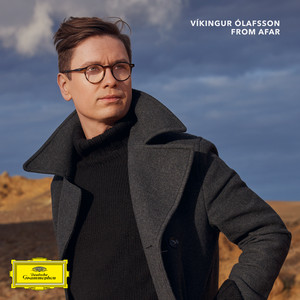 | Ave María (Arr. Víkingur Ólafsson) - Upright Piano | Víkingur Ólafsson | D Minor | 0 | 7A | 77 BPM | |
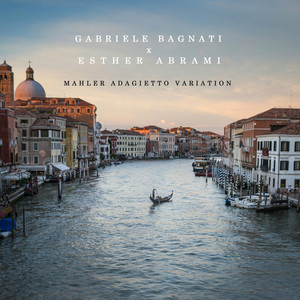 | Mahler Adagietto Variation (From Symphony No. 5 in C-Sharp Minor, Arr. for Violin and Piano by Jan-Peter Klöpfel) | Gustav Mahler, Gabriele Bagnati, Esther Abrami | F Major | 2 | 7B | 82 BPM | |
 | Scottish Fantasy for Violin and Orchestra, Op. 46: I. Introduction: Grave, Adagio cantabile | Max Bruch, Joshua Bell, Academy of St. Martin in the Fields | E♭ Major | 2 | 5B | 60 BPM |
- ISRC
- GBAVQ1500159
- Label
- L-M Records/RCA Records