- BPM
- 130
- Key
- D♭ Major
- Camelot
- 3B
Les Boréades, RCT 31, Acte IV, Scène IV: Entrée pour les Muses, les Zéphyres, les Saisons, les Heures et les Arts by Jean-Philippe Rameau, Teodor Currentzis Song Details
"Les Boréades, RCT 31, Acte IV, Scène IV: Entrée pour les Muses, les Zéphyres, les Saisons, les Heures et les Arts" by Jean-Philippe Rameau, Teodor Currentzis had its release date on October 17, 2014. Since This song is still less than 10 minute long, it is still considered a pretty long duration song compared to the average song length. This song does not appear to be explicit due to the lack of the "E" tag. There are a total of 18 in the song's album "Rameau - The Sound of Light". In this album, this song's track order is #3. Furthermore, we believe that the track originated from United States. Based on our statistics, Les Boréades, RCT 31, Acte IV, Scène IV: Entrée pour les Muses, les Zéphyres, les Saisons, les Heures et les Arts's popularity is below average in popularity right now. In our opinion, the overall tone is not very danceable and projects negative sounds, such as being sad, depressed, or angry.
BPM and Tempo
With Les Boréades, RCT 31, Acte IV, Scène IV: Entrée pour les Muses, les Zéphyres, les Saisons, les Heures et les Arts by Jean-Philippe Rameau, Teodor Currentzis having a BPM of 130 with a half-time of 65 BPM and a double-time of 260 BPM, we would consider this track to have a Allegro (fast, quick, and bright) tempo marking. Because of this, we believe that the song has an overall fast tempo. Looking at the BPM of this song, this song might go great with walking. The time signature for this track is 4/4.
Music Key
This song is in the music key of D♭ Major. Or for those who are familiar with the camelot wheel, this song has a camelot key of 3B. So, the perfect camelot match for 3B would be either 3B or 4A. While, 4B can give you a low energy boost. For moderate energy boost, you would use 12B and a high energy boost can either be 5B or 10B. Though, if you want a low energy drop, you should looking for songs with either a camelot key of 3A or 2B will give you a low energy drop, 6B would be a moderate one, and 1B or 8B would be a high energy drop. Lastly, 12A allows you to change the mood.
Want to find the BPM and music key for other songs? Check out our BPM and Key Finder page!
- Popularity
- 36%
- Loudness
- -18.908 dB
- Acousticness
- 83%
- Danceability
- 16%
- Energy
- 14%
- Instrumentalness
- 19%
- Liveness
- 16%
- Loudness
- 68%
- Speechiness
- 4%
- Valence
- 4%
Recommendations
| Track | Artist | Key | Energy | Camelot | BPM | ||
|---|---|---|---|---|---|---|---|
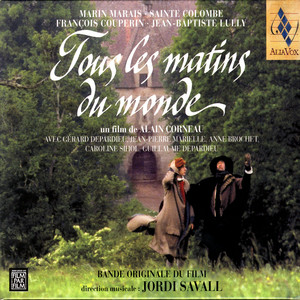 | Les Pleurs (Mr. de Sainte Colombe, version viole seule de Jordi Savall) | Monsieur de Sainte-Colombe, Jordi Savall | D♭ Minor | 0 | 12A | 102 BPM | |
 | Orfeo ed Euridice, Wq. 30 / Act 2: Dance of the Blessed Spirits | Christoph Willibald Gluck, Stuttgart Chamber Orchestra, Karl Münchinger | F Major | 1 | 7B | 67 BPM | |
 | Harmonia Artificioso Ariosa, Partia V in G Minor, C. 66: Passacaglia | Heinrich Ignaz Franz von Biber, Lautten Compagney, Wolfgang Katschner | F♯ Minor | 1 | 11A | 94 BPM | |
 | Sarabande et rigaudon, Op. 93: Sarabande | Camille Saint-Saëns, Orchestre National de Lille, Jun Markl | C Major | 0 | 8B | 71 BPM | |
 | Cello Concerto In B Flat: 2. Andante grazioso | Luigi Boccherini, Jian Wang, Camerata Salzburg | B♭ Major | 1 | 6B | 137 BPM | |
 | Canción | Manuel de Falla, Javier Perianes | C Minor | 0 | 5A | 76 BPM | |
 | The Seasons, Op. 37b: X. October (Autumn Song) | Pyotr Ilyich Tchaikovsky, Khatia Buniatishvili | D Minor | 0 | 7A | 72 BPM | |
 | Les Indes galantes, RCT 44, Nouvelle entrée, Les sauvages, Scène VI: Rondeau - Duo et choeur "Forêts paisibles" | Jean-Philippe Rameau, Teodor Currentzis | F♯ Minor | 3 | 11A | 98 BPM | |
 | Rachmaninov: Piano Concerto No. 2 in C Minor, Op. 18: I. Moderato | Sergei Rachmaninoff, Alexandre Tharaud, Alexander Vedernikov, Royal Liverpool Philharmonic Orchestra | D♭ Minor | 1 | 12A | 84 BPM | |
 | Oboe Quartet in F Major, K. 370: II. Adagio | Wolfgang Amadeus Mozart, Alexei Ogrintchouk, Boris Brovtsyn, Maxim Rysanov, Kristine Blaumane | D Minor | 0 | 7A | 84 BPM | |
 | Piano Concerto No. 6 in C Major, H. 49: II. Larghetto | John Field, Miceal O'Rourke, Matthias Bamert, London Mozart Players | E Major | 0 | 12B | 79 BPM | |
 | Déraisonnable beauté: Chaconne | Rinaldo Alessandrini | B Major | 1 | 1B | 124 BPM | |
 | F-A-E Sonata, WoO 22: II. Intermezzo (Arr. G. Schwabe for Cello & Piano) | Robert Schumann, Gabriel Schwabe, Nicholas Rimmer | F Major | 1 | 7B | 86 BPM | |
 | Vespers, Op. 37: Nunc dimittis | Sergei Rachmaninoff, Franck Krawczyk, Sinfonia Varsovia | E♭ Minor | 0 | 2A | 84 BPM | |
 | String Quintet No. 60 in C Major, G. 324 "La musica notturna delle strade di Madrid": I. Il campane quando suonano l'Ave Maria | Luigi Boccherini, Cuarteto Casals, Eckart Runge | C Major | 1 | 8B | 103 BPM | |
 | String Quartet No. 1 in D Major, Op. 11, TH 111: II. Andante cantabile | Pyotr Ilyich Tchaikovsky, Heath Quartet | A Minor | 1 | 8A | 82 BPM | |
 | Orfeo ed Euridice, Wq. 30, Act II: Danse des champs-elysées "Mélodie" (Arr. for Piano by Ignaz Friedman) | Christoph Willibald Gluck, Joseph Banowetz | A Major | 0 | 11B | 72 BPM | |
 | Pièces de viole, Livre 3 - Suite No. 7 in G Major: No. 92. Prélude. Lentement | Marin Marais, Mieneke van der Velden, Glen Wilson | E♭ Minor | 0 | 2A | 120 BPM | |
 | Serenade No. 10 in B-Flat Major, K. 361 "Gran Partita": III. Adagio | Wolfgang Amadeus Mozart, LSO Wind Ensemble | E♭ Major | 0 | 5B | 65 BPM | |
 | Canzona undecima a due canti "detta la plettenberger" | Girolamo Frescobaldi, Bruno Cocset, Les Basses Réunies | A Minor | 1 | 8A | 72 BPM | |
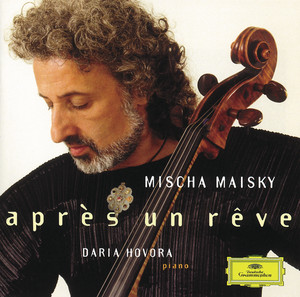 | Les chemins de l'amour, FP. 106 | Francis Poulenc, Mischa Maisky, Daria Hovora | E Major | 1 | 12B | 67 BPM | |
 | Gluck / Arr. Kreisler: Mélodie (From Orfeo ed Euricide, Wq. 30) | Christoph Willibald Gluck, Vilde Frang | D Minor | 0 | 7A | 164 BPM | |
 | Cello Concerto No. 1 in C Major, Hob.VIIb:1: II. Adagio | Joseph Haydn, Steven Isserlis, Chamber Orchestra of Europe, Sir Roger Norrington | F Major | 0 | 7B | 74 BPM | |
| Nais, RCT 49, Prologue, Scène V: Premier rigaudon - Deuxième rigaudon | Jean-Philippe Rameau, Teodor Currentzis | A♭ Major | 3 | 4B | 64 BPM | |
 | Dvořák: 4 Romantic Pieces, Op. 75, B. 150: No. 1, Allegro moderato | Antonín Dvořák, Renaud Capuçon, Khatia Buniatishvili | B♭ Major | 1 | 6B | 107 BPM |
- ISRC
- USSM11404275
- Label
- L-M Records/RCA Records