- BPM
- 50
- Key
- G Major
- Camelot
- 9B
Schubert: String Quintet in C Major, Op. 163, D. 956: II. Adagio (Excerpt) by Franz Schubert, Borodin Quartet, Misha Milman Song Details
"Schubert: String Quintet in C Major, Op. 163, D. 956: II. Adagio (Excerpt)" by Franz Schubert, Borodin Quartet, Misha Milman had its release date on November 18, 2025. The duration of This song is about two minutes long, specifically at 2:37. This song does not appear to have any foul language. Schubert: String Quintet in C Major, Op. 163, D. 956: II. Adagio (Excerpt)'s duration is considered a little bit shorter than the average duration of a typical track. There is only one song in "Tranquility" - Classical Moods, so we believe that "Schubert: String Quintet in C Major, Op. 163, D. 956: II. Adagio (Excerpt)" is a single. Schubert: String Quintet in C Major, Op. 163, D. 956: II. Adagio (Excerpt) is below average in popularity right now. Although the tone can be danceable to some, this track does projects more of a negative sound rather than a postive one.
BPM and Tempo
The tempo marking of Schubert: String Quintet in C Major, Op. 163, D. 956: II. Adagio (Excerpt) by Franz Schubert, Borodin Quartet, Misha Milman is Lento (slowly), since this song has a tempo of 50 BPM. With that information, we can conclude that the song has a slow tempo. The time signature for this track is 3/4.
Music Key
G Major is the music key of this track. This also means that this song has a camelot key of 9B. So, the perfect camelot match for 9B would be either 9B or 10A. While, 10B can give you a low energy boost. For moderate energy boost, you would use 6B and a high energy boost can either be 11B or 4B. Though, if you want a low energy drop, you should looking for songs with either a camelot key of 9A or 8B will give you a low energy drop, 12B would be a moderate one, and 7B or 2B would be a high energy drop. Lastly, 6A allows you to change the mood.
Want to find the BPM and music key for other songs? Check out our BPM and Key Finder page!
- Popularity
- 22%
- Loudness
- -17.054 dB
- Acousticness
- 100%
- Danceability
- 54%
- Energy
- 11%
- Instrumentalness
- 91%
- Liveness
- 9%
- Loudness
- 72%
- Speechiness
- 4%
- Valence
- 14%
Recommendations
| Track | Artist | Key | Energy | Camelot | BPM | ||
|---|---|---|---|---|---|---|---|
 | Albinoni: Concerto a cinque in G Major, Op. 10 No. 4: II. Andante | Tomaso Albinoni, Claudio Scimone, Piero Toso, I Solisti Veneti | B♭ Major | 2 | 6B | 105 BPM | |
 | 6 Consolations, S. 172: No. 3 in D flat major (Lento, placido) | Franz Liszt, Nelson Freire | A♭ Major | 0 | 4B | 75 BPM | |
 | Orphee et Eurydice, Act II: Dance of the Blessed Spirits (arr. D. Sosin for flute and harp): Orfeo ed Euridice, Act II: Dance of the Blessed Spirits (arr. for flute and harp) | Donald Sosin, Christoph Willibald Gluck, Nora Shulman, Judy Loman | F Major | 1 | 7B | 82 BPM | |
 | Adriana Lecouvreur, Act 2: Intermezzo | Francesco Cilea, Opera Australia Orchestra, Andrea Molino | F Major | 0 | 7B | 124 BPM | |
 | Khachaturian: Suite No. 2 from Spartacus: I. Adagio of Spartacus & Phrygia | Aram Khachaturian, Alexander Lazarev, The Bolshoi Symphony Orchestra | D♭ Major | 1 | 3B | 175 BPM | |
 | Pavane pour une infante défunte, M.19: Lent | Maurice Ravel, Philharmonia Orchestra, Carlo Maria Giulini | G Major | 0 | 9B | 81 BPM | |
 | Orphée et Eurydice, Wq. 30, Act 2: Danse des ombres heureuses | Christoph Willibald Gluck, Richard Divall, Melbourne Symphony Orchestra | A Major | 4 | 11B | 146 BPM | |
 | Elgar: Chanson de matin, Op. 15 No. 2 | Edward Elgar, Andrew Davis, BBC Symphony Orchestra | G Major | 1 | 9B | 92 BPM | |
 | Elgar: Carissima | Edward Elgar, Northern Sinfonia Orchestra, Sir Neville Marriner | G Major | 1 | 9B | 58 BPM | |
| Albinoni: Concerto a cinque in C Major, Op. 10 No. 3: II. Adagio | Tomaso Albinoni, Claudio Scimone, Piero Toso, I Solisti Veneti | A Minor | 2 | 8A | 86 BPM | |
 | 4 Impromptus, Op. 90, D. 899: No. 3 in G-Flat Major (Andante) | Franz Schubert, Roger Woodward | F♯ Major | 0 | 2B | 66 BPM | |
 | Walton: Henry V: Passacaglia "The Death of Falstaff" | William Walton, Douglas Boyd, Chamber Orchestra of Europe | E Minor | 0 | 9A | 86 BPM | |
 | Gluck: Orfeo ed Euridice, Wq. 30, Act 2: Dance of the Blessed Spirits | Christoph Willibald Gluck, Sir Neville Marriner, Academy of St. Martin in the Fields | A Major | 1 | 11B | 93 BPM | |
 | Violin Concerto In D, Op.77: 2. Adagio | Johannes Brahms, Anne-Sophie Mutter, Berliner Philharmoniker, Herbert von Karajan | C Major | 1 | 8B | 114 BPM | |
 | Bruch: Scottish Fantasy, Op. 46: I. (b) Adagio cantabile | Max Bruch, Itzhak Perlman, Jesús López-Cobos, New Philharmonia Orchestra | E♭ Minor | 0 | 2A | 59 BPM | |
 | Bach, JS: Concerto for 2 Pianos in C Minor, BWV 1062: II. Largo ma non tanto | Johann Sebastian Bach, David Fray, Orchestre National Du Capitole De Toulouse | F Minor | 3 | 4A | 70 BPM | |
 | Carmen Suite No. 1: III. Intermezzo (Entracte After Act II) | Georges Bizet, Berliner Philharmoniker, Herbert von Karajan | E♭ Major | 1 | 5B | 128 BPM | |
 | Suite No. 1, P. 109: III. Villanella: Andante Cantabile | Ottorino Respighi, RTÉ National Symphony Orchestra | B Minor | 0 | 10A | 88 BPM | |
 | Delius: Irmelin Prelude | Frederick Delius, Sir John Barbirolli, London Symphony Orchestra | D Major | 1 | 10B | 87 BPM | |
 | Two Melodies, Op. 53, for string Orchestra: Det første møte (First Encounter). Lento | Edvard Grieg, WDR Sinfonieorchester Köln, Eivind Aadland | D Minor | 0 | 7A | 100 BPM | |
 | Serse / Act 1: "Ombra mai fù" | George Frideric Handel, Anthony Way, Daniel Phillips, English Sinfonia, Neil Page | F Major | 1 | 7B | 70 BPM | |
 | Massenet: Thaïs, Act II: Méditation | Jules Massenet, Sarah Chang, Plácido Domingo, Berliner Philharmoniker | D Major | 1 | 10B | 99 BPM | |
 | Fauré: Pavane, Op. 50 | Gabriel Fauré, New Philharmonia Orchestra/Sir David Willcocks/Gareth Morris, Gareth Morris, Sir David Willcocks, New Philharmonia Orchestra | F♯ Minor | 0 | 11A | 130 BPM | |
 | Concerto Grosso: 3. Sarabande | Ralph Vaughan Williams, Academy of St. Martin in the Fields, Sir Neville Marriner | G Minor | 1 | 6A | 87 BPM | |
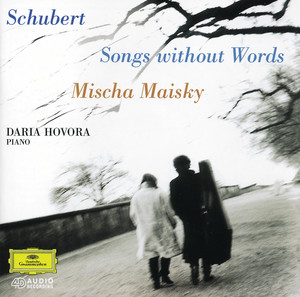 | Schwanengesang, D. 957: Am Meer | Franz Schubert, Mischa Maisky, Daria Hovora | C Major | 0 | 8B | 96 BPM |
- ISRC
- DEA809419206
- Label
- L-M Records/RCA Records