- BPM
- 76
- Key
- D♭ Minor
- Camelot
- 12A
Messiah, Pt. 3: 47. Soli and Chorus "Since by Man" by George Frideric Handel, Dunedin Consort, John Butt Song Details
"Messiah, Pt. 3: 47. Soli and Chorus "Since by Man"" by George Frideric Handel, Dunedin Consort, John Butt had its release date on November 1, 2006. The duration of This song is about two minutes long, specifically at 2:03. This song does not appear to have any foul language. Messiah, Pt. 3: 47. Soli and Chorus "Since by Man"'s duration is considered a little bit shorter than the average duration of a typical track. The track order of this song in George Frideric Handel, Dunedin Consort, John Butt's "Handel: Messiah (Dublin Version, 1742)" album is number 18 out of 57. On top of that, United Kingdom appears to be the country where this track was created. Messiah, Pt. 3: 47. Soli and Chorus "Since by Man" is not that popular right now. In our opinion, the overall tone is not very danceable and projects negative sounds, such as being sad, depressed, or angry.
BPM and Tempo
We consider the tempo marking of Messiah, Pt. 3: 47. Soli and Chorus "Since by Man" by George Frideric Handel, Dunedin Consort, John Butt to be Adagio (slowly with great expression) because the track has a tempo of 76 BPM, a half-time of 38BPM, and a double-time of 152 BPM. Based on that, the speed of the song's tempo is slow. The time signature for this track is 4/4.
Music Key
This song is in the music key of D♭ Minor. This also means that this song has a camelot key of 12A. So, the perfect camelot match for 12A would be either 12A or 11B. While, a low energy boost can consist of either 12B or 1A. For moderate energy boost, you would use 9A and a high energy boost can either be 2A or 7A. However, if you are looking for a low energy drop, finding a song with a camelot key of 11A would be a great choice. Where 3A would give you a moderate drop, and 10A or 5A would be a high energy drop. Lastly, 3B allows you to change the mood.
Want to find the BPM and music key for other songs? Check out our BPM and Key Finder page!
- Popularity
- 7%
- Loudness
- -18.493 dB
- Acousticness
- 97%
- Danceability
- 18%
- Energy
- 11%
- Instrumentalness
- 0%
- Liveness
- 10%
- Loudness
- 69%
- Speechiness
- 4%
- Valence
- 4%
Recommendations
| Track | Artist | Key | Energy | Camelot | BPM | ||
|---|---|---|---|---|---|---|---|
 | Concerto in D Minor for Two Violins, BWV 1043: Largo ma non tanto | Johann Sebastian Bach, Jascha Heifetz, Erick Friedman, Thornton Lofthouse, The New Symphony Orchestra Of London, Sir Malcolm Sargent | A Minor | 2 | 8A | 94 BPM | |
 | Symphony in G Minor, Op. 6, No. 6, W. C12: I. Allegro | Johann Christian Bach, Concerto Köln | D Major | 2 | 10B | 139 BPM | |
 | Overture (Suite) In G Minor, TWV 55: G4: II. Rondeau: Gayement | Cologne Chamber Orchestra, Georg Philipp Telemann | B♭ Major | 3 | 6B | 134 BPM | |
 | Bach, JS: Concerto for 4 Pianos in A Minor, BWV 1065: I. Allegro | Johann Sebastian Bach, David Fray, Audrey Vigoureux, Emmanuel Christien, Jacques Rouvier, Orchestre National Du Capitole De Toulouse | A Minor | 3 | 8A | 108 BPM | |
 | Sonata in D Minor, K. 9 | Domenico Scarlatti, Ivo Pogorelich | D Minor | 0 | 7A | 94 BPM | |
 | Rameau: Les Boréades, Act 4: Entrée de Polymnie | Jean-Philippe Rameau, Gyorgy Vashegyi, Orfeo Orchestra | D Major | 2 | 10B | 122 BPM | |
 | Matthäus-Passion: Erster Teil, 1. Chorus I & II Kommt, ihr Töchter, helft mir klagen | Johann Sebastian Bach, RIAS Kammerchor, Staats- und Domchor Berlin, Akademie für Alte Musik Berlin, René Jacobs | E♭ Minor | 3 | 2A | 77 BPM | |
 | Atys, LWV 53: Ouverture | Jean-Baptiste Lully, Leonardo García-Alarcón, Cappella Mediterranea | F Minor | 3 | 4A | 131 BPM | |
 | Dvořák: 4 Romantic Pieces, Op. 75, B. 150: No. 1, Allegro moderato | Antonín Dvořák, Renaud Capuçon | B♭ Major | 1 | 6B | 91 BPM | |
 | Abdelazer, Z.570: Overture & Rondeau | Henry Purcell, Academy of Ancient Music, Christopher Hogwood | D♭ Minor | 2 | 12A | 122 BPM | |
 | Suite From Abdelzar: I. Rondeau | Henry Purcell, Tafelmusik Baroque Orchestra, Jeanne Lamon | D♭ Minor | 1 | 12A | 101 BPM | |
 | Symphony No. 5 in D Major: 1. Allegro ma non troppo - Allegro assai | William Boyce, Academy of Ancient Music, Christopher Hogwood | D♭ Major | 2 | 3B | 131 BPM | |
 | Music from The Fairy Queen (1) (after Shakespeare: A Midsummer Night's Dream): Prelude | Henry Purcell, Emil Klein | G Minor | 2 | 6A | 136 BPM | |
 | Symphony No. 1 in B-Flat Major, Op. 2: I. Allegro | William Boyce, Aradia Ensemble, Kevin Mallon | A Major | 1 | 11B | 86 BPM | |
 | Theodora, HWV 68, Act I Scene 5: Air. Angels, ever bright and fair (Theodora) | George Frideric Handel, Christina Wieland, Diana Schmid, Franz Vitzthum, Knut Schoch, Klaus Mertens, Junge Kantorei, Barockorchester Frankfurt, Joachim Carlos Martini | E Major | 1 | 12B | 94 BPM | |
 | 3 Chorales, P. 167: No. 3, Andante (After J.S. Bach's BWV 645) | Ottorino Respighi, Seattle Symphony Orchestra, Gerard Schwarz | E♭ Major | 0 | 5B | 84 BPM | |
 | Mozart - Serenade K361 "Gran Partita" for 13 wind instruments: Adagio | Wolfgang Amadeus Mozart, London Winds, Michael Collins | G Major | 1 | 9B | 135 BPM | |
 | The Old Bachelor, Z.607: Rondeau - Menuet - Boree - March - Jig | Henry Purcell, Academy of Ancient Music, Christopher Hogwood | B Major | 2 | 1B | 120 BPM | |
 | Cantata, BWV 208: Schafe können sicher weiden | Johann Sebastian Bach, Yo-Yo Ma, Ton Koopman, Amsterdam Baroque Orchestra | A Major | 0 | 11B | 69 BPM | |
 | Cello Concerto No. 3 in A Major, Wq. 172: III. Allegro assai | Carl Philipp Emanuel Bach, Daniel Müller-Schott, L'Arte del mondo, Werner Ehrhardt | E Major | 2 | 12B | 142 BPM | |
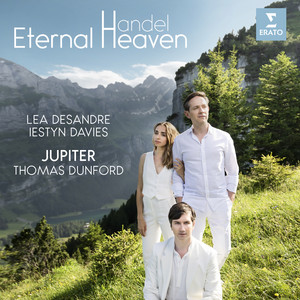 | Handel: Theodora, HWV 68, Act 2: "To Thee Thy Glorious Son of Worth" (Theodora, Didymus) | George Frideric Handel, Jupiter, Thomas Dunford, Iestyn Davies, Lea Desandre | E Minor | 1 | 9A | 59 BPM | |
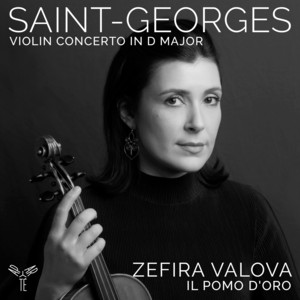 | Violin Concerto in D Major: II. Adagio | Joseph Boulogne Chevalier de Saint-Georges, Zefira Valova, Il Pomo D'oro | E Major | 0 | 12B | 71 BPM | |
 | Sonata "Follia" Op. 5, No. 12: Adagio | Arcangelo Corelli, Stephen Stubbs, Maxine Eilander, Erin Headley, Milos Valent | D♭ Minor | 0 | 12A | 82 BPM | |
 | Suite in D Minor: 2. Sarabande | Louis Couperin, Christopher Hogwood | D♭ Minor | 1 | 12A | 140 BPM | |
 | Albinoni: Concerto a cinque in B-Flat Major, Op. 10 No. 1: II. Adagio | Tomaso Albinoni, Claudio Scimone, I Solisti Veneti | G Minor | 2 | 6A | 63 BPM |
- ISRC
- GBASH0628547
- Label
- L-M Records/RCA Records