- BPM
- 135
- Key
- F Major
- Camelot
- 7B
Die Dreigroschenoper: 1. Dreigroschenfinale by Kurt Weill, Rolf Boysen, Ute Lemper, Helga Dernesch, Mario Adorf, Rias-Sinfonietta Berlin, John Mauceri Song Details
Kurt Weill, Rolf Boysen, Ute Lemper, Helga Dernesch, Mario Adorf, Rias-Sinfonietta Berlin, John Mauceri's 'Die Dreigroschenoper: 1. Dreigroschenfinale' had a release date set for January 1, 1988. With this song being around four minutes long, at 3:49, the duration of this song is pretty average compared to other songs. This track is safe for children and doesn't appear to contain any foul language, since the "Explicit" tag was not present in this track. This song is part of Weill: The Threepenny Opera by Kurt Weill, René Kollo, Mario Adorf, Helga Dernesch, Ute Lemper, Milva, Wolfgang Reichmann, Susanne Tremper, Rolf Boysen, Rias-Sinfonietta Berlin, John Mauceri. The song's track number on the album is #11 out of 27 tracks. Based on our data, United Kingdom was the country where this track was produced or recorded. Based on our statistics, Die Dreigroschenoper: 1. Dreigroschenfinale's popularity is not that popular right now. Although the overall vibe is very danceable, it does project more negative sounds.
BPM and Tempo
Since Die Dreigroschenoper: 1. Dreigroschenfinale by Kurt Weill, Rolf Boysen, Ute Lemper, Helga Dernesch, Mario Adorf, Rias-Sinfonietta Berlin, John Mauceri has a tempo of 135 beats per a minute, the tempo markings of this song would be Allegro (fast, quick, and bright). With Die Dreigroschenoper: 1. Dreigroschenfinale being at 135 BPM, the half-time would be 68 BPM with a double-time of 270 BPM.In addition, we consider the tempo speed to be pretty fast for this song. This makes this song perfect for activities such as, walking. The time signature for this track is 4/4.
Music Key
This song is in the music key of F Major. Or for those who are familiar with the camelot wheel, this song has a camelot key of 7B. So, the perfect camelot match for 7B would be either 7B or 8A. While, 8B can give you a low energy boost. For moderate energy boost, you would use 4B and a high energy boost can either be 9B or 2B. Though, if you want a low energy drop, you should looking for songs with either a camelot key of 7A or 6B will give you a low energy drop, 10B would be a moderate one, and 5B or 12B would be a high energy drop. Lastly, 4A allows you to change the mood.
Want to find the BPM and music key for other songs? Check out our BPM and Key Finder page!
- Popularity
- 5%
- Loudness
- -19.105 dB
- Acousticness
- 89%
- Danceability
- 63%
- Energy
- 17%
- Instrumentalness
- 0%
- Liveness
- 8%
- Loudness
- 68%
- Speechiness
- 14%
- Valence
- 38%
Recommendations
| Track | Artist | Key | Energy | Camelot | BPM | ||
|---|---|---|---|---|---|---|---|
 | Youkali "Tango-habanera" (Arr. for Voice, Double Bass, Piano & Accordion by Katie Bray, Murray Grainger, Marianne Schofield & William Vann) | Kurt Weill, Katie Bray, William Vann, Murray Grainger, Marianne Schofield | E♭ Major | 2 | 5B | 67 BPM | |
 | Hildegard, Act I: Scene 11: in this dirt, this soil (Hildegard) | Sarah Kirkland Snider, Nola Richardson, Kazem Abdullah | F Minor | 2 | 4A | 81 BPM | |
 | Auch kleine Dinge können uns entzücken | Hugo Wolf, Mojca Erdmann | A Major | 0 | 11B | 68 BPM | |
 | Bird's Lament | Louis Thomas Hardin, Lucienne Renaudin Vary, Bill Elliott, BBC Concert Orchestra | D Major | 2 | 10B | 72 BPM | |
 | A Thousand Tongues | Missy Mazzoli, Emily D'Angelo, Mikayel Hakhnazaryan | D♭ Minor | 2 | 12A | 73 BPM | |
| Marie Galante: J'attends un navire (Arr. for Voice, Double Bass, Piano & Accordion by Katie Bray, Murray Grainger, Marianne Schofield & William Vann) | Kurt Weill, Katie Bray, William Vann, Murray Grainger, Marianne Schofield | E♭ Major | 2 | 5B | 67 BPM | |
 | Poème de Théophile de Viau: À Chloris | Reynaldo Hahn, Marie-Nicole Lemieux | E♭ Major | 1 | 5B | 59 BPM | |
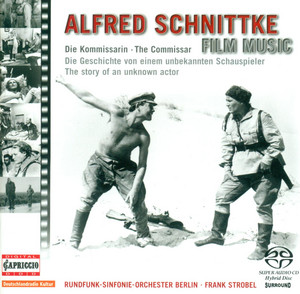 | Die Geschichte Eines Unbekannten Schauspielers (The Story of the Unknown Actor): Epilog - Finale | Alfred Schnittke, Berlin Radio Symphony Orchestra, Frank Strobel | B♭ Major | 0 | 6B | 129 BPM | |
 | Petite messe solennelle: Gloria in excelsis Deo | Gioachino Rossini, Orchestre de chambre de Paris, Accentus, Ottavio Dantone, Julia Lezhneva, Michael Spyres, Alexander Vinogradov, Delphine Galou | F Major | 1 | 7B | 106 BPM | |
 | Anstatt-Dass-Song (1.Akt) (Polly Peachum ist nicht | Bertolt Brecht, Kurt Weill | B♭ Major | 2 | 6B | 108 BPM | |
 | Brel & Jouannest: Mathilde | Alexandre Tharaud | B♭ Minor | 2 | 3A | 133 BPM | |
 | Britten: Young Apollo, Op. 16 | Benjamin Britten, Martin James Bartlett, Mozarteumorchester Salzburg, Howard Griffiths | E♭ Major | 2 | 5B | 67 BPM | |
 | Purcell / Arr. Pluhar: Dido and Aeneas, Z. 626, Act III: Song. "When I Am Laid in Earth" | Henry Purcell, Christina Pluhar, L'Arpeggiata, Raquel Andueza | F Minor | 0 | 4A | 102 BPM | |
 | The Tempest, Op. 109: III. Allegretto grazioso | Jean Sibelius, Santtu-Matias Rouvali, Gothenburg Symphony Orchestra | G Major | 3 | 9B | 110 BPM | |
 | Kreisler: Marche miniature viennoise (Arr. Lehn for Trumpet and Orchestra) | Fritz Kreisler, Lucienne Renaudin Vary, Sascha Goetzel, Orchestre de chambre de Paris | D Major | 1 | 10B | 100 BPM | |
 | Winterreise, D. 911 Op. 89: I. Gute Nacht | Franz Schubert, Rosemary Standley, Ensemble Contraste, Arnaud Thorette, Johan Farjot | G Minor | 2 | 6A | 117 BPM | |
 | Ginastera / Transcr. Ducros: Ginastera: Danzas Argentinas, Op. 2: No. 2, Danza de la moza donosa | Alberto Ginastera, Lucienne Renaudin Vary, Sascha Goetzel, Monte-Carlo Philharmonic Orchestra | E Minor | 1 | 9A | 73 BPM | |
 | Klezmer Dance No. 2 | Göran Fröst, Martin Fröst, Royal Stockholm Philharmonic Orchestra | D Minor | 2 | 7A | 87 BPM | |
| Piazzolla / Transcr. Ducros: Chin Chin | Lucienne Renaudin Vary | E Minor | 3 | 9A | 122 BPM | |
 | Wagner: Lohengrin, Act 1: "Hört, Grafen, Edle, Freie von Brabant!" (Herald, Henry, Chorus) | Richard Wagner, Daniel Barenboim, Chor der Deutschen Staatsoper Berlin, René Pape, Roman Trekel, Staatskapelle Berlin | D♭ Major | 1 | 3B | 126 BPM | |
 | Concerto for Violin & Piano, Op. 105: III. Allegretto | Nikolai Kapustin, Frank Dupree, Rosanne Philippens, Württemberg Chamber Orchestra, Case Scaglione | G Major | 4 | 9B | 90 BPM | |
 | Die Dreigroschenoper: Akt II, Die Seeräuber-Jenny oder Träume eines Küchenmädchens ("Meine Herren, heute sehen Sie mich Gläser abwaschen") | Kurt Weill, Wolfgang Neuss, Lotte Lenya, Wilhelm Brückner-Rüggeberg | F Minor | 1 | 4A | 81 BPM | |
 | Hahn: 20 Mélodies: No. 20 À Chloris | Philippe Jaroussky | D Major | 0 | 10B | 70 BPM | |
 | Kindertotenlieder (Rückert) (1999 Digital Remaster): I: Nun will die Sonn' so hell aufgeh'n | Gustav Mahler, Dame Janet Baker, Hallé, Sir John Barbirolli | G Minor | 0 | 6A | 88 BPM | |
 | España | Emmanuel Chabrier, Boston Symphony Orchestra, Seiji Ozawa | F Major | 3 | 7B | 126 BPM |
- ISRC
- GBF078841511
- Label
- L-M Records/RCA Records