- BPM
- 133
- Key
- B♭ Minor
- Camelot
- 3A
Brel & Jouannest: Mathilde by Alexandre Tharaud Song Details
"Brel & Jouannest: Mathilde" by Alexandre Tharaud had its release date on October 17, 2025. With this song being around four minutes long, at 3:57, the duration of this song is pretty average compared to other songs. This track is safe for children and doesn't appear to contain any foul language, since the "Explicit" tag was not present in this track. There are a total of 30 in the song's album "Pianosong". In this album, this song's track order is #6. Furthermore, we believe that the track originated from United Kingdom. Based on our statistics, Brel & Jouannest: Mathilde's popularity is not that popular right now. Although the tone can be danceable to some, this track does projects more of a negative sound rather than a postive one.
BPM and Tempo
With Brel & Jouannest: Mathilde by Alexandre Tharaud having a BPM of 133 with a half-time of 66 BPM and a double-time of 266 BPM, we would consider this track to have a Allegro (fast, quick, and bright) tempo marking. Because of this, we believe that the song has an overall fast tempo. Looking at the BPM of this song, this song might go great with walking. The time signature for this track is 5/4.
Music Key
B♭ Minor is the music key of this track. Which also means that the camelot key for this song is 3A. So, the perfect camelot match for 3A would be either 3A or 2B. While, a low energy boost can consist of either 3B or 4A. For moderate energy boost, you would use 12A and a high energy boost can either be 5A or 10A. However, if you are looking for a low energy drop, finding a song with a camelot key of 2A would be a great choice. Where 6A would give you a moderate drop, and 1A or 8A would be a high energy drop. Lastly, 6B allows you to change the mood.
Want to find the BPM and music key for other songs? Check out our BPM and Key Finder page!
- Popularity
- 1%
- Loudness
- -38.055 dB
- Acousticness
- 12%
- Danceability
- 58%
- Energy
- 22%
- Instrumentalness
- 0%
- Liveness
- 8%
- Loudness
- 37%
- Speechiness
- 49%
- Valence
- 16%
Recommendations
| Track | Artist | Key | Energy | Camelot | BPM | ||
|---|---|---|---|---|---|---|---|
 | Ukrainian Sketches, Op. 27: No. 2, Andante tranquillo - Arr. for Orchestra by Nicholas Hersh | Józef Koffler, Daniel Grossmann, Jewish Chamber Orchestra Munich | F Major | 0 | 7B | 116 BPM | |
 | Liebesträume, S. 541: No. 3, Oh Lieb, so lang du lieben kannst | Franz Liszt, Andrejs Osokins | E Major | 1 | 12B | 68 BPM | |
 | Ballabili per il film "Il Gattopardo" (1963) (revisione a cura di Nicola Scardicchio): 3. Controdanza | Nino Rota, Riccardo Muti, Orchestra Filarmonica Della Scala, Milan La Scala Philharmonic Orchestra | B♭ Major | 0 | 6B | 91 BPM | |
 | Lasst mich allein, Op. 82 No. 1, B. 157/1 (Orch. Leopold) | Antonín Dvořák, Mahler Chamber Orchestra, Daniel Harding | A Major | 2 | 11B | 130 BPM | |
 | Souvenir pour Elise (Based on Beethoven's "For Elise") | Janoska Ensemble | B♭ Major | 2 | 6B | 107 BPM | |
 | I Cover the Waterfront (Arr. Tatum / Transcr. Trifonov for Piano) | Johnny Green, Daniil Trifonov | E Minor | 0 | 9A | 92 BPM | |
 | String Sextet in B-Flat Major, Op. 18: II. Andante, ma moderato | Johannes Brahms, Leipziger Streichquartett, Hartmut Rohde, Michael Sanderling | C Major | 1 | 8B | 178 BPM | |
 | Ethereal Reverie | Sebastian Verneau | D Major | 3 | 10B | 153 BPM | |
 | Forgotten Melodies I, Op. 38: VI. Canzona serenata | Nikolai Medtner, Alexander Malofeev | F Minor | 0 | 4A | 86 BPM | |
 | Preludes, Op. 31: No. 15 Dans le genre gothique | Charles-Valentin Alkan, Mao Fujita | G Major | 1 | 9B | 82 BPM | |
 | Jazz Suite: II. Lyrical Waltz | Alexander Tsfasman, Zlata Chochieva, BBC Scottish Symphony Orchestra, Karl-Heinz Steffens | E Minor | 1 | 9A | 84 BPM | |
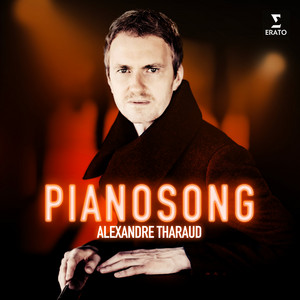 | Improvisation on "L'hymne à l'amour" by Monnot & Piaf | Alexandre Tharaud | B♭ Minor | 2 | 3A | 133 BPM | |
 | D'Indy : Symphonie sur un chant montagnard, 'Cévenole' Op.25 : II Assez modéré, mais sans lenteur | Vincent d'Indy, Marek Janowski, Orchestre Philharmonique de Radio France | F Major | 1 | 7B | 56 BPM | |
 | Symphonie fantastique, H. 48: II. Un bal. Valse | Hector Berlioz, Deutsches Symphonie-Orchester Berlin, Nicolò Umberto Foron | A Major | 1 | 11B | 72 BPM | |
 | Symphony No. 5 in A Minor, Op. 90 "Sinfonia brevis": III. Intermezzo | Erkki Melartin, Turku Philharmonic Orchestra, Ari Rasilainen | E Minor | 2 | 9A | 134 BPM | |
 | The Human Comedy, Op. 37: The Theme of Paris | Dmitri Shostakovich, Malmö Opera Orchestra, Mark Fitz-Gerald | A♭ Major | 0 | 4B | 82 BPM | |
 | Symphony No. 1 in E Minor, Op. 39: II. Andante (ma non troppo lento) | Jean Sibelius, Oslo Philharmonic Orchestra, Klaus Mäkelä | F♯ Minor | 1 | 11A | 66 BPM | |
 | Franck: Symphonic Variations for Piano and Orchestra, FWV 46: III. Molto più lento | César Franck, Alexis Weissenberg, Herbert von Karajan, Berliner Philharmoniker | D♭ Major | 0 | 3B | 81 BPM | |
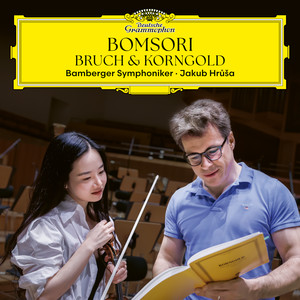 | Die stumme Serenade, Op. 36: No. 25, Schönste Nacht (Transcr. Sonnenmoser for Violin & Piano) | Erich Wolfgang Korngold, Bomsori, Thomas Hoppe | D Major | 2 | 10B | 86 BPM | |
 | Massenet: Année passée, Livre II "Jours d'automne": I. Feuilles jaunies. Assez lent | Jules Massenet, Aldo Ciccolini | C Major | 2 | 8B | 107 BPM | |
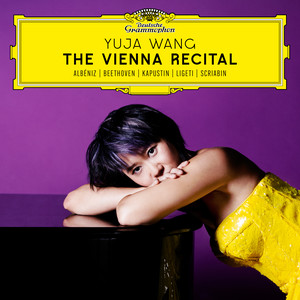 | Orfeo ed Euridice, Wq. 30: Melodie dell'Orfeo (Arr. Sgambati for Piano) | Yuja Wang | D♭ Minor | 1 | 12A | 80 BPM | |
 | Schubert: Fantasia for Piano Four-Hands in F Minor, Op. Posth. 103, D. 940: I. Allegro molto moderato | Franz Schubert, Bertrand Chamayou, Leif Ove Andsnes | F Minor | 1 | 4A | 105 BPM | |
 | Symphony No. 9: IV | Christopher Gunning, BBC National Orchestra Of Wales, Kenneth Woods | B♭ Major | 1 | 6B | 133 BPM | |
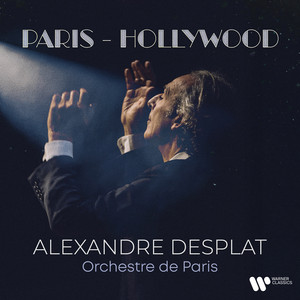 | Wes Anderson’s Suite: The Grand Budapest Hotel | Alexandre Desplat, Orchestre de Paris, Florentino Calvo, Giani Caserotto, Iurie Morar | G Major | 2 | 9B | 93 BPM | |
 | Gershwin: George Gershwin's Songbook: VIII. The Man I Love | George Gershwin, Alexandre Tharaud | A♭ Major | 1 | 4B | 137 BPM |
- ISRC
- GBAYC2502290
- Label
- L-M Records/RCA Records