- BPM
- 112
- Key
- G Minor
- Camelot
- 6A
Peter Pan (Remastered): The Plank by Leonard Bernstein, Ben Steinberg, Peter Pan Cast Orchestra, Boris Karloff, Jean Arthur, Marcia Henderson, Peg Hillias, Joe E. Marks Song Details
Leonard Bernstein, Ben Steinberg, Peter Pan Cast Orchestra, Boris Karloff, Jean Arthur, Marcia Henderson, Peg Hillias, Joe E. Marks's ' "Peter Pan (Remastered): The Plank" was released on its scheduled release date, 1950. With This song being less than a minute long, we are pretty confident that this song does not contain any foul language. That being said, this song is pretty short compared to other songs. There are a total of 14 in the song's album "Peter Pan (Original Broadway Cast Recording)". In this album, this song's track order is #12. Furthermore, we believe that the track originated from United States. In terms of popularity, Peter Pan (Remastered): The Plank is currently unknown. The overall tone is very danceable, especially with its high energy, which produces more of a euphoric, cheerful, or happy vibe.
BPM and Tempo
With Peter Pan (Remastered): The Plank by Leonard Bernstein, Ben Steinberg, Peter Pan Cast Orchestra, Boris Karloff, Jean Arthur, Marcia Henderson, Peg Hillias, Joe E. Marks having a BPM of 112 with a half-time of 56 BPM and a double-time of 224 BPM, we would consider this track to have a Moderato (at a moderate speed) tempo marking. Because of this, we believe that the song has an overall moderate tempo. The time signature for this track is 4/4.
Music Key
This song is in the music key of G Minor. Which also means that the camelot key for this song is 6A. So, the perfect camelot match for 6A would be either 6A or 5B. While, a low energy boost can consist of either 6B or 7A. For moderate energy boost, you would use 3A and a high energy boost can either be 8A or 1A. However, if you are looking for a low energy drop, finding a song with a camelot key of 5A would be a great choice. Where 9A would give you a moderate drop, and 4A or 11A would be a high energy drop. Lastly, 9B allows you to change the mood.
Want to find the BPM and music key for other songs? Check out our BPM and Key Finder page!
- Popularity
- 0%
- Loudness
- -13.62 dB
- Acousticness
- 98%
- Danceability
- 76%
- Energy
- 33%
- Instrumentalness
- 0%
- Liveness
- 16%
- Loudness
- 77%
- Speechiness
- 9%
- Valence
- 75%
Recommendations
| Track | Artist | Key | Energy | Camelot | BPM | ||
|---|---|---|---|---|---|---|---|
 | Tchaikovsky: Symphony No. 4 in F Minor, Op. 36: II. Andantino in moto di canzone | Pyotr Ilyich Tchaikovsky, San Francisco Symphony, Michael Tilson Thomas | B♭ Minor | 0 | 3A | 82 BPM | |
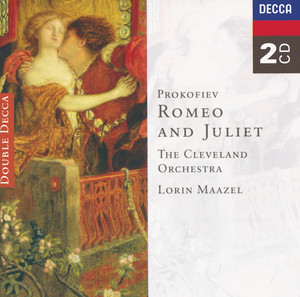 | Romeo and Juliet, Op. 64 / Act 1: Dance Of The Knights | Sergei Prokofiev, The Cleveland Orchestra, Lorin Maazel | B♭ Major | 6 | 6B | 124 BPM | |
 | La Cenerentola: Overture (Sinfonia) | Gioachino Rossini, Orchestra del Teatro Comunale di Bologna, Riccardo Chailly | A Minor | 1 | 8A | 116 BPM | |
 | Scheherazade, Op. 35: The Sea And Sinbad's Ship (Largo e maestoso - Lento - Allegro non troppo - Tranquillo) | Nikolai Rimsky-Korsakov, Joseph Silverstein, Boston Symphony Orchestra, Seiji Ozawa | C Major | 1 | 8B | 79 BPM | |
 | Polovetsian Dances from Prince Igor: Introduzione | Alexander Borodin, George Szell, The Cleveland Orchestra | A Major | 1 | 11B | 83 BPM | |
 | Symphony No. 5 in D Minor, Op. 47: IV. Allegro non troppo - 2017 Remastered Version | Dmitri Shostakovich, Leonard Bernstein, New York Philharmonic | B♭ Major | 4 | 6B | 106 BPM | |
 | Pictures at an Exhibition (Orch. Ravel): IX. The Hut on Fowl's Legs "Baba-Yaga" | Modest Mussorgsky, Chicago Symphony Orchestra, Carlo Maria Giulini | G Major | 2 | 9B | 76 BPM | |
 | The Planets, Op. 32: IV. Jupiter, the Bringer of Jollity | Gustav Holst, Orchestre Symphonique de Montréal, Charles Dutoit | G Minor | 2 | 6A | 136 BPM | |
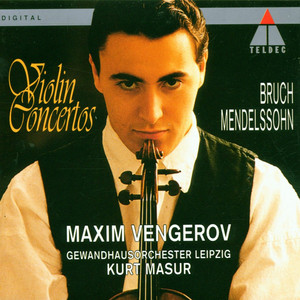 | Bruch: Violin Concerto No. 1 in G Minor, Op. 26: I. Prelude. Allegro moderato | Max Bruch, Maxim Vengerov, Kurt Masur, Gewandhausorchester | E♭ Major | 1 | 5B | 113 BPM | |
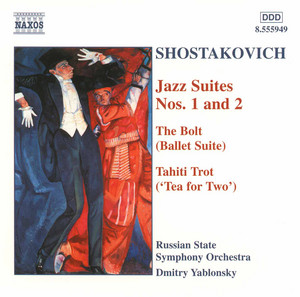 | Jazz Suite No. 2: III. Dance 1 | Dmitri Shostakovich, Russian State Symphony Orchestra, Dmitry Yablonsky | A Major | 3 | 11B | 153 BPM | |
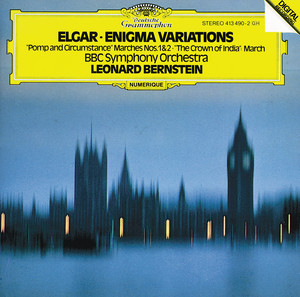 | Variations On An Original Theme, Op.36 "Enigma": 11. G.R.S. (Allegro di molto) | Edward Elgar, BBC Symphony Orchestra, Leonard Bernstein | D Major | 3 | 10B | 85 BPM | |
 | Grieg: The Last Spring, Op. 34, No. 2 | Edvard Grieg, San Francisco Symphony, Michael Tilson Thomas | G Major | 0 | 9B | 89 BPM | |
 | Songfest: IV. "To What You Said ..." | Leonard Bernstein, Clamma Dale, Nancy Williams, Rosalind Elias, Neil Rosenshein, Donald Gramm, John Reardon, National Symphony Orchestra Washington | B♭ Major | 0 | 6B | 109 BPM | |
 | The Planets, Op. 32: IV. Jupiter, the Bringer of Jollity | Gustav Holst, Los Angeles Philharmonic, Zubin Mehta | F Major | 4 | 7B | 89 BPM | |
| The Planets, Op. 32: I. Mars, the Bringer of War | Gustav Holst, Los Angeles Philharmonic, Zubin Mehta | F Major | 4 | 7B | 89 BPM | |
 | Samson et Dalila: Bacchanale | Camille Saint-Saëns, Slovak Radio Symphony Orchestra, Stephen Gunzenhauser | A Minor | 1 | 8A | 109 BPM | |
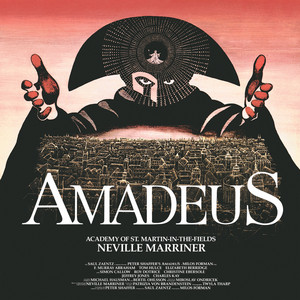 | Mass In C Minor, K. 427, Kyrie | Wolfgang Amadeus Mozart, Sir Neville Marriner, Academy of St. Martin in the Fields, Academy of St Martin in the Fields Chorus, Laszlo Heltay, Felicity Lott | E♭ Major | 1 | 5B | 173 BPM | |
 | Chaminade: Flute Concertino, Op. 107 | Cécile Chaminade, Emmanuel Pahud, François Leleux, Orchestre de chambre de Paris | D Major | 1 | 10B | 83 BPM | |
 | Nocturne | Alexander Borodin, Julian Lloyd Webber, Royal Philharmonic Orchestra, James Judd | D Minor | 1 | 7A | 69 BPM | |
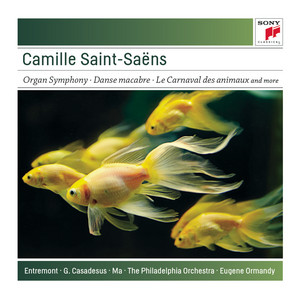 | Samson et Dalila, Op. 47: Bacchanale | Camille Saint-Saëns, Eugene Ormandy, Philadelphia Orchestra | D Minor | 3 | 7A | 134 BPM | |
 | Symphony No. 6 in B Minor, Op. 74 "Pathétique": II. Allegro con grazia | Pyotr Ilyich Tchaikovsky, Berliner Philharmoniker, Kirill Petrenko | D Major | 1 | 10B | 85 BPM | |
 | William Tell: Overture | Gioachino Rossini, Academy of St. Martin in the Fields, Sir Neville Marriner | E Major | 1 | 12B | 88 BPM | |
 | Symphony No. 41 in C Major, K. 551 "Jupiter": IV. Finale. Molto allegro | Wolfgang Amadeus Mozart, Wiener Philharmoniker, Karl Böhm | G Major | 2 | 9B | 141 BPM | |
 | 3 Dance Episodes from On the Town: No. 2, Lonely Town | Leonard Bernstein, Bournemouth Symphony Orchestra, Marin Alsop | D Minor | 2 | 7A | 105 BPM | |
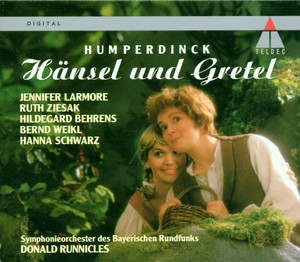 | Humperdinck : Hänsel und Gretel : Overture to Act 1 | Engelbert Humperdinck, Donald Runnicles, Bavarian Radio Symphony Orchestra | C Major | 0 | 8B | 92 BPM |
- ISRC
- USSM11605296
- Label
- L-M Records/RCA Records