- BPM
- 71
- Key
- D Minor
- Camelot
- 7A
Requiem, Op. 48: II. Kyrie by Gabriel Fauré, Harry Peeters, Netherlands Chamber Choir, Limburg Symphony Orchestra, Ed Spanjaard Song Details
"Requiem, Op. 48: II. Kyrie" by Gabriel Fauré, Harry Peeters, Netherlands Chamber Choir, Limburg Symphony Orchestra, Ed Spanjaard had its release date on March 1, 2005. With this song being around four minutes long, at 4:19, the duration of this song is pretty average compared to other songs. This track is safe for children and doesn't appear to contain any foul language, since the "Explicit" tag was not present in this track. The song is number 2 out of 14 in Fauré: Requiem by Gabriel Fauré, Netherlands Chamber Choir, Limburg Symphony Orchestra, Ed Spanjaard. Going off of the ISRC code of this track, we detected that the origin of this track is from Netherlands. Requiem, Op. 48: II. Kyrie is unknown right now. In our opinion, the overall tone is not very danceable and projects negative sounds, such as being sad, depressed, or angry.
BPM and Tempo
The tempo marking of Requiem, Op. 48: II. Kyrie by Gabriel Fauré, Harry Peeters, Netherlands Chamber Choir, Limburg Symphony Orchestra, Ed Spanjaard is Adagio (slowly with great expression), since this song has a tempo of 71 BPM. With that information, we can conclude that the song has a slow tempo. The time signature for this track is 4/4.
Music Key
This song is in the music key of D Minor. Because this track belongs in the D Minor key, the camelot key is 7A. So, the perfect camelot match for 7A would be either 7A or 6B. While, a low energy boost can consist of either 7B or 8A. For moderate energy boost, you would use 4A and a high energy boost can either be 9A or 2A. However, if you are looking for a low energy drop, finding a song with a camelot key of 6A would be a great choice. Where 10A would give you a moderate drop, and 5A or 12A would be a high energy drop. Lastly, 10B allows you to change the mood.
Want to find the BPM and music key for other songs? Check out our BPM and Key Finder page!
- Popularity
- 0%
- Loudness
- -26.069 dB
- Acousticness
- 97%
- Danceability
- 7%
- Energy
- 3%
- Instrumentalness
- 68%
- Liveness
- 8%
- Loudness
- 57%
- Speechiness
- 4%
- Valence
- 4%
Recommendations
| Track | Artist | Key | Energy | Camelot | BPM | ||
|---|---|---|---|---|---|---|---|
 | Sea Pictures, Op. 37: No. 1, Sea Slumber-Song | Edward Elgar, Alice Coote, Sir Mark Elder, Hallé | C Minor | 3 | 5A | 133 BPM | |
 | Requiem, Op. 48: III. Offertoire | Gabriel Fauré, Netherlands Chamber Choir, Limburg Symphony Orchestra, Ed Spanjaard | D Major | 0 | 10B | 77 BPM | |
 | Mass for Double Choir: Kyrie | Frank Martin, Mikaeli Chamber Choir, Anders Eby | A Minor | 0 | 8A | 88 BPM | |
| Cantique de J.Racine, Op. 11 | Gabriel Fauré, Netherlands Chamber Choir, Limburg Symphony Orchestra, Ed Spanjaard | D♭ Major | 0 | 3B | 78 BPM | |
 | The City | Majorstua Kammerkor & Tore Erik Mohn | E♭ Major | 2 | 5B | 88 BPM | |
 | The Dying Soldier (Trad.) | Nigel Short, Tenebrae | C Major | 1 | 8B | 77 BPM | |
 | Mass in B Minor, BWV 232: Sanctus (Chorus) | Johann Sebastian Bach, Christina Högman, Monica Groop, Howard Crook, Petteri Salomaa, Mikaeli Chamber Choir, Drottningholm Baroque Ensemble, Anders Eby | F Major | 3 | 7B | 97 BPM | |
 | Funeral Ikos | John Tavener, Tenebrae, Nigel Short | A♭ Major | 0 | 4B | 107 BPM | |
 | Vespers, Op. 37: Come, Let Us Worship | Sergei Rachmaninoff, Yuri Korinnyk, Mykhaylo Tyshchenko, Olga Borusene, National Choir Of The Ukraine "Dumka", Yevhen Savchuk | F Major | 0 | 7B | 111 BPM | |
 | Stabat Mater, FP 148: XII. Quando corpus | Francis Poulenc, Kathleen Battle, Boston Symphony Orchestra, Seiji Ozawa, Tanglewood Festival Chorus, John Oliver | A♭ Minor | 1 | 1A | 94 BPM | |
 | All-night Vigil, Op. 37: No. 3, Blessed Is the Man | Sergei Rachmaninoff, Latvijas Radio koris, Sigvards Kļava | F Major | 0 | 7B | 71 BPM | |
 | Flow, my tears | John Dowland, Stile Antico | B♭ Minor | 1 | 3A | 83 BPM | |
 | Albinoni / Giazotto: The Beatitudes (Adagio) | Remo Giazotto, Tomaso Albinoni, Edward Higginbottom, Choir of New College, Oxford, Capricorn | C Minor | 2 | 5A | 95 BPM | |
 | Rossini: Petite messe solennelle, Part 1: I. Kyrie - Kyrie eleison (Chorus) | Gioachino Rossini, Antonio Pappano, Orchestra dell'Accademia Nazionale di Santa Cecilia | E Major | 0 | 12B | 79 BPM | |
 | Requiem: X. Lacrymosa | Giuseppe Verdi, Sir Colin Davis, Stuart Neill, John Relyea, Christine Brewer, Karen Cargill, London Symphony Orchestra | B♭ Minor | 1 | 3A | 83 BPM | |
 | Calme des nuits, Op. 68, No. 1 | Camille Saint-Saëns, The Monteverdi Choir, John Eliot Gardiner | E Minor | 0 | 9A | 128 BPM | |
 | Passion selon St-Jean, 1ère partie: Trahison & arrestation (Saint Jean 18, 1-14): Choeur, BWV 245 Herr, unser herrscher, dessen ruhm, BWV 245 | Johann Sebastian Bach, Orchestre & Choeurs Paul Kuentz, Barbara Schlick, Ingeborg Most, Adrian Brand, Alexander Stevenson, Philip Langshaw, Peter Lika | F♯ Minor | 5 | 11A | 203 BPM | |
 | Fauré: Pavane, Op. 50 | Gabriel Fauré, New Philharmonia Orchestra/Sir David Willcocks/Gareth Morris, Gareth Morris, Sir David Willcocks, New Philharmonia Orchestra | F♯ Minor | 0 | 11A | 130 BPM | |
 | MAGNIFICAT: III. Quia fecit | Kim André Arnesen, Nidarosdomens jentekor, TrondheimSolistene, Anita Brevik, Lise Granden Berg, Magne H. Draagen, Øyvind Gimse | G Major | 2 | 9B | 120 BPM | |
 | Rückert Lieder: Ich bin der Welt abhanden gekommen | Gustav Mahler, Violeta Urmana, Wiener Philharmoniker, Pierre Boulez | F Major | 0 | 7B | 169 BPM | |
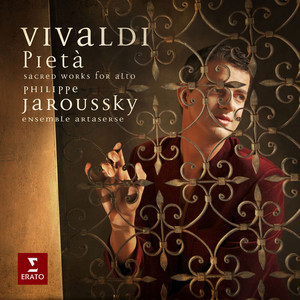 | Vivaldi: Stabat Mater in F Minor, RV 621: II. Cujus animam gementem | Antonio Vivaldi, Philippe Jaroussky, Ensemble Artaserse | B♭ Major | 0 | 6B | 76 BPM | |
 | Das Lied von der Erde: II. Der Einsame im Herbst | Gustav Mahler, Violeta Urmana, Wiener Philharmoniker, Pierre Boulez | B♭ Major | 0 | 6B | 134 BPM | |
 | Agnus Dei, Op. 11 | Samuel Barber, Ormond College Choir, Douglas Lawrence | D Major | 0 | 10B | 104 BPM | |
 | Concerto for Cello & Wind Band: II. Idylle | Friedrich Gulda, Nicolas Altstaedt, Alexander Joel, Deutsche Staatsphilharmonie Rheinland-Pfalz | B♭ Major | 0 | 6B | 80 BPM | |
| Fauré : Requiem Op.48 : VI Libera me | Gabriel Fauré, Edward Higginbottom, Capricorn, Tim Oldham | D Minor | 1 | 7A | 114 BPM |
- ISRC
- NLE420300302
- Label
- L-M Records/RCA Records