- BPM
- 110
- Key
- A Major
- Camelot
- 11B
Танец маленький лебедей by Pyotr Ilyich Tchaikovsky, Оркестр Золотого Света Song Details
Pyotr Ilyich Tchaikovsky, Оркестр Золотого Света's ' "Танец маленький лебедей" was released on its scheduled release date, February 7, 2000. The duration of This song is about two minutes long, specifically at 2:52. This song does not appear to have any foul language. Танец маленький лебедей's duration is considered a little bit shorter than the average duration of a typical track. There is only one song in 20 лучших классических мелодий, so we believe that "Танец маленький лебедей" is a single. In terms of popularity, Танец маленький лебедей is currently not that popular. The overall tone is very danceable, especially with its high energy, which produces more of a euphoric, cheerful, or happy vibe.
BPM and Tempo
The tempo marking of Танец маленький лебедей by Pyotr Ilyich Tchaikovsky, Оркестр Золотого Света is Moderato (at a moderate speed), since this song has a tempo of 110 BPM. With that information, we can conclude that the song has a moderate tempo. The time signature for this track is 4/4.
Music Key
This song has a musical key of A Major. This also means that this song has a camelot key of 11B. So, the perfect camelot match for 11B would be either 11B or 12A. While, 12B can give you a low energy boost. For moderate energy boost, you would use 8B and a high energy boost can either be 1B or 6B. Though, if you want a low energy drop, you should looking for songs with either a camelot key of 11A or 10B will give you a low energy drop, 2B would be a moderate one, and 9B or 4B would be a high energy drop. Lastly, 8A allows you to change the mood.
Want to find the BPM and music key for other songs? Check out our BPM and Key Finder page!
- Popularity
- 2%
- Loudness
- -10.186 dB
- Acousticness
- 11%
- Danceability
- 70%
- Energy
- 76%
- Instrumentalness
- 92%
- Liveness
- 6%
- Loudness
- 83%
- Speechiness
- 5%
- Valence
- 73%
Recommendations
| Track | Artist | Key | Energy | Camelot | BPM | ||
|---|---|---|---|---|---|---|---|
 | La Bayadere, Act II: 36. "Variations Nikiya; Snake, and Finale" | Evergreen Symphony Orchestra, Kevin Galiè | C Major | 2 | 8B | 135 BPM | |
 | Jazz Suite No. 2: IV. Waltz I | Dmitri Shostakovich, Royal Concertgebouw Orchestra, Riccardo Chailly | B♭ Major | 2 | 6B | 178 BPM | |
 | The Sleeping Beauty, Op. 66 : Valse | Pyotr Ilyich Tchaikovsky, Slovak State Philharmonic Orchestra, Kosice | B♭ Major | 2 | 6B | 100 BPM | |
 | An der schönen blauen Donau, Waltz, Op. 314 | Johann Strauss II, Berliner Philharmoniker, Herbert von Karajan | D Major | 0 | 10B | 95 BPM | |
 | Symphony No. 25 in G Minor, K. 183: I. Allegro con brio | Wolfgang Amadeus Mozart, Academy of St. Martin in the Fields, Sir Neville Marriner | G Minor | 2 | 6A | 80 BPM | |
 | Giselle, Act 1: Overture | Adolphe Adam, Tasmanian Symphony Orchestra, Nicolette Fraillon | E♭ Major | 1 | 5B | 88 BPM | |
 | Vocalise, Op. 34, No. 14 | Sergei Rachmaninoff, Berliner Philharmoniker, Lorin Maazel | E Minor | 1 | 9A | 76 BPM | |
 | Symphony No. 40 in G Minor, K. 550: I. Allegro molto | Wolfgang Amadeus Mozart, Capella Istropolitana, Barry Wordsworth | D Minor | 2 | 7A | 122 BPM | |
 | Violin Partita No. 2 in D Minor, BWV 1004: I. Allemande | Johann Sebastian Bach, Hilary Hahn | D Minor | 1 | 7A | 76 BPM | |
 | Peer Gynt Suite No.1 op. 46 Anitra's Dance (Tempo di Mazurka) | Academy of St. Martin in the Fields | E Minor | 0 | 9A | 168 BPM | |
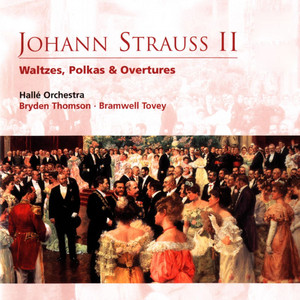 | On the Beautiful Blue Danube - Waltz Op. 314 | Johann Strauss II, Hallé, Bryden Thomson | D Major | 0 | 10B | 81 BPM | |
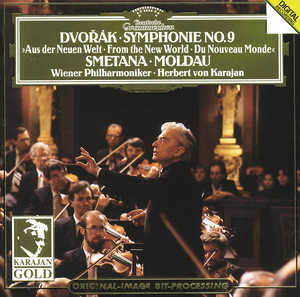 | Symphony No. 9 in E Minor, Op. 95, B. 178 "From the New World": IV. Allegro con fuoco | Antonín Dvořák, Wiener Philharmoniker, Herbert von Karajan | E Minor | 2 | 9A | 136 BPM | |
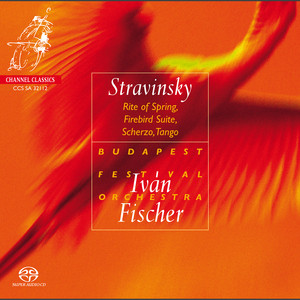 | L'oiseau de feu, K. 10. Suite 1919: V. Danse infernale du roi Kastchei | Igor Stravinsky, Budapest Festival Orchestra, Iván Fischer | C Major | 5 | 8B | 130 BPM | |
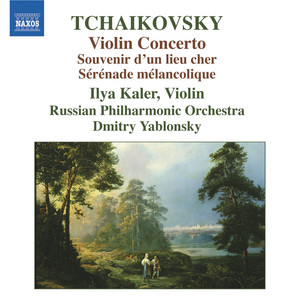 | Violin Concerto in D Major, Op. 35, TH 59: II. Canzonetta. Andante | Pyotr Ilyich Tchaikovsky, Ilya Kaler, Russian Philharmonic Orchestra, Dmitry Yablonsky | D♭ Minor | 6 | 12A | 160 BPM | |
 | The Sleeping Beauty, Op. 66/66a: Act 1, No. 8, Adagio – Pas d’Action - Arr. for Orchestra by Santtu-Matias Rouvali | Pyotr Ilyich Tchaikovsky, Philharmonia Orchestra, Santtu-Matias Rouvali | E♭ Major | 1 | 5B | 109 BPM | |
| Giselle, Act 1: No. 3 Giselle’s Entrance, Giselle and Albrecht first meet and are discovered by Hilarion | Adolphe Adam, Tasmanian Symphony Orchestra, Nicolette Fraillon | E♭ Major | 1 | 5B | 88 BPM | |
 | Brook Green Suite: II. Air | Gustav Holst, English Sinfonia, Howard Griffiths | E♭ Major | 0 | 5B | 128 BPM | |
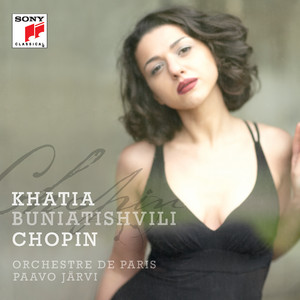 | Waltz in C-sharp minor, Op. 64 No. 2 | Frédéric Chopin, Khatia Buniatishvili | D♭ Minor | 0 | 12A | 96 BPM | |
 | Kaiser (Emperor), Op. 437 : Kaiser Walzer (Emperor Waltz), Op. 437 | Strauss Festival Orchestra, Johann Strauss II | C Major | 0 | 8B | 181 BPM | |
| Giselle, Act 2: No. 18 Giselle and Albrecht Pas de deux | Adolphe Adam, Tasmanian Symphony Orchestra, Nicolette Fraillon | A♭ Major | 1 | 4B | 129 BPM | |
 | Holberg Suite, Op. 40: II. Sarabande (Andante) | Edvard Grieg, Gothenburg Symphony Orchestra, Neeme Järvi | A Major | 1 | 11B | 87 BPM | |
 | Barber: Adagio for Strings | Samuel Barber, Sir Simon Rattle, Berliner Philharmoniker | B♭ Minor | 1 | 3A | 73 BPM | |
 | Jazz Suite No. 2: IV. Waltz 1 | Dmitri Shostakovich, Russian State Symphony Orchestra, Dmitry Yablonsky | B♭ Major | 2 | 6B | 109 BPM | |
 | Les Sylphides: 7. Valse | Frédéric Chopin, National Philharmonic Orchestra, Richard Bonynge | D♭ Minor | 1 | 12A | 120 BPM | |
 | The Planets, Op. 32: I. Mars, the Bringer of War | Gustav Holst, Berliner Philharmoniker, Herbert von Karajan | A♭ Major | 5 | 4B | 149 BPM |
- ISRC
- USA371409519
- Label
- L-M Records/RCA Records