- BPM
- 73
- Key
- B♭ Minor
- Camelot
- 3A
Barber: Adagio for Strings by Samuel Barber, Sir Simon Rattle, Berliner Philharmoniker Song Details
"Barber: Adagio for Strings" by Samuel Barber, Sir Simon Rattle, Berliner Philharmoniker had its release date on January 1, 2009. Since This song is still less than 10 minute long, it is still considered a pretty long duration song compared to the average song length. This song does not appear to be explicit due to the lack of the "E" tag. Because this song is the only song in Barber: Adagio for Strings and no other songs are present in the album, we classify this track as a single. Going off of the ISRC code of this track, we detected that the origin of this track is from United Kingdom. Barber: Adagio for Strings is average in popularity right now. In our opinion, the overall tone is not very danceable and projects negative sounds, such as being sad, depressed, or angry.
BPM and Tempo
The tempo marking of Barber: Adagio for Strings by Samuel Barber, Sir Simon Rattle, Berliner Philharmoniker is Adagio (slowly with great expression), since this song has a tempo of 73 BPM. With that information, we can conclude that the song has a slow tempo. The time signature for this track is 3/4.
Music Key
This song has a musical key of B♭ Minor. Because this track belongs in the B♭ Minor key, the camelot key is 3A. So, the perfect camelot match for 3A would be either 3A or 2B. While, a low energy boost can consist of either 3B or 4A. For moderate energy boost, you would use 12A and a high energy boost can either be 5A or 10A. However, if you are looking for a low energy drop, finding a song with a camelot key of 2A would be a great choice. Where 6A would give you a moderate drop, and 1A or 8A would be a high energy drop. Lastly, 6B allows you to change the mood.
Want to find the BPM and music key for other songs? Check out our BPM and Key Finder page!
- Popularity
- 49%
- Loudness
- -24.133 dB
- Acousticness
- 97%
- Danceability
- 6%
- Energy
- 7%
- Instrumentalness
- 86%
- Liveness
- 28%
- Loudness
- 60%
- Speechiness
- 5%
- Valence
- 3%
Recommendations
| Track | Artist | Key | Energy | Camelot | BPM | ||
|---|---|---|---|---|---|---|---|
 | Spring 2 - 2012 | Max Richter, Daniel Hope, Raphael Alpermann, Konzerthaus Kammerorchester Berlin, Andre de Ridder | D♭ Minor | 2 | 12A | 174 BPM | |
 | 3 Chorales, P. 167: No. 3, Andante (After J.S. Bach's BWV 645) | Ottorino Respighi, Seattle Symphony Orchestra, Gerard Schwarz | E♭ Major | 0 | 5B | 84 BPM | |
 | Widmung, Op. 25 No. 1 (Arr. Franz Liszt) | Robert Schumann, Martin James Bartlett | A♭ Major | 0 | 4B | 74 BPM | |
 | Zdes' khorosho ('How Fair This Spot'), Op. 21, No. 7 | Sergei Rachmaninoff, Pablo Ferrandez, Denis Kozhukhin | A Major | 0 | 11B | 87 BPM | |
 | Sure on This Shining Night, Op. 13 No. 3 (Arr. Parkin for Cello and Piano) | Samuel Barber, Sheku Kanneh-Mason, Isata Kanneh-Mason | B♭ Major | 0 | 6B | 113 BPM | |
 | Piano Concerto in G Major, M. 83: II. Adagio assai | Maurice Ravel, Krystian Zimerman, Cleveland Orchestra, Pierre Boulez | E Major | 0 | 12B | 74 BPM | |
 | Big My Secret | Michael Nyman | D Major | 1 | 10B | 77 BPM | |
 | On The Nature Of Daylight - Orchestra Version | Max Richter, Baltic Sea Philharmonic, Kristjan Järvi | D♭ Major | 1 | 3B | 69 BPM | |
 | Piano Concerto No. 2 in F Major, Op. 102: II. Andante | Dmitri Shostakovich, Boris Giltburg, Royal Liverpool Philharmonic Orchestra, Vasily Petrenko | C Minor | 0 | 5A | 80 BPM | |
 | Kol Nidrei, Op. 47 | Max Bruch, Jan Vogler, Helmut Branny | D Major | 1 | 10B | 136 BPM | |
 | II. Adagio cantabile from Piano Sonata No. 8 in C minor, Op. 13 "Pathetique" - Instrumental | Ludwig van Beethoven, Murray Perahia | A♭ Major | 0 | 4B | 62 BPM | |
 | Polovetsian Dances from Prince Igor: Introduzione | Alexander Borodin, George Szell, The Cleveland Orchestra | A Major | 1 | 11B | 83 BPM | |
 | Symphony No. 7 in A Major, Op. 92: II. Allegretto | Ludwig van Beethoven, Berliner Philharmoniker, Herbert von Karajan | E Minor | 0 | 9A | 77 BPM | |
 | Sechs Klavierstücke, Op. 118: II. Intermezzo in A Major | Johannes Brahms, Arcadi Volodos | A Major | 0 | 11B | 69 BPM | |
 | Young Birches, Op. 128, No. 2 | Amy Beach, Joanne Polk | F♯ Minor | 1 | 11A | 170 BPM | |
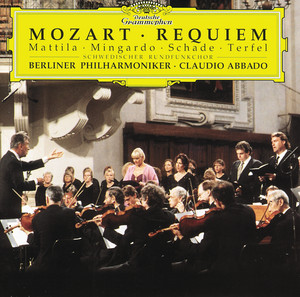 | Requiem, K. 626 (Ed. Beyer/Levin): IIIc. Rex tremendae - Live | Wolfgang Amadeus Mozart, Berliner Philharmoniker, Claudio Abbado, Swedish Radio Choir, Kay Johannsen | G Minor | 3 | 6A | 108 BPM | |
 | Pärt: Spiegel im Spiegel | Arvo Pärt, Renaud Capuçon, Guillaume Bellom | F Major | 0 | 7B | 85 BPM | |
 | The Lamb | John Tavener, 12 Ensemble | E Minor | 0 | 9A | 72 BPM | |
 | Adagio for Strings, Op. 11 - Live | Samuel Barber, Keller Quartett | B♭ Minor | 1 | 3A | 93 BPM | |
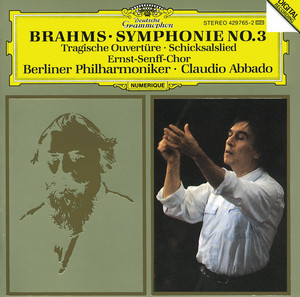 | Symphony No. 3 in F Major, Op. 90: III. Poco allegretto | Johannes Brahms, Berliner Philharmoniker, Claudio Abbado | C Minor | 0 | 5A | 101 BPM | |
![Spartacus, Act III: Adagio of Spartacus and Phrygia (arr. Y. Grigorovich) [1968 Bolshoi Version] by Aram Khachaturian, RIAS Kammerchor, Deutsches Symphonie-Orchester Berlin, Michail Jurowski](https://i.scdn.co/image/ab67616d00001e02c21d253eed4ccdd547b4b94d) | Spartacus, Act III: Adagio of Spartacus and Phrygia (arr. Y. Grigorovich) [1968 Bolshoi Version] | Aram Khachaturian, RIAS Kammerchor, Deutsches Symphonie-Orchester Berlin, Michail Jurowski | E Major | 2 | 12B | 123 BPM | |
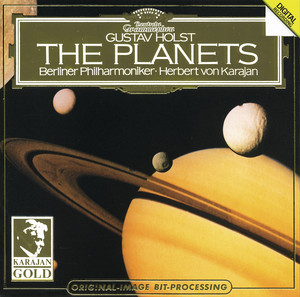 | The Planets, Op. 32: II. Venus, the Bringer of Peace | Gustav Holst, Berliner Philharmoniker, Herbert von Karajan | F Minor | 0 | 4A | 85 BPM | |
 | Prélude in C-Sharp Minor, Op. 3, No. 2 | Sergei Rachmaninoff | F♯ Minor | 1 | 11A | 115 BPM | |
 | Lieder ohne Worte, Op. 19b: Lieder ohne Worte (Song without Words) No. 6 in G Minor, Op. 19, No. 6, "Venezianisches Gondellied" [Venetian Gondola Song] | Felix Mendelssohn, Péter Nagy | G Major | 0 | 9B | 101 BPM | |
 | Swan Lake Suite, Op. 20a: I. Scene "Swan Theme". Moderato | Pyotr Ilyich Tchaikovsky, Berliner Philharmoniker, Mstislav Rostropovich | E Minor | 2 | 9A | 74 BPM |
- ISRC
- GBAYC0902894
- Label
- L-M Records/RCA Records