- BPM
- 78
- Key
- G Major
- Camelot
- 9B
Noye's Fludde, Op. 59: "The Spacious Firmament On High" by Benjamin Britten, David Pinto, Darian Angadi, Stephen Alexander, Owen Brannigan, Sheila Rex, Caroline Clack, Marie-Therese Pinto, Eileen O'Donovan, Patricia Garrod, Margaret Hawes, Kathleen Petch, Gillian Saunders, Trevor Anthony, Chorus Of Animals, The English Opera Group Orchestra, Merlin Channon, Norman Del Mar Song Details
"Noye's Fludde, Op. 59: "The Spacious Firmament On High"" by Benjamin Britten, David Pinto, Darian Angadi, Stephen Alexander, Owen Brannigan, Sheila Rex, Caroline Clack, Marie-Therese Pinto, Eileen O'Donovan, Patricia Garrod, Margaret Hawes, Kathleen Petch, Gillian Saunders, Trevor Anthony, Chorus Of Animals, The English Opera Group Orchestra, Merlin Channon, Norman Del Mar had its release date on January 1, 1993. Since This song is still less than 10 minute long, it is still considered a pretty long duration song compared to the average song length. This song does not appear to be explicit due to the lack of the "E" tag. The song is number 11 out of 15 in Britten: Noye's Fludde; The Golden Vanity by Benjamin Britten, Owen Brannigan, Sheila Rex, The English Opera Group Orchestra, Wandsworth School Boys Choir, Russell Burgess, Norman Del Mar. Going off of the ISRC code of this track, we detected that the origin of this track is from United Kingdom. Noye's Fludde, Op. 59: "The Spacious Firmament On High" is not that popular right now. In our opinion, the overall tone is not very danceable and projects negative sounds, such as being sad, depressed, or angry.
BPM and Tempo
The tempo marking of Noye's Fludde, Op. 59: "The Spacious Firmament On High" by Benjamin Britten, David Pinto, Darian Angadi, Stephen Alexander, Owen Brannigan, Sheila Rex, Caroline Clack, Marie-Therese Pinto, Eileen O'Donovan, Patricia Garrod, Margaret Hawes, Kathleen Petch, Gillian Saunders, Trevor Anthony, Chorus Of Animals, The English Opera Group Orchestra, Merlin Channon, Norman Del Mar is Andante (at a walking pace), since this song has a tempo of 78 BPM. With that information, we can conclude that the song has a slow tempo. The time signature for this track is 4/4.
Music Key
G Major is the music key of this track. This also means that this song has a camelot key of 9B. So, the perfect camelot match for 9B would be either 9B or 10A. While, 10B can give you a low energy boost. For moderate energy boost, you would use 6B and a high energy boost can either be 11B or 4B. Though, if you want a low energy drop, you should looking for songs with either a camelot key of 9A or 8B will give you a low energy drop, 12B would be a moderate one, and 7B or 2B would be a high energy drop. Lastly, 6A allows you to change the mood.
Want to find the BPM and music key for other songs? Check out our BPM and Key Finder page!
- Popularity
- 12%
- Loudness
- -15.779 dB
- Acousticness
- 83%
- Danceability
- 16%
- Energy
- 30%
- Instrumentalness
- 0%
- Liveness
- 33%
- Loudness
- 74%
- Speechiness
- 4%
- Valence
- 15%
Recommendations
| Track | Artist | Key | Energy | Camelot | BPM | ||
|---|---|---|---|---|---|---|---|
 | Kindertotenlieder (Rückert) (1999 Digital Remaster): I: Nun will die Sonn' so hell aufgeh'n | Gustav Mahler, Dame Janet Baker, Hallé, Sir John Barbirolli | G Minor | 0 | 6A | 88 BPM | |
 | Lucy, Charlotte And Miss Lavish See The City | Richard Robbins, Richard Robbins And Orchestra, Orchestra | F Major | 1 | 7B | 84 BPM | |
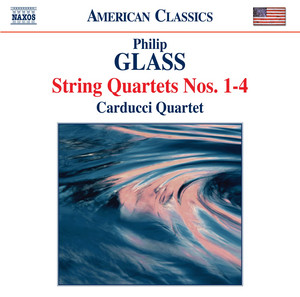 | String Quartet No. 2, "Company": III. — | Philip Glass, Carducci String Quartet | E Minor | 0 | 9A | 168 BPM | |
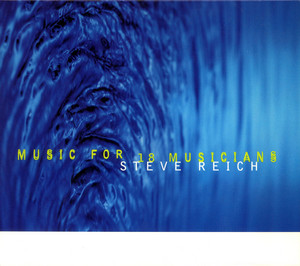 | Music for 18 Musicians: Pulses II | Steve Reich | F♯ Minor | 5 | 11A | 103 BPM | |
 | Requiem, Op. 9: II. Kyrie eléison | Maurice Duruflé, Maîtrise de Saint-Christophe de Javel, Yves Castagnet, Henri Chalet | D Major | 0 | 10B | 67 BPM | |
 | Lux aeterna | György Ligeti, Schola Heidelberg, Walter Nußbaum | E♭ Major | 0 | 5B | 79 BPM | |
 | VII. Finale | Igor Stravinsky, Brussels Philharmonic, Alexander Rahbari | D♭ Minor | 3 | 12A | 81 BPM | |
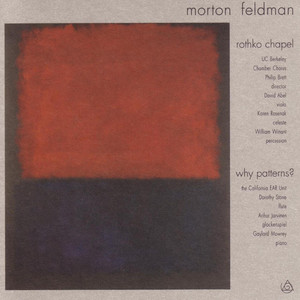 | Rothko Chapel 4 | Morton Feldman | A Minor | 0 | 8A | 82 BPM | |
 | Scrapping and Yelling | Mark Mothersbaugh | F♯ Major | 2 | 2B | 89 BPM | |
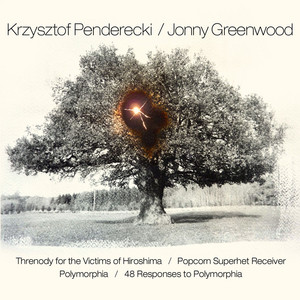 | Greenwood: Popcorn Superhet Receiver:, Pt. 1 | Jonny Greenwood, Krzysztof Penderecki, Marek Mos, AUKSO Orchestra | G Major | 1 | 9B | 86 BPM | |
 | 1937: Saint Sebastian | Philip Glass, Kronos Quartet, Michael Riesman | D Minor | 0 | 7A | 93 BPM | |
 | Rejoice in the Lamb, Op. 30: For I will consider my Cat Jeoffrey | Benjamin Britten, Benedict Giles, Malcolm Green, Simon Wall, Thomas Williams, Iain Farrington, Choir of St. John's College, Cambridge, Christopher Robinson | D♭ Major | 3 | 3B | 124 BPM | |
 | Serenade - Tchaikovsky: Serenade in C major for String Orchestra, Op. 48; Valse: Moderato. Tempo di Valse | Pyotr Ilyich Tchaikovsky, NEW YORK CITY BALLET ORCHESTRA/ROBERT IRVING, CONDUCTOR | D Major | 1 | 10B | 176 BPM | |
 | Brahms: Ein deutsches Requiem, Op. 45: I. Selig sind die da Leid tragen | Johannes Brahms, Sir Simon Rattle, Berliner Philharmoniker, Rundfunkchor Berlin | G Major | 1 | 9B | 132 BPM | |
 | Shostakovich: Lady Macbeth of the Mtsensk District, Op. 29, Act 1 Scene 1: "Akh, nye spitsa bol'she, Poprobuyu" (Katerina) | Dmitri Shostakovich, Mstislav Rostropovich, London Philharmonic Orchestra | B♭ Minor | 0 | 3A | 112 BPM | |
 | Akhnaten: Act III, Scene 3: The Ruins | Philip Glass, Dennis Russell Davies, David Warrilow, Stuttgart State Opera Orchestra, Chor der Staatsoper Stuttgart | F Major | 2 | 7B | 80 BPM | |
 | Os justi | Anton Bruckner, VOCES8 | C Major | 0 | 8B | 138 BPM | |
| In The Piazza Signoria | Richard Robbins, Richard Robbins And Orchestra, Orchestra | A Minor | 0 | 8A | 177 BPM | |
| Mahler: Rückert-Lieder: No. 4, Ich bin der Welt abhanden gekommen | Gustav Mahler, Janet Baker, Hallé, Sir John Barbirolli | F Major | 0 | 7B | 66 BPM | |
 | Monsoon | Thrya | E Major | 1 | 12B | 77 BPM | |
 | Martynov: "Come in!", Movement VI | Vladimir Martynov, Gidon Kremer | A Major | 0 | 11B | 172 BPM | |
 | Jūra, MKČ 102: I. Exposition, Main Theme | Mikalojus Konstantinas Čiurlionis, Lithuanian National Symphony Orchestra, Mirga Gražinytė-Tyla | E Major | 1 | 12B | 88 BPM | |
 | Quiet City | Aaron Copland, Paula Engerer, Scott Moore, Nashville Chamber Orchestra, Paul Gambill | F Major | 0 | 7B | 72 BPM | |
 | War Requiem, Op. 66 / Dies irae: IIa. Dies irae | Benjamin Britten, London Symphony Chorus, The Bach Choir, London Symphony Orchestra | G Major | 1 | 9B | 81 BPM | |
| Mahler: Kindertotenlieder: No. 4, Oft denk' ich, sie sind nur ausgegangen | Gustav Mahler, Dame Janet Baker, Hallé, Sir John Barbirolli | B♭ Minor | 1 | 3A | 74 BPM |
- ISRC
- GBF076140811
- Label
- L-M Records/RCA Records