- BPM
- 69
- Key
- D♭ Major
- Camelot
- 3B
Die Walküre / Erster Aufzug: "Du bist der Lenz" by Richard Wagner, Régine Crespin, James King, Wiener Philharmoniker, Sir Georg Solti Song Details
"Die Walküre / Erster Aufzug: "Du bist der Lenz"" by Richard Wagner, Régine Crespin, James King, Wiener Philharmoniker, Sir Georg Solti had its release date on January 1, 2012. Since This song is still less than 10 minute long, it is still considered a pretty long duration song compared to the average song length. This song does not appear to be explicit due to the lack of the "E" tag. There are a total of 414 in the song's album "Solti - Wagner - The Operas". In this album, this song's track order is #11. Die Walküre / Erster Aufzug: "Du bist der Lenz" is not that popular right now. In our opinion, the overall tone is not very danceable and projects negative sounds, such as being sad, depressed, or angry.
BPM and Tempo
With Die Walküre / Erster Aufzug: "Du bist der Lenz" by Richard Wagner, Régine Crespin, James King, Wiener Philharmoniker, Sir Georg Solti having a BPM of 69 with a half-time of 34 BPM and a double-time of 138 BPM, we would consider this track to have a Adagio (slowly with great expression) tempo marking. Because of this, we believe that the song has an overall slow tempo. The time signature for this track is 3/4.
Music Key
This song has a musical key of D♭ Major. Or for those who are familiar with the camelot wheel, this song has a camelot key of 3B. So, the perfect camelot match for 3B would be either 3B or 4A. While, 4B can give you a low energy boost. For moderate energy boost, you would use 12B and a high energy boost can either be 5B or 10B. Though, if you want a low energy drop, you should looking for songs with either a camelot key of 3A or 2B will give you a low energy drop, 6B would be a moderate one, and 1B or 8B would be a high energy drop. Lastly, 12A allows you to change the mood.
Want to find the BPM and music key for other songs? Check out our BPM and Key Finder page!
- Popularity
- 4%
- Loudness
- -17.491 dB
- Acousticness
- 98%
- Danceability
- 19%
- Energy
- 18%
- Instrumentalness
- 0%
- Liveness
- 59%
- Loudness
- 71%
- Speechiness
- 4%
- Valence
- 6%
Recommendations
| Track | Artist | Key | Energy | Camelot | BPM | ||
|---|---|---|---|---|---|---|---|
 | Symphony No. 3 in D Minor, Part II: IV. Sehr langsam - Misterioso | Gustav Mahler, Leonard Bernstein, New York Philharmonic | A Major | 0 | 11B | 82 BPM | |
 | Orchestervorspiel | Berliner Philharmoniker, Chor der Deutschen Oper Berlin | A Major | 2 | 11B | 119 BPM | |
 | Symphony No. 5 In C Sharp Minor: 1. Trauermarsch (In gemessenem Schritt. Streng. Wie ein Kondukt - Plötzlich schneller. Leidenschaftlich. Wild - Tempo I) | Gustav Mahler, Gyeonggi Philharmonic Orchestra, Shi-Yeon Sung | D♭ Minor | 1 | 12A | 165 BPM | |
 | Wagner: Tristan und Isolde, Act 3: "Mild und leise wie er lächelt" (Isolde) | Richard Wagner, Daniel Barenboim, Berliner Philharmoniker, Waltraud Meier | G Minor | 2 | 6A | 91 BPM | |
 | Die Zauberflöte, K. 620: Overture | Wolfgang Amadeus Mozart, Staatskapelle Dresden, Sir Colin Davis | E♭ Major | 1 | 5B | 155 BPM | |
 | Verdi: Messa da Requiem: VIII. Rex tremendæ | Giuseppe Verdi, Claudio Abbado, Angela Gheorghiu, Daniela Barcellona, Eric Ericson Chamber Choir, Julian Konstantinov, Orfeon Donostiarra, Roberto Alagna, Swedish Radio Choir, Berliner Philharmoniker | C Minor | 3 | 5A | 82 BPM | |
| Wagner: Tristan und Isolde, Act 2: "So starben wir, um ungetrennt" (Isolde, Tristan, Brangäne) | Richard Wagner, Daniel Barenboim, Berliner Philharmoniker, Marjana Lipovsek, Siegfried Jerusalem, Waltraud Meier | D Major | 0 | 10B | 101 BPM | |
 | Vier letzte Lieder: 4. Im Abendrot | Richard Strauss, Renée Fleming, Munich Philharmonic Orchestra, Christian Thielemann | D Major | 1 | 10B | 117 BPM | |
 | Mozart: Die Zauberflöte, K. 620: Overture | Wolfgang Amadeus Mozart, Wolfgang Sawallisch, Bayerisches Staatsorchester | E♭ Major | 1 | 5B | 80 BPM | |
 | Symphony No. 9 in E Minor, Op. 95 "From the New World": IV. Allegro con fuoco | Antonín Dvořák, Ferenc Fricsay, Berliner Philharmoniker | E Minor | 2 | 9A | 133 BPM | |
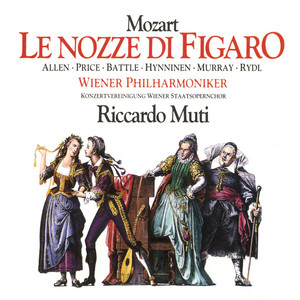 | Mozart: Le nozze di Figaro, K. 492, Act 2: "Voi, che sapete che cosa è amor" (Cherubino) | Wolfgang Amadeus Mozart, Riccardo Muti, Ann Murray, Wiener Philharmoniker | B♭ Major | 1 | 6B | 111 BPM | |
 | Rusalka, Op. 114 / Act 3: Líbej mne, líbej, mír mi prej | Antonín Dvořák, Ben Heppner, Renée Fleming, Franz Hawlata, Czech Philharmonic, Sir Charles Mackerras | D♭ Major | 1 | 3B | 62 BPM | |
 | Symphony No. 2 In C Minor - "Resurrection" / 1st Movement - Allegro maestoso (Totenfeier): Im Tempo nachgeben | Gustav Mahler, Wiener Philharmoniker, Gilbert Kaplan | B Major | 1 | 1B | 152 BPM | |
 | La Gioconda / Act 1: Preludio | Amilcare Ponchielli, National Philharmonic Orchestra, Bruno Bartoletti | F Major | 0 | 7B | 133 BPM | |
| Verdi: Messa da Requiem: XI. Confutatis | Giuseppe Verdi, Claudio Abbado, Eric Ericson Chamber Choir, Julian Konstantinov, Orfeon Donostiarra, Swedish Radio Choir, Berliner Philharmoniker | B Major | 1 | 1B | 76 BPM | |
 | Symphony No. 3 In C Minor, Op. 78 "Organ Symphony": 1. Adagio - Allegro moderato - Poco adagio | Camille Saint-Saëns, Simon Preston, Berliner Philharmoniker, James Levine | A♭ Major | 1 | 4B | 118 BPM | |
 | Gianni Schicchi: "O mio babbino caro" | Giacomo Puccini, Mirella Freni, Orchestra del Maggio Musicale Fiorentino, Bruno Bartoletti | A♭ Major | 1 | 4B | 171 BPM | |
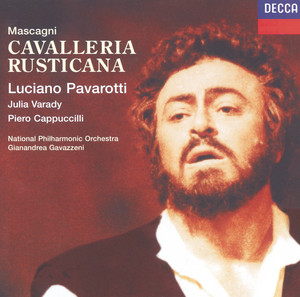 | Cavalleria rusticana: Preludio | Pietro Mascagni, National Philharmonic Orchestra, Gianandrea Gavazzeni | F Major | 2 | 7B | 88 BPM | |
 | Symphony No. 4 in B-Flat Major, Op. 60: I. Adagio - Allegro vivace (Live) | Ludwig van Beethoven, Bavarian State Orchestra, Carlos Kleiber | F Major | 1 | 7B | 74 BPM | |
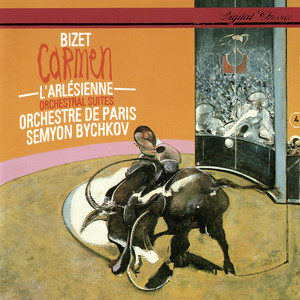 | L'Arlésienne Suite No. 1, WD 40: 4. Carillon | Georges Bizet, Orchestre de Paris, Semyon Bychkov | E Major | 0 | 12B | 115 BPM | |
 | Symphony No. 1 in D Major: 2. Kräftig bewegt - Live | Gustav Mahler, Berliner Philharmoniker, Claudio Abbado | A Major | 1 | 11B | 96 BPM | |
 | Die lustigen Weiber von Windsor: Overture | Otto Nicolai, Wiener Philharmoniker, Christian Thielemann | F Major | 2 | 7B | 146 BPM | |
 | Symphony No. 7 in A Major, Op. 92: IV. Allegro con brio | Ludwig van Beethoven, Wiener Philharmoniker, Carlos Kleiber | A Major | 3 | 11B | 75 BPM | |
 | Berlioz: Harold en Italie, Op. 16, H. 68: III. Allegro assai - Allegretto (Sérénade d'un montagnard des Abruzzes à sa maîtresse) | Hector Berlioz, Leonard Bernstein, Orchestre National De France | C Major | 1 | 8B | 85 BPM | |
| Symphony No.3 In C Minor, Op.78 "Organ Symphony": 1b. Poco adagio | Camille Saint-Saëns, Simon Preston, Berliner Philharmoniker, James Levine | D♭ Major | 0 | 3B | 80 BPM |
- ISRC
- This song does not have an ISRC.
- Label
- L-M Records/RCA Records