- BPM
- 67
- Key
- E♭ Major
- Camelot
- 5B
Der Bajazzo: Jetzt spielen by Ruggero Leoncavallo, Rudolf Schock, Napoli MandolinOrchestra, Wilhelm Schüchter Song Details
"Der Bajazzo: Jetzt spielen" by Ruggero Leoncavallo, Rudolf Schock, Napoli MandolinOrchestra, Wilhelm Schüchter had its release date on 2008. With this song being around four minutes long, at 3:57, the duration of this song is pretty average compared to other songs. This track is safe for children and doesn't appear to contain any foul language, since the "Explicit" tag was not present in this track. The song is number 3 out of 20 in Die schönsten Opernarien by Rudolf Schock, Tschuschke, Hans, Napoli MandolinOrchestra. Going off of the ISRC code of this track, we detected that the origin of this track is from Germany. Der Bajazzo: Jetzt spielen is unknown right now. In our opinion, the overall tone is not very danceable and projects negative sounds, such as being sad, depressed, or angry.
BPM and Tempo
The tempo marking of Der Bajazzo: Jetzt spielen by Ruggero Leoncavallo, Rudolf Schock, Napoli MandolinOrchestra, Wilhelm Schüchter is Adagio (slowly with great expression), since this song has a tempo of 67 BPM. With that information, we can conclude that the song has a slow tempo. The time signature for this track is 3/4.
Music Key
This song has a musical key of E♭ Major. This also means that this song has a camelot key of 5B. So, the perfect camelot match for 5B would be either 5B or 6A. While, 6B can give you a low energy boost. For moderate energy boost, you would use 2B and a high energy boost can either be 7B or 12B. Though, if you want a low energy drop, you should looking for songs with either a camelot key of 5A or 4B will give you a low energy drop, 8B would be a moderate one, and 3B or 10B would be a high energy drop. Lastly, 2A allows you to change the mood.
Want to find the BPM and music key for other songs? Check out our BPM and Key Finder page!
- Popularity
- 0%
- Loudness
- -15.944 dB
- Acousticness
- 99%
- Danceability
- 19%
- Energy
- 14%
- Instrumentalness
- 4%
- Liveness
- 15%
- Loudness
- 73%
- Speechiness
- 5%
- Valence
- 18%
Recommendations
| Track | Artist | Key | Energy | Camelot | BPM | ||
|---|---|---|---|---|---|---|---|
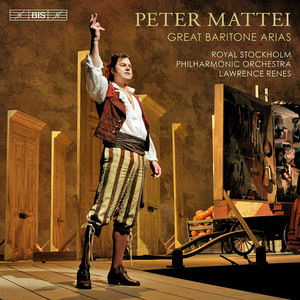 | Eugene Onegin, Op. 24, TH 5, Eugene Onegin, Op. 24, Act II: Uzhel ya zasluzhil ot vas nasmyeshku etu? | Pyotr Ilyich Tchaikovsky, Peter Mattei, Royal Stockholm Philharmonic Orchestra, Lawrence Renes | A Minor | 1 | 8A | 71 BPM | |
 | Don Giovanni, ossia Il dissoluto punito, K.527 / Act 1: "Là ci darem la mano" | Wolfgang Amadeus Mozart, Ildebrando D'Arcangelo, Mojca Erdmann, Mahler Chamber Orchestra, Yannick Nézet-Séguin | B Minor | 9 | 10A | 180 BPM | |
 | La Bohème: Mi chiamano Mimi | Mirella Freni | D Major | 2 | 10B | 74 BPM | |
 | I Pagliacci (From "For the First Time"): Vesti la giubba (From "For the First Time") | Ruggero Leoncavallo, Mario Lanza, Constantine Callinicos | A Minor | 3 | 8A | 84 BPM | |
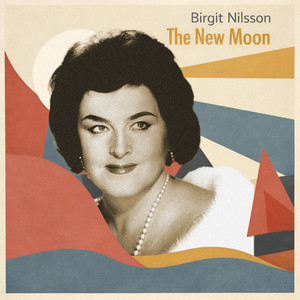 | Tosca, Act 2: "Vissi d'arte" | Birgit Nilsson | F♯ Major | 1 | 2B | 137 BPM | |
 | Tosca | Renata Tebaldi, Chorus and Orchestra of the Accademia di Santa Cecilia, Rome, Francesco Molinari-Pradelli | D Major | 2 | 10B | 112 BPM | |
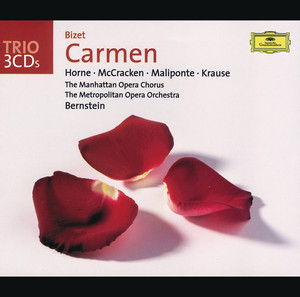 | Carmen, Act I: Habanera. L'amour est un oiseau rebelle | Georges Bizet, Marilyn Horne, The Manhattan Opera Chorus, John Mauceri, Metropolitan Opera Orchestra, Leonard Bernstein | E Minor | 2 | 9A | 107 BPM | |
 | Tagliaferri: Passione | Luciano Pavarotti, Giancarlo Chiaramello, Orchestra del Teatro Comunale di Bologna | A Minor | 3 | 8A | 126 BPM | |
 | Si, Mi Chiamano Mimì - La Boheme Atto I | Renata Tebaldi | F♯ Major | 1 | 2B | 137 BPM | |
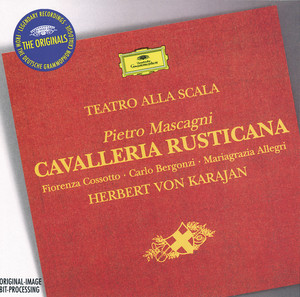 | Cavalleria rusticana: "O lola ch'ai di latti la cammisa" (Siciliana) | Pietro Mascagni, Carlo Bergonzi, Orchestra Del Teatro Alla Scala, Milano, Herbert von Karajan | F Minor | 0 | 4A | 167 BPM | |
 | I Puritani | Dame Joan Sutherland, Orchestra of the Royal Opera House & Covent Garden, Francesco Molinari-Pradelli | D Major | 2 | 10B | 112 BPM | |
 | Rigoletto / Act 2: Cortigiani, vil razza dannata (Rigoletto) | Giuseppe Verdi, Vladimir Chernov, Metropolitan Opera Orchestra, James Levine | D♭ Major | 2 | 3B | 86 BPM | |
 | Le nozze di Figaro, K. 492, Act I: No. 10, Non più andrai | Wolfgang Amadeus Mozart, Bryn Terfel, Scottish Chamber Orchestra, Sir Charles Mackerras | G Major | 2 | 9B | 134 BPM | |
 | Rigoletto : La donna è mobile | Orchestra Italiana | F♯ Major | 1 | 2B | 137 BPM | |
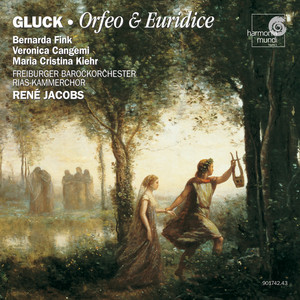 | Orfeo ed Euridice: "Act III, Scene 1, Orfeo: Che farò senza Euridice? " | Christoph Willibald Gluck, René Jacobs, Freiburger Barockorchester, RIAS Kammerchor | G Major | 1 | 9B | 71 BPM | |
 | Pagliacci, Act I: "Recitar! Vesti la giubba" (Canio) | Ruggero Leoncavallo, Orchestra dell'Accademia Nazionale di Santa Cecilia, Francesco Molinari-Prandelli, Mario del Monaco | E Major | 2 | 12B | 89 BPM | |
 | Tosca, S. 69, Tosca, Act I: Tre sbirri, una carrozza, "Te Deum" | Giacomo Puccini, Dmitri Hvorostovsky, Russia Spiritual Revival Choir, Philharmonia of Russia, Constantine Orbelian | C Minor | 5 | 5A | 73 BPM | |
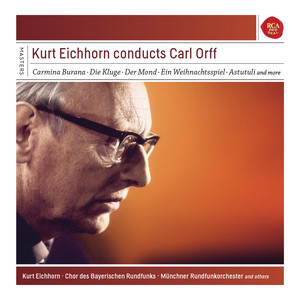 | Carmina Burana: In trutina | Carl Orff, Lucia Popp, Kurt Eichhorn | E♭ Minor | 1 | 2A | 62 BPM | |
 | Cavalleria rusticana: "Voi lo sapete, o mamma" | Pietro Mascagni, Elina Garanca, Orquestra de la Comunitat Valenciana, Roberto Abbado | E Minor | 2 | 9A | 168 BPM | |
 | Fedora: Amor ti vieta | Umberto Giordano, Jonathan Tetelman, Orquesta Filarmónica de Gran Canaria, Karel Mark Chichon | A Major | 1 | 11B | 83 BPM | |
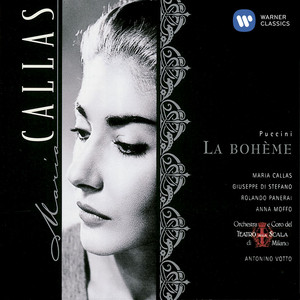 | Sono andati? (Mimì/Rodolfo) - 1997 Remastered Version | Giacomo Puccini, Maria Callas, Giuseppe Di Stefano, Orchestra Del Teatro Alla Scala, Milano, Antonino Votto, Orchestra Del Teatro Alla Scala Di Milan | A♭ Major | 0 | 4B | 173 BPM | |
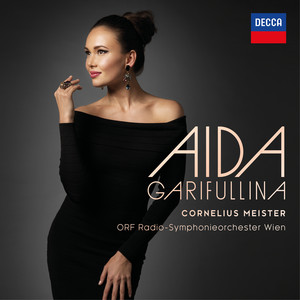 | Roméo et Juliette, CG 9 / Act 1: "Ah, je veux vivre dans ce rève" | Charles Gounod, Aida Garifullina, Vienna Radio Symphony Orchestra, Cornelius Meister | C Major | 3 | 8B | 77 BPM | |
 | Martha: M´apparì, tutt´amor | Carlo Bergonzi, Orchestra Sinfonica e Coro di Torino della RAI, Massimo Pradella | F Major | 2 | 7B | 68 BPM | |
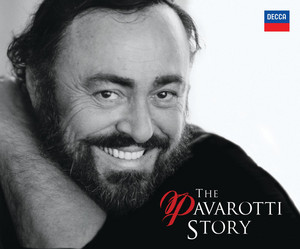 | Tosca / Act 3: "E lucevan le stelle" | Giacomo Puccini, Luciano Pavarotti, Orchestra of the Royal Opera House, Covent Garden, Sir Edward Downes | B Minor | 1 | 10A | 90 BPM | |
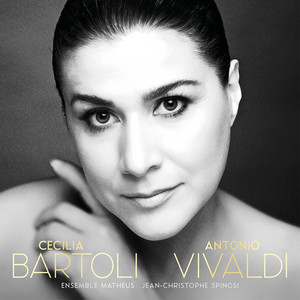 | Orlando furioso, RV 728 / Act 2: "Ah fuggi rapido" | Antonio Vivaldi, Cecilia Bartoli, Ensemble Matheus, Jean-Christophe Spinosi | C Major | 5 | 8B | 126 BPM |
- ISRC
- DEAD60805803
- Label
- L-M Records/RCA Records