- BPM
- 75
- Key
- C Minor
- Camelot
- 5A
Variations On An Original Theme (enigma), Op. 36 by Edward Elgar, London Symphony Orchestra, Eduardo Mata Song Details
Edward Elgar, London Symphony Orchestra, Eduardo Mata's 'Variations On An Original Theme (enigma), Op. 36' had a release date set for October 13, 2009. The duration of This song is about two minutes long, specifically at 2:08. This song does not appear to have any foul language. Variations On An Original Theme (enigma), Op. 36's duration is considered a little bit shorter than the average duration of a typical track. The song is number 6 out of 17 in Elgar: Enigma Variations; In The South; Introduction & Allegro For Strings by Edward Elgar, Eduardo Mata, Yehudi Menuhin, Barry Wordsworth, London Symphony Orchestra, Royal Philharmonic Orchestra. Going off of the ISRC code of this track, we detected that the origin of this track is from United States. Variations On An Original Theme (enigma), Op. 36 is not that popular right now. In our opinion, the overall tone is not very danceable and projects negative sounds, such as being sad, depressed, or angry.
BPM and Tempo
The tempo marking of Variations On An Original Theme (enigma), Op. 36 by Edward Elgar, London Symphony Orchestra, Eduardo Mata is Adagio (slowly with great expression), since this song has a tempo of 75 BPM. With that information, we can conclude that the song has a slow tempo. The time signature for this track is 3/4.
Music Key
C Minor is the music key of this track. Because this track belongs in the C Minor key, the camelot key is 5A. So, the perfect camelot match for 5A would be either 5A or 4B. While, a low energy boost can consist of either 5B or 6A. For moderate energy boost, you would use 2A and a high energy boost can either be 7A or 12A. However, if you are looking for a low energy drop, finding a song with a camelot key of 4A would be a great choice. Where 8A would give you a moderate drop, and 3A or 10A would be a high energy drop. Lastly, 8B allows you to change the mood.
Want to find the BPM and music key for other songs? Check out our BPM and Key Finder page!
- Popularity
- 1%
- Loudness
- -26.278 dB
- Acousticness
- 98%
- Danceability
- 18%
- Energy
- 4%
- Instrumentalness
- 86%
- Liveness
- 11%
- Loudness
- 56%
- Speechiness
- 4%
- Valence
- 22%
Recommendations
| Track | Artist | Key | Energy | Camelot | BPM | ||
|---|---|---|---|---|---|---|---|
 | Handel / Orch. Hale: Keyboard Suite No. 4 in D Minor, HWV 437: III. Sarabande | George Frideric Handel, Alexander Briger, Academy of St. Martin in the Fields | D Minor | 0 | 7A | 116 BPM | |
 | Serenade for Strings in E Minor, Op. 20: I. Allegro piacevole | Edward Elgar, Orpheus Chamber Orchestra | F Minor | 0 | 4A | 124 BPM | |
 | Mozart: Clarinet Concerto in A Major, K. 622: II. Adagio | Wolfgang Amadeus Mozart, Sabine Meyer, Hans Vonk, Staatskapelle Dresden | D Major | 0 | 10B | 93 BPM | |
 | Zdes' khorosho ('How Fair This Spot'), Op. 21, No. 7 | Sergei Rachmaninoff, Pablo Ferrandez, Denis Kozhukhin | A Major | 0 | 11B | 87 BPM | |
 | Sibelius: Valse triste, Op. 44 | Jean Sibelius, San Francisco Symphony, Michael Tilson Thomas | G Major | 0 | 9B | 102 BPM | |
 | Vocalise, Op. 34, No. 14 (Arr. for Cello and Piano) | Sergei Rachmaninoff, Lynn Harrell, Vladimir Ashkenazy | D♭ Minor | 0 | 12A | 93 BPM | |
 | Suite bergamasque, L. 75: 3. Clair de lune | Claude Debussy, Daniel Barenboim | D♭ Major | 0 | 3B | 66 BPM | |
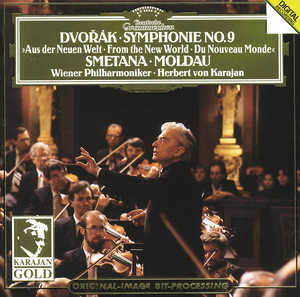 | Má vlast, JB 1:112: II. Vltava "The Moldau" | Bedřich Smetana, Wiener Philharmoniker, Herbert von Karajan | E Minor | 1 | 9A | 78 BPM | |
 | Lalo: Cello Concerto in D Minor: II. Intermezzo - Allegro presto | Édouard Lalo, André Navarra, Charles Münch, Orchestre des Concerts Lamoureux | C Minor | 1 | 5A | 75 BPM | |
 | 3 Chorales, P. 167: No. 3, Andante (After J.S. Bach's BWV 645) | Ottorino Respighi, Seattle Symphony Orchestra, Gerard Schwarz | E♭ Major | 0 | 5B | 84 BPM | |
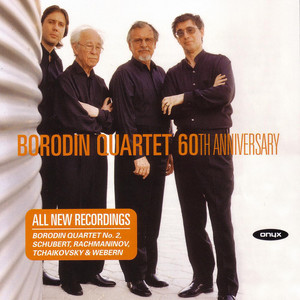 | Borodin - String Quartet No.2 in D major: Notturno: Andante | Alexander Borodin, Borodin Quartet | A Major | 2 | 11B | 74 BPM | |
 | Double Concerto in A Minor, Op. 102 for Violin, Cello and Orchestra: II. Andante | Johannes Brahms, Joshua Bell, Steven Isserlis, Academy of St. Martin in the Fields | G Major | 1 | 9B | 95 BPM | |
 | I. Prélude. Andantino | César Franck, Jean-Pierre Armengaud | D Major | 0 | 10B | 66 BPM | |
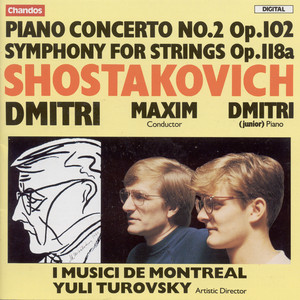 | Piano Concerto No. 2 in F Major, Op. 102: II. Andante | Dmitri Shostakovich, I Musici de Montréal, Maxim Shostakovich | C Minor | 0 | 5A | 177 BPM | |
 | Scottish Fantasy for Violin and Orchestra, Op. 46: IV. Finale: Allegro guerriero | Max Bruch, Joshua Bell, Academy of St. Martin in the Fields | E♭ Major | 2 | 5B | 97 BPM | |
 | Thaïs / Acte Deux: Meditation | Jules Massenet, Michel Schwalbé, Berliner Philharmoniker, Herbert von Karajan | B♭ Major | 3 | 6B | 99 BPM | |
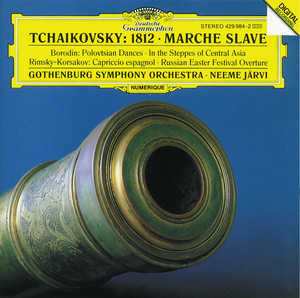 | Polovtsian Dances From "Prince Igor" | Alexander Borodin, Torgny Sporsen, Gothenburg Symphony Orchestra, Neeme Järvi, Gothenburg Symphony Choir | D Major | 1 | 10B | 103 BPM | |
 | Carnaval, Op. 9: XII. Chopin | Robert Schumann, Daniil Trifonov | E Major | 0 | 12B | 68 BPM | |
 | Morgen, Op. 27 No. 4 (Arr. Reger for Piano) | Richard Strauss, Angela Hewitt | A Major | 2 | 11B | 143 BPM | |
 | Andante Festivo | Jean Sibelius, Gothenburg Symphony Orchestra, Neeme Järvi | G Major | 1 | 9B | 86 BPM | |
 | 5 Military Marches, Op. 39, "Pomp and Circumstance": No. 5 in C Major | Edward Elgar, New Zealand Symphony Orchestra, James Judd | C Major | 2 | 8B | 102 BPM | |
 | The Moon | William Lloyd Webber, English Chamber Orchestra, Julian Lloyd Webber | B♭ Major | 1 | 6B | 119 BPM | |
 | Peer Gynt Suite No.1 op. 46 Anitra's Dance (Tempo di Mazurka) | Academy of St. Martin in the Fields | E Minor | 0 | 9A | 168 BPM | |
 | The Planets, Op. 32: 4. Jupiter, the Bringer of Jollity | Gustav Holst, Berliner Philharmoniker, Herbert von Karajan | G Minor | 3 | 6A | 140 BPM | |
 | Le tombeau de Couperin: 3. Menuet (version for orchestra) | Maurice Ravel, フランス国立リヨン管弦楽団, レナード・スラットキン | A Major | 1 | 11B | 107 BPM |
- ISRC
- USX760905506
- Label
- L-M Records/RCA Records