- BPM
- 120
- Key
- B♭ Major
- Camelot
- 6B
Stornello by Giuseppe Verdi, Ruth Ann Swenson Song Details
Giuseppe Verdi, Ruth Ann Swenson's 'Stornello' had a release date set for January 1, 1996. The duration of This song is about two minutes long, specifically at 2:06. This song does not appear to have any foul language. Stornello's duration is considered a little bit shorter than the average duration of a typical track. The track order of this song in Ruth Ann Swenson's "I Carry Your Heart" album is number 7 out of 20. On top of that, United States appears to be the country where this track was created. Based on our statistics, Stornello's popularity is unknown right now. Although the tone can be danceable to some, this track does projects more of a negative sound rather than a postive one.
BPM and Tempo
We consider the tempo marking of Stornello by Giuseppe Verdi, Ruth Ann Swenson to be Moderato (at a moderate speed) because the track has a tempo of 120 BPM, a half-time of 60BPM, and a double-time of 240 BPM. Based on that, the speed of the song's tempo is fast. Activities such as, walking, can go well with this song. The time signature for this track is 4/4.
Music Key
This song is in the music key of B♭ Major. This also means that this song has a camelot key of 6B. So, the perfect camelot match for 6B would be either 6B or 7A. While, 7B can give you a low energy boost. For moderate energy boost, you would use 3B and a high energy boost can either be 8B or 1B. Though, if you want a low energy drop, you should looking for songs with either a camelot key of 6A or 5B will give you a low energy drop, 9B would be a moderate one, and 4B or 11B would be a high energy drop. Lastly, 3A allows you to change the mood.
Want to find the BPM and music key for other songs? Check out our BPM and Key Finder page!
- Popularity
- 0%
- Loudness
- -26.577 dB
- Acousticness
- 98%
- Danceability
- 48%
- Energy
- 5%
- Instrumentalness
- 0%
- Liveness
- 10%
- Loudness
- 56%
- Speechiness
- 5%
- Valence
- 32%
Recommendations
| Track | Artist | Key | Energy | Camelot | BPM | ||
|---|---|---|---|---|---|---|---|
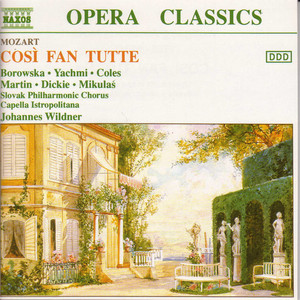 | Così fan tutte, K. 588: Act I Scene 2: Terzet - Soave sia il vento (Don Alfonso, Fiordiligi, Dorabella) | Wolfgang Amadeus Mozart, Joanna Borowska, Priti Coles, John Dickie, Andrea Martin, Peter Mikulas, Rohangiz Yachmi, Slovak Philharmonic Chorus, Capella Istropolitana, Johannes Wildner | E Major | 2 | 12B | 154 BPM | |
 | Una voce poco fa from Il Barbiere di Siviglia, '(The) Barber of Seville' | Maria Callas, Philharmonia Orchestra, Tullio Serafin | E Major | 1 | 12B | 136 BPM | |
 | Granada | Agustín Lara, Luciano Pavarotti, Royal Philharmonic Orchestra, Maurizio Benini | E♭ Major | 4 | 5B | 98 BPM | |
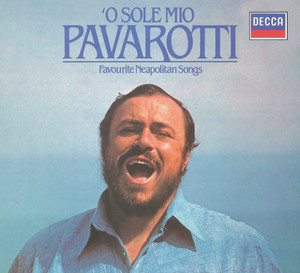 | Marechiare | Francesco Paolo Tosti, Luciano Pavarotti, National Philharmonic Orchestra, Giancarlo Chiaramello | C Major | 2 | 8B | 132 BPM | |
 | Dance of the Hours from Act III of "La Gioconda" | Amilcare Ponchielli, Philadelphia Orchestra, Eugene Ormandy | E Major | 1 | 12B | 130 BPM | |
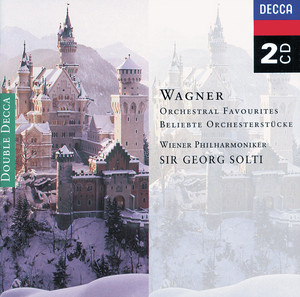 | Tannhäuser: Overture (Concert Version) | Richard Wagner, Wiener Philharmoniker, Sir Georg Solti | E Major | 2 | 12B | 82 BPM | |
 | Faust, CG 4, Faust, Act I: Avant de quitter ces lieux | Charles Gounod, Dmitri Hvorostovsky, Russia Spiritual Revival Choir, Philharmonia of Russia, Constantine Orbelian | G Minor | 1 | 6A | 93 BPM | |
 | Puccini: Madama Butterfly, Act 2: "Un bel di vedremo" (Butterfly) | Giacomo Puccini, Maria Callas, Herbert von Karajan, Orchestra Del Teatro Alla Scala, Milano | D♭ Major | 2 | 3B | 77 BPM | |
 | Pagliacci, Act I: "Recitar! Vesti la giubba" (Canio) | Ruggero Leoncavallo, Orchestra dell'Accademia Nazionale di Santa Cecilia, Francesco Molinari-Prandelli, Mario del Monaco | E Major | 2 | 12B | 89 BPM | |
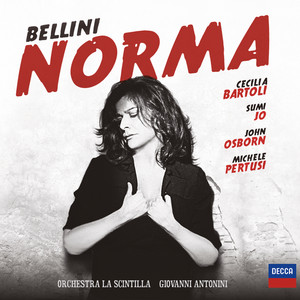 | Norma (Ed. Biondi & Minasi), Act I Scene 1: Casta Diva | Vincenzo Bellini, Cecilia Bartoli, International Chamber Vocalists, Orchestra La Scintilla, Giovanni Antonini | F Major | 1 | 7B | 176 BPM | |
 | Blumenduett - Lakmé | Léo Delibes, Alain Lombard, Danielle Millet, Mady Mesplé, Orchestre Du Theatre National De L'Opera Comique | B Major | 1 | 1B | 130 BPM | |
 | Extrait "Casta Diva" | Maria Callas, Tullio Serafin, Choeur et orchestre du Théâtre de la Scala de Milan | F Major | 1 | 7B | 87 BPM | |
 | Verdi: La Forza del Destino: La Vergine degli Angeli | Renata Tebaldi | G Major | 2 | 9B | 130 BPM | |
 | Core 'ngrato (Arr. Chiaramello) | Salvatore Cardillo, Luciano Pavarotti, Orchestra del Teatro Comunale di Bologna, Giancarlo Chiaramello | E♭ Major | 3 | 5B | 84 BPM | |
 | Das Rheingold / Vierte Szene: Entry Of The Gods Into Valhalla | Richard Wagner, Wiener Philharmoniker, Sir Georg Solti | D♭ Major | 1 | 3B | 86 BPM | |
 | Mozart: Le nozze di Figaro, K. 492, Act 2: "Voi, che sapete che cosa è amor" (Cherubino) | Wolfgang Amadeus Mozart, Daniel Barenboim, Cecilia Bartoli, Berliner Philharmoniker | B♭ Major | 2 | 6B | 110 BPM | |
 | Polovtsian Dances From "Prince Igor" | Alexander Borodin, Torgny Sporsen, Gothenburg Symphony Orchestra, Neeme Järvi, Gothenburg Symphony Choir | D Major | 1 | 10B | 103 BPM | |
 | Norma (1997 Digital Remaster): Casta Diva | Maria Callas, Tullio Serafin, Orchestra Del Teatro Alla Scala, Milano | F Major | 1 | 7B | 169 BPM | |
 | I vespri siciliani*: Sinfonia | Giuseppe Verdi, Hungarian State Opera Orchestra, Pier Giorgio Morandi | C Minor | 0 | 5A | 64 BPM | |
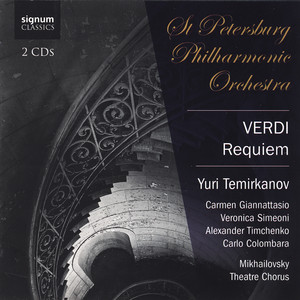 | Liber scriptus | Giuseppe Verdi, Carmen Giannattasio, Veronica Simeoni, Alxander Timchenko, Carlo Colombara, Yuri Temirkanov, St. Petersburg Philharmonic Orchestra | D Major | 1 | 10B | 79 BPM | |
 | Le nozze di Figaro, K. 492, Act I: No. 10, Non più andrai | Wolfgang Amadeus Mozart, Bryn Terfel, Scottish Chamber Orchestra, Sir Charles Mackerras | G Major | 2 | 9B | 134 BPM | |
 | Prince Igor, Act II: Polovtsian Dances, Dance II | Alexander Borodin, Choir of Mariinsky Theatre, Saint Petersburg, Paavo Järvi, Orchestre Philharmonique de Radio France | A Major | 1 | 11B | 75 BPM | |
 | Violin Concerto In D Major, Op. 61 | Berliner Philharmoniker, Yehudi Menuhin & Festival Orchestra Lucerne | B♭ Major | 2 | 6B | 95 BPM | |
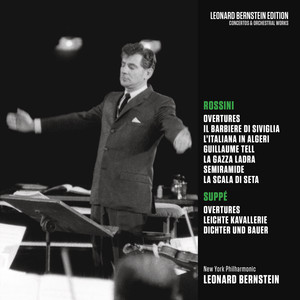 | The Barber of Seville: Overture | Gioachino Rossini, Leonard Bernstein, New York Philharmonic | E Major | 2 | 12B | 175 BPM | |
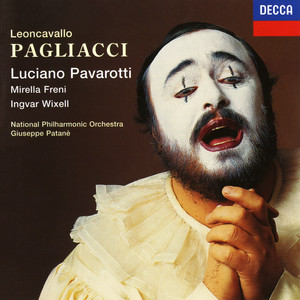 | Pagliacci / Act 1: "Recitar!...Vesti la giubba" | Ruggero Leoncavallo, Luciano Pavarotti, National Philharmonic Orchestra, Giuseppe Patanè | E Major | 2 | 12B | 83 BPM |
- ISRC
- USAR20700675
- Label
- L-M Records/RCA Records