- BPM
- 91
- Key
- E Major
- Camelot
- 12B
Variations on a Theme by Mozart, Op. 9 by Fernando Sor, John C. Williams Song Details
Fernando Sor, John C. Williams's ' "Variations on a Theme by Mozart, Op. 9" was released on its scheduled release date, 1969. Since This song is still less than 10 minute long, it is still considered a pretty long duration song compared to the average song length. This song does not appear to be explicit due to the lack of the "E" tag. This song is part of Virtuoso Variations for Guitar by John Williams. The song's track number on the album is #7 out of 7 tracks. Based on our data, United States was the country where this track was produced or recorded. In terms of popularity, Variations on a Theme by Mozart, Op. 9 is currently not that popular. Based on the vibe, this track doesn't seem to be that danceable, however its valence properties can make this some somewhat danceable.
BPM and Tempo
Since Variations on a Theme by Mozart, Op. 9 by Fernando Sor, John C. Williams has a tempo of 91 beats per a minute, the tempo markings of this song would be Andante (at a walking pace). With Variations on a Theme by Mozart, Op. 9 being at 91 BPM, the half-time would be 46 BPM with a double-time of 182 BPM.In addition, we consider the tempo speed to be pretty slow for this song. This makes this song perfect for activities such as, yoga or pilates. The time signature for this track is 4/4.
Music Key
E Major is the music key of this track. Or for those who are familiar with the camelot wheel, this song has a camelot key of 12B. So, the perfect camelot match for 12B would be either 12B or 1A. While, 1B can give you a low energy boost. For moderate energy boost, you would use 9B and a high energy boost can either be 2B or 7B. Though, if you want a low energy drop, you should looking for songs with either a camelot key of 12A or 11B will give you a low energy drop, 3B would be a moderate one, and 10B or 5B would be a high energy drop. Lastly, 9A allows you to change the mood.
Want to find the BPM and music key for other songs? Check out our BPM and Key Finder page!
- Popularity
- 1%
- Loudness
- -23.368 dB
- Acousticness
- 94%
- Danceability
- 36%
- Energy
- 13%
- Instrumentalness
- 85%
- Liveness
- 9%
- Loudness
- 61%
- Speechiness
- 5%
- Valence
- 42%
Recommendations
| Track | Artist | Key | Energy | Camelot | BPM | ||
|---|---|---|---|---|---|---|---|
 | Aria à deux No. 2 | Francis Kleynjans, Duo Bergerac | E Minor | 1 | 9A | 119 BPM | |
 | Gómez Crespo: Norteña | Jorge Gomez Crespo, Oscar Caceres | C Minor | 0 | 5A | 133 BPM | |
 | Les guitares bien tempérées, Preludes and Fugues, Op. 199: Prelude No. 2 in D Major (the Well-Tempered Guitars) | Mario Castelnuovo-Tedesco, Brasil Guitar Duo | F Major | 2 | 7B | 104 BPM | |
 | Phantasia in D Minor | David Kellner, Émilie Fend | D Major | 0 | 10B | 73 BPM | |
 | Pacific Sunrise | James Lentini | A Major | 0 | 11B | 158 BPM | |
| Les guitares bien tempérées, Preludes and Fugues, Op. 199: Prelude No. 5 in B Minor (the Well-Tempered Guitars) | Mario Castelnuovo-Tedesco, Brasil Guitar Duo | E Minor | 0 | 9A | 68 BPM | |
 | Se Ela Pergunta | Dilermando Reis, Xuefei Yang | E Minor | 0 | 9A | 138 BPM | |
 | Danza in E Minor | Jorge Morel, Celil Refik Kaya | F Minor | 0 | 4A | 139 BPM | |
 | Bardenklänge, Op. 13: Unruhe | Johann Kaspar Mertz, Johannes Möller, Laura Fraticelli | F Major | 0 | 7B | 102 BPM | |
| Les guitares bien tempérées, Preludes and Fugues, Op. 199: Fugue No. 1 in G Minor (the Well-Tempered Guitars) | Mario Castelnuovo-Tedesco, Brasil Guitar Duo | G Minor | 1 | 6A | 139 BPM | |
 | Evocación | David Tutmark | E Minor | 1 | 9A | 116 BPM | |
 | Los seys libros del Delphin de musica de cifra para taner vihuela: Libro I, 1: Primer tono por ge sol re ut | Luis de Narváez, Pablo Marquez | G Minor | 0 | 6A | 117 BPM | |
 | Cenas Brasileiras: No. 1, Serões | Isaías Sávio, Gerald Garcia | G Major | 1 | 9B | 83 BPM | |
 | Etudes, Op. 60: Study No. 10, Allegretto | Matteo Carcassi, Tariq Harb | D Major | 3 | 10B | 167 BPM | |
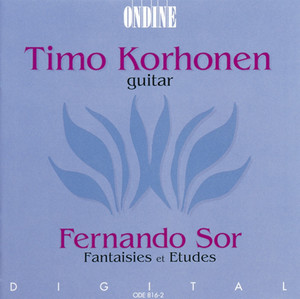 | Exercise, Op. 35: Study No. 18 in E Minor | Fernando Sor, Timo Korhonen | E Minor | 0 | 9A | 108 BPM | |
 | 12 Studies, Op. 29: No. 23 in G Major | Fernando Sor, Jeffrey McFadden | G Major | 1 | 9B | 88 BPM | |
 | Debussy: Préludes, Livre I, CD 125, L. 117: No. 8, La fille aux cheveux de lin (Transc. Cáceres for Two Guitars) | Claude Debussy, Turibio Santos, Oscar Caceres | D Major | 1 | 10B | 102 BPM | |
 | Preludios Epigramáticos: No. 4, Rié, que todo rié. que todo es madre lev | Leo Brouwer, Gerard Cousins | D Major | 1 | 10B | 102 BPM | |
 | Lecon, Op. 60: No. 22 in E Minor | Fernando Sor, Nicholas Goluses | E Minor | 1 | 9A | 131 BPM | |
 | 24 Short Progressive Pieces, Op. 44: No. 12 in E Minor | Fernando Sor, Jason Vieaux | A Major | 1 | 11B | 79 BPM | |
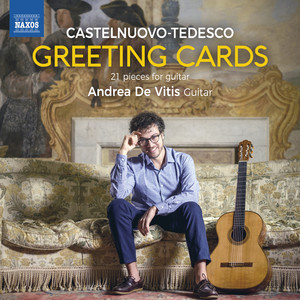 | Greeting Cards, Op. 170: No. 14, Ninna Nanna, a Lullaby for Eugene | Mario Castelnuovo-Tedesco, Andrea de Vitis | A Minor | 0 | 8A | 178 BPM | |
| Walton: 5 Bagatelles: No. 4, Lento | William Walton, Carlos Bonell | D Major | 1 | 10B | 102 BPM | |
 | III Danza en la noche (de Suite de Valencia) | Antonio Chover Salom, Carlos Blanco Ruiz | E Major | 0 | 12B | 77 BPM | |
 | Rondena | Regino Sáinz de la Maza, Franz Halász | G Minor | 2 | 6A | 118 BPM | |
 | The Troubadours Three: Melancholy | Stjepan Šulek, Ana Vidović | C Major | 1 | 8B | 109 BPM |
- ISRC
- USSM11303311
- Label
- L-M Records/RCA Records