- BPM
- 105
- Key
- G Major
- Camelot
- 9B
Three Movements From PETROUCHKA: Chez Petrouchka - Produced by Igor Stravinsky, Anatoly Sheludyakov Song Details
"Three Movements From PETROUCHKA: Chez Petrouchka - Produced" by Igor Stravinsky, Anatoly Sheludyakov had its release date on 2004. With this song being about 5 minutes long, at This song is fairly a long song compared to the average song length. This song does not have an "Explicit" tag, making it safe for all ages. There are a total of 27 in the song's album "STRAVINSKY Piano Works". In this album, this song's track order is #2. In terms of popularity, Three Movements From PETROUCHKA: Chez Petrouchka - Produced is currently not that popular. Although the tone can be danceable to some, this track does projects more of a negative sound rather than a postive one.
BPM and Tempo
With Three Movements From PETROUCHKA: Chez Petrouchka - Produced by Igor Stravinsky, Anatoly Sheludyakov having a BPM of 105 with a half-time of 52 BPM and a double-time of 210 BPM, we would consider this track to have a Andante (at a walking pace) tempo marking. Because of this, we believe that the song has an overall slow tempo. The time signature for this track is 5/4.
Music Key
This song is in the music key of G Major. Or for those who are familiar with the camelot wheel, this song has a camelot key of 9B. So, the perfect camelot match for 9B would be either 9B or 10A. While, 10B can give you a low energy boost. For moderate energy boost, you would use 6B and a high energy boost can either be 11B or 4B. Though, if you want a low energy drop, you should looking for songs with either a camelot key of 9A or 8B will give you a low energy drop, 12B would be a moderate one, and 7B or 2B would be a high energy drop. Lastly, 6A allows you to change the mood.
Want to find the BPM and music key for other songs? Check out our BPM and Key Finder page!
- Popularity
- 9%
- Loudness
- -22.655 dB
- Acousticness
- 99%
- Danceability
- 42%
- Energy
- 9%
- Instrumentalness
- 79%
- Liveness
- 8%
- Loudness
- 62%
- Speechiness
- 6%
- Valence
- 6%
Recommendations
| Track | Artist | Key | Energy | Camelot | BPM | ||
|---|---|---|---|---|---|---|---|
 | Cello Concertino in G Minor, Op. 132 (arr. V. Blok): I. Andante mosso | Sergei Prokofiev, Vladimir Blok, Alexander Rudin, Ukraine National Symphony Orchestra, Theodore Kuchar | A♭ Major | 1 | 4B | 88 BPM | |
 | L'Assassinat du duc de Guise, Op. 128, R. 331: Introduction - Premier tableau | Camille Saint-Saëns, Ensemble Musique Oblique | G Major | 0 | 9B | 99 BPM | |
 | The Rite of Spring: Part One: Adoration of the Earth: Introduction | Igor Stravinsky, Teodor Currentzis, musicAeterna | B Minor | 0 | 10A | 87 BPM | |
 | Sibelius: Symphony No. 5 in E-Flat Major, Op. 82: III. Allegro molto (1915 Version) | Jean Sibelius, San Francisco Symphony, Esa-Pekka Salonen | E♭ Major | 1 | 5B | 76 BPM | |
 | Schoenberg: 5 Orchestral Pieces, Op. 16: No. 3, Farben | Arnold Schoenberg, Daniel Barenboim, Chicago Symphony Orchestra | A Major | 0 | 11B | 72 BPM | |
 | Symphony No. 8 in G Minor, Op. 88, B. 163: II. Adagio | Antonín Dvořák, London Symphony Orchestra, Sir Colin Davis | C Major | 0 | 8B | 54 BPM | |
 | Prelude in C Sharp Minor, Op. 3, No. 2 (Arr. Orchestra) - Live | Sergei Rachmaninoff, Czech Philharmonic, Leopold Stokowski | E♭ Major | 4 | 5B | 124 BPM | |
 | Tristan und Isolde, WWV 90: Prelude To Act I | Richard Wagner, Gewandhausorchester Leipzig, Andris Nelsons | A Minor | 1 | 8A | 79 BPM | |
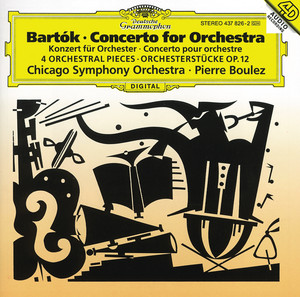 | Concerto for Orchestra, Sz. 116: IV. Intermezzo interrotto (Allegretto) | Béla Bartók, Chicago Symphony Orchestra, Pierre Boulez | D Major | 1 | 10B | 73 BPM | |
 | Symphonie fantastique, Op. 14, H 48: II. Un Bal | Hector Berlioz, London Symphony Orchestra, Sir Colin Davis | A Major | 1 | 11B | 113 BPM | |
 | Overture: Overture | Grażyna Bacewicz, BBC Symphony Orchestra, Sakari Oramo | B Major | 0 | 1B | 112 BPM | |
 | Symphony No. 2 "The Age of Anxiety" / Part 1 / I. The Prologue: Lento moderato | Leonard Bernstein, Krystian Zimerman, Berliner Philharmoniker, Sir Simon Rattle | C Major | 0 | 8B | 74 BPM | |
 | The Rite of Spring, K15, Pt. 1: V. Games of the Rival Tribes | Igor Stravinsky, Berliner Philharmoniker, Herbert von Karajan | F Minor | 5 | 4A | 164 BPM | |
 | D'un matin de printemps | Lili Boulanger, Yan Pascal Tortelier, BBC Philharmonic | C Major | 1 | 8B | 130 BPM | |
 | Also sprach Zarathustra, Op. 30: IX. Das Nachtwandlerlied | Richard Strauss, Berliner Philharmoniker, Herbert von Karajan | F Minor | 5 | 4A | 164 BPM | |
 | Daphnis et Chloe: Part III: Bacchanale | Maurice Ravel, Bordeaux Opera Chorus, Bordeaux Aquitaine National Orchestra, Laurent Petitgirard | B♭ Minor | 4 | 3A | 82 BPM | |
 | String Quartet No. 12 in F major, Op. 96 - "American" B.179: 2. Lento | Antonín Dvořák, Hagen Quartett | D Minor | 1 | 7A | 88 BPM | |
 | Le sacre du printemps / Pt. 1: L'Adoration de la terre: IV. Rondes printanières | Igor Stravinsky, Orchestre de Paris, Klaus Mäkelä | B♭ Minor | 1 | 3A | 113 BPM | |
 | Petrouchka: Fête populaire de la semaine grasse | Ferenc Fricsay, Berliner Philharmoniker | B♭ Major | 5 | 6B | 73 BPM | |
 | Aleko: Intermezzo | Sergei Rachmaninoff, Berliner Philharmoniker, Lorin Maazel | B♭ Major | 0 | 6B | 90 BPM | |
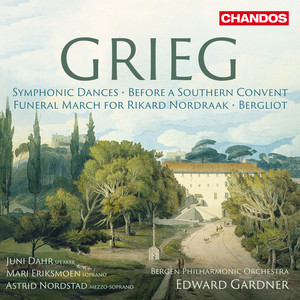 | Symphonic Dances, Op. 64: III. Allegro giocoso | Edvard Grieg, Bergen Philharmonic Orchestra, Edward Gardner | A Major | 1 | 11B | 172 BPM | |
 | Sinfonietta, JW VI/18: II. The Castle, Brno. Andante – Allegretto | Leoš Janáček, Bavarian Radio Symphony Orchestra, Rafael Kubelík | A♭ Minor | 2 | 1A | 144 BPM | |
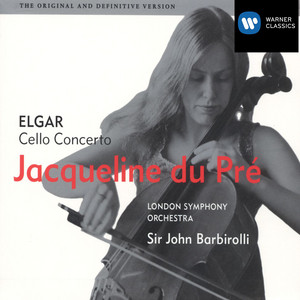 | Elgar: Cello Concerto in E Minor, Op. 85: II. Lento - Allegro molto | Edward Elgar, Jacqueline du Pré, London Symphony Orchestra, Sir John Barbirolli | G Major | 2 | 9B | 87 BPM | |
 | Japanese Suite, Op. 33, H. 126: II. Ceremonial Dance | Gustav Holst, Ulster Orchestra, Joann Falletta | C Minor | 3 | 5A | 103 BPM | |
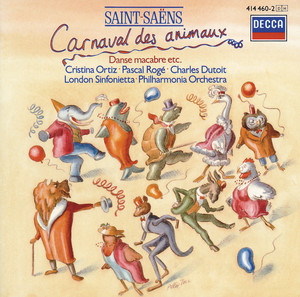 | Phaéton, Op. 39 | Camille Saint-Saëns, Philharmonia Orchestra, Charles Dutoit | E♭ Major | 1 | 5B | 80 BPM |
- ISRC
- This song does not have an ISRC.
- Label
- L-M Records/RCA Records