- BPM
- 181
- Key
- A Minor
- Camelot
- 8A
3 Easy Pieces For Piano Duet: 2. Waltz by Igor Stravinsky, Katia Labèque, Marielle Labèque Song Details
Igor Stravinsky, Katia Labèque, Marielle Labèque's ' "3 Easy Pieces For Piano Duet: 2. Waltz" was released on its scheduled release date, August 24, 1987. With This song being less than two minutes long, at 1:47, we are fairly confident that this song is not explicit and is safe for all ages. Based on the duration of this song, this song duration is much smaller than the average song duration. There are a total of 15 in the song's album "Stravinsky: Concerto For 2 Pianos; 3 Movements From Petrushka; 5 Easy Pieces; 3 Easy Pieces". In this album, this song's track order is #14. Furthermore, we believe that the track originated from Netherlands. The popularity of 3 Easy Pieces For Piano Duet: 2. Waltz is currently not that popular right now. Based on the vibe, this track doesn't seem to be that danceable, however its valence properties can make this some somewhat danceable.
BPM and Tempo
With 3 Easy Pieces For Piano Duet: 2. Waltz by Igor Stravinsky, Katia Labèque, Marielle Labèque having a BPM of 181 with a half-time of 90 BPM and a double-time of 362 BPM, we would consider this track to have a Presto (very, very fast) tempo marking. Because of this, we believe that the song has an overall fast tempo. The time signature for this track is 4/4.
Music Key
This song is in the music key of A Minor. Which also means that the camelot key for this song is 8A. So, the perfect camelot match for 8A would be either 8A or 7B. While, a low energy boost can consist of either 8B or 9A. For moderate energy boost, you would use 5A and a high energy boost can either be 10A or 3A. However, if you are looking for a low energy drop, finding a song with a camelot key of 7A would be a great choice. Where 11A would give you a moderate drop, and 6A or 1A would be a high energy drop. Lastly, 11B allows you to change the mood.
Want to find the BPM and music key for other songs? Check out our BPM and Key Finder page!
- Popularity
- 1%
- Loudness
- -36.435 dB
- Acousticness
- 100%
- Danceability
- 29%
- Energy
- 1%
- Instrumentalness
- 90%
- Liveness
- 11%
- Loudness
- 39%
- Speechiness
- 6%
- Valence
- 50%
Recommendations
| Track | Artist | Key | Energy | Camelot | BPM | ||
|---|---|---|---|---|---|---|---|
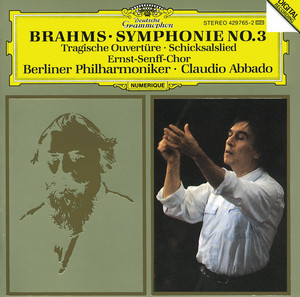 | Symphony No. 3 in F Major, Op. 90: II. Andante | Johannes Brahms, Berliner Philharmoniker, Claudio Abbado | C Major | 0 | 8B | 82 BPM | |
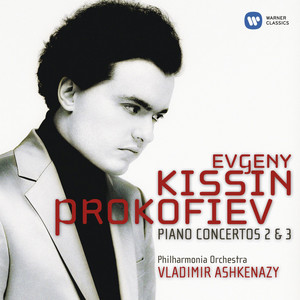 | Piano Concerto No. 2 in G minor Op. 16: Andantino - Allegretto | Sergei Prokofiev, Evgeny Kissin, Vladimir Ashkenazy, Philharmonia Orchestra | G Minor | 1 | 6A | 90 BPM | |
 | Danzas fantásticas, Op. 22: I. Exaltación | Joaquín Turina, Juanjo Mena, BBC Philharmonic | E Minor | 0 | 9A | 129 BPM | |
 | Organ Concerto in G Minor, FP 93: IV. Tempo allegro. Molto agitato | Francis Poulenc, Philippe Lefebvre, Orchestre National de Lille, Jean-Claude Casadesus | B♭ Minor | 0 | 3A | 133 BPM | |
 | Schoenberg: Verklärte Nacht, Op. 4: II. Molto rallentando (1943 Version) | Arnold Schoenberg, Daniel Barenboim, Chicago Symphony Orchestra | E Major | 2 | 12B | 76 BPM | |
 | Symphonie fantastique, Op. 14, H 48: 5d. Songe d'une nuit du Sabbat - Dies irae et Ronde du Sabbat ensemble | Hector Berlioz, Chicago Symphony Orchestra, Claudio Abbado | B♭ Major | 1 | 6B | 153 BPM | |
 | Symphony No. 1, Op. 9: III. Andante tranquillo | Samuel Barber, Leonard Slatkin, St. Louis Symphony | B♭ Major | 3 | 6B | 93 BPM | |
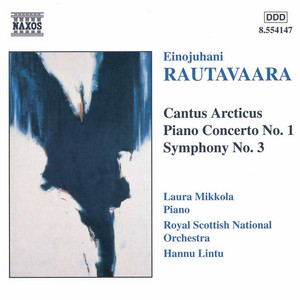 | Piano Concerto No. 1, Op. 45: III. Molto vivace | Einojuhani Rautavaara, Laura Mikkola, Royal Scottish National Orchestra, Hannu Lintu | C Minor | 3 | 5A | 76 BPM | |
 | The Rite of Spring: Part One: Adoration of the Earth: Games of the Rival Tribes | Igor Stravinsky, Teodor Currentzis, musicAeterna | G Major | 4 | 9B | 80 BPM | |
 | Danse Sacrée et Danse Profane, L. 103: II. Danse Profane | Claude Debussy, Nieuw Sinfonietta Amsterdam, Ernitine Stoop | A Major | 0 | 11B | 73 BPM | |
 | Pictures At An Exhibition: Gnomus | Modest Mussorgsky, Chicago Symphony Orchestra, Carlo Maria Giulini | B Major | 0 | 1B | 99 BPM | |
 | Symphony No. 8 in G Minor, Op. 88, B. 163: III. Allegretto grazioso - Molto vivace | Antonín Dvořák, London Symphony Orchestra, Sir Colin Davis | G Major | 1 | 9B | 130 BPM | |
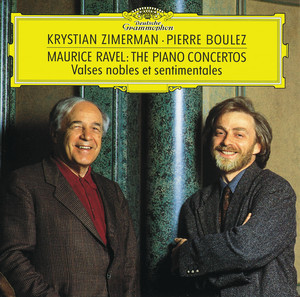 | Piano Concerto in G Major, M. 83: I. Allegramente | Maurice Ravel, Krystian Zimerman, The Cleveland Orchestra, Pierre Boulez | D Major | 1 | 10B | 129 BPM | |
 | Sibelius: Symphony No. 5 in E-Flat Major, Op. 82: III. Allegro molto | Jean Sibelius, Sakari Oramo, City Of Birmingham Symphony Orchestra | A♭ Major | 1 | 4B | 149 BPM | |
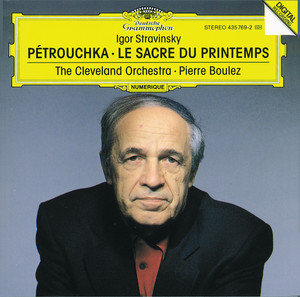 | Petrouchka / Tableau I: Fête populaire de la semaine grasse | Igor Stravinsky, Cleveland Orchestra, Pierre Boulez | D Minor | 2 | 7A | 116 BPM | |
| Symphonie fantastique, H. 48: IV. Marche au supplice | Hector Berlioz, Chicago Symphony Orchestra, Claudio Abbado | G Minor | 2 | 6A | 166 BPM | |
 | I. Thème. Modéré | Olivier Messiaen, Benjamin Frith, Lucy Gould | C Minor | 0 | 5A | 84 BPM | |
| Organ Concerto in G Minor, FP 93: VI. Tempo de I' Allegro intial | Francis Poulenc, Philippe Lefebvre, Orchestre National de Lille, Jean-Claude Casadesus | A♭ Minor | 0 | 1A | 71 BPM | |
 | Pines of Rome, P. 141: IV. I pini della Via Appia | Ottorino Respighi, Berliner Philharmoniker, Herbert von Karajan | B Major | 3 | 1B | 166 BPM | |
 | The Firebird (L'oiseau De Feu) - Suite (1919): Berceuse | Igor Stravinsky, Orchestre de l'Opéra Bastille, Myung-Whun Chung | A♭ Minor | 0 | 1A | 135 BPM | |
 | Tristan und Isolde, Act I: Prelude | Richard Wagner, Staatskapelle Dresden, Carlos Kleiber | A Major | 1 | 11B | 82 BPM | |
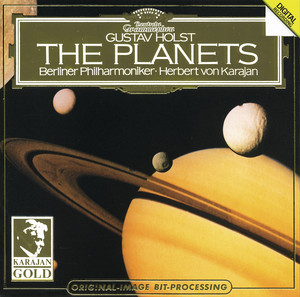 | The Planets, Op. 32: 3. Mercury, the Winged Messenger | Gustav Holst, Berliner Philharmoniker, Herbert von Karajan | A Major | 1 | 11B | 108 BPM | |
 | Les soirs illuminés par l'ardeur du charbon, L.150 (Arr. by Colin Matthews) | Claude Debussy, Colin Matthews, Hallé, Sir Mark Elder | D♭ Major | 0 | 3B | 79 BPM | |
| Petrushka, K12 (1911 Version): II. Petrushka's Room | Igor Stravinsky, The Cleveland Orchestra, Pierre Boulez | E Minor | 1 | 9A | 172 BPM | |
 | Chamber Symphony No. 5 in A-Flat Major, Op. 118a: II. Allegretto furioso | Dmitri Shostakovich, Yuli Turovsky, I Musici de Montréal | D♭ Major | 0 | 3B | 78 BPM |
- ISRC
- NLA508700007
- Label
- L-M Records/RCA Records