- BPM
- 61
- Key
- F Major
- Camelot
- 7B
Symphony No. 3 for Wind Ensemble "Circus Maximus": VII. Prayer by John Corigliano, The University of Texas Wind Ensemble, Jerry Junkin Song Details
"Symphony No. 3 for Wind Ensemble "Circus Maximus": VII. Prayer" by John Corigliano, The University of Texas Wind Ensemble, Jerry Junkin had its release date on January 27, 2009. This song is about six minutes long, preciously at 5:58, making this song fairly long compared to other songs. The track order of this song in John Corigliano, The University of Texas Wind Ensemble, Jerry Junkin's "John Corigliano: Symphony No. 3 "Circus Maximus" & Gazebo Dances" album is number 7 out of 12. On top of that, Hong Kong appears to be the country where this track was created. Symphony No. 3 for Wind Ensemble "Circus Maximus": VII. Prayer is unknown right now. In our opinion, the overall tone is not very danceable and projects negative sounds, such as being sad, depressed, or angry.
BPM and Tempo
We consider the tempo marking of Symphony No. 3 for Wind Ensemble "Circus Maximus": VII. Prayer by John Corigliano, The University of Texas Wind Ensemble, Jerry Junkin to be Larghetto (rather broadly) because the track has a tempo of 61 BPM, a half-time of 30BPM, and a double-time of 122 BPM. Based on that, the speed of the song's tempo is slow. The time signature for this track is 3/4.
Music Key
This song is in the music key of F Major. This also means that this song has a camelot key of 7B. So, the perfect camelot match for 7B would be either 7B or 8A. While, 8B can give you a low energy boost. For moderate energy boost, you would use 4B and a high energy boost can either be 9B or 2B. Though, if you want a low energy drop, you should looking for songs with either a camelot key of 7A or 6B will give you a low energy drop, 10B would be a moderate one, and 5B or 12B would be a high energy drop. Lastly, 4A allows you to change the mood.
Want to find the BPM and music key for other songs? Check out our BPM and Key Finder page!
- Popularity
- 0%
- Loudness
- -35.368 dB
- Acousticness
- 93%
- Danceability
- 12%
- Energy
- 0%
- Instrumentalness
- 26%
- Liveness
- 23%
- Loudness
- 41%
- Speechiness
- 4%
- Valence
- 3%
Recommendations
| Track | Artist | Key | Energy | Camelot | BPM | ||
|---|---|---|---|---|---|---|---|
 | Wandering Still | Era eScapes | F♯ Minor | 0 | 11A | 68 BPM | |
 | Voyage for Flute and String Orchestra - Remastered | John Corigliano, James Galway, David Effron | F Minor | 3 | 4A | 143 BPM | |
 | Lalo: Cello Concerto in D Minor: II. Intermezzo - Allegro presto | Édouard Lalo, André Navarra, Charles Münch, Orchestre des Concerts Lamoureux | C Minor | 1 | 5A | 75 BPM | |
 | String Quartet No. 1: II. Lento cantabile - Live | Michael Tippett, Heath Quartet | D♭ Major | 1 | 3B | 88 BPM | |
 | Violin Concerto: III. Romance Without Words | Ned Rorem, Philippe Quint, Royal Liverpool Philharmonic Orchestra, José Serebrier | F♯ Major | 1 | 2B | 62 BPM | |
 | Requiem for Cello Alone: VI. Lux aeterna | Peter Sculthorpe, Pieter Wispelwey | B Major | 3 | 1B | 89 BPM | |
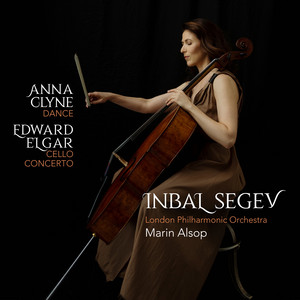 | DANCE: III. in the middle of the fighting | Anna Clyne, Inbal Segev, London Philharmonic Orchestra, Marin Alsop | A Minor | 1 | 8A | 82 BPM | |
 | II. Andante | Samuel Barber, Leonard Slatkin, St. Louis Symphony, Elmar Oliveria | C Minor | 2 | 5A | 65 BPM | |
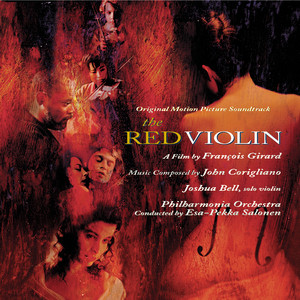 | III. Oxford, Pope's Gypsy Cadenza | John Corigliano, Esa-Pekka Salonen, Joshua Bell, Philharmonia Orchestra | A Major | 1 | 11B | 56 BPM | |
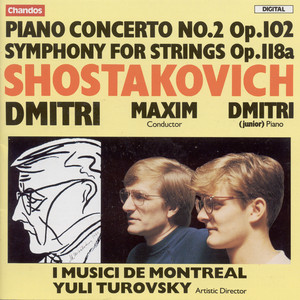 | Piano Concerto No. 2 in F Major, Op. 102: II. Andante | Dmitri Shostakovich, I Musici de Montréal, Maxim Shostakovich | C Minor | 0 | 5A | 177 BPM | |
 | 6 Sonatas for Violin Solo, Op. 27 / Sonata No. 1 in G Minor: III. Allegretto poco scherzoso | Eugène Ysaÿe, Hilary Hahn | B♭ Major | 1 | 6B | 60 BPM | |
 | String Quartet No. 2 in A Major, Op. 13: I. Adagio - Allegro vivace | Felix Mendelssohn, Kazakh State String Quartet | A Minor | 1 | 8A | 78 BPM | |
 | Suite for Cello Solo: Prelude - Fantasia | Gaspar Cassadó, Bernd Glemser, Maria Kliegel | G Major | 0 | 9B | 113 BPM | |
 | Suite for Viola & Small Orchestra: I. Prelude | Ralph Vaughan Williams, Helen Callus, New Zealand Symphony Orchestra, Marc Decio Taddei | B Major | 0 | 1B | 119 BPM | |
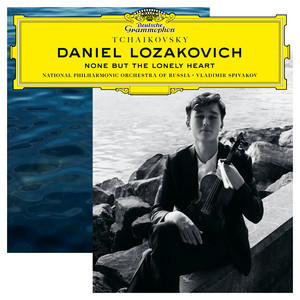 | Souvenir d'un lieu cher, Op. 42: Ib. Méditation (Orch. Glazunov) | Pyotr Ilyich Tchaikovsky, Daniel Lozakovich, National Philharmonic Orchestra of Russia, Vladimir Spivakov | B♭ Major | 2 | 6B | 99 BPM | |
 | Fratres | Arvo Pärt, Gidon Kremer, Keith Jarrett | B♭ Major | 0 | 6B | 77 BPM | |
 | Kol Nidrei, Adagio for Cello, Op. 47 | Max Bruch, János Starker, London Symphony Orchestra, Antal Doráti | D Major | 1 | 10B | 85 BPM | |
| V. Montréal, Morritz's Theme | John Corigliano, Esa-Pekka Salonen | C Minor | 1 | 5A | 85 BPM | |
 | Symphony No. 3 for Wind Ensemble "Circus Maximus": VI. Circus Maximus | John Corigliano, The University of Texas Wind Ensemble, Jerry Junkin | D♭ Major | 6 | 3B | 128 BPM | |
 | Petite suite: I. An Opalescent Fantasy | Peter Scott Lewis, Miranda Cuckson | F Minor | 1 | 4A | 67 BPM | |
 | Yumeji's Theme - From "In The Mood For Love" | Shigeru Umebayashi, Gidon Kremer, Kremerata Baltica | C Minor | 0 | 5A | 99 BPM | |
 | Prelude for Cello & Piano | Ernest John Moeran, Gerald Peregrine, Antony Ingham | B Major | 0 | 1B | 111 BPM | |
 | Les chemins de l'amour, FP. 106 | Francis Poulenc, Mischa Maisky, Daria Hovora | E Major | 1 | 12B | 67 BPM | |
 | Allegro appassionato for Cello and Orchestra, Op. 43 | Pyotr Ilyich Tchaikovsky, Stéphane Tétreault, Fabien Gabel, Orchestre Symphonique De Québec | E Minor | 1 | 9A | 127 BPM | |
 | Piano Concerto No. 2 in F Major, Op. 102: II. Andante | Dmitri Shostakovich, Boris Giltburg, Royal Liverpool Philharmonic Orchestra, Vasily Petrenko | C Minor | 0 | 5A | 80 BPM |
- ISRC
- HKI190846607
- Label
- L-M Records/RCA Records