- BPM
- 68
- Key
- E Major
- Camelot
- 12B
Verdi: Rigoletto, Act 1 Scene 13: No. 6, Scene ed Aria, "Gualtier Maldè! … Caro nome che il mio cor" (Gilda, Borsa, Ceprano, Marullo, Chorus) by Giuseppe Verdi, Maria Callas, Renato Ercolani, William Dickie, Orchestra Del Teatro Alla Scala, Milano, Tullio Serafin, Orchestra Del Teatro Alla Scala Di Milan, Philharmonia Orchestra Song Details
"Verdi: Rigoletto, Act 1 Scene 13: No. 6, Scene ed Aria, "Gualtier Maldè! … Caro nome che il mio cor" (Gilda, Borsa, Ceprano, Marullo, Chorus)" by Giuseppe Verdi, Maria Callas, Renato Ercolani, William Dickie, Orchestra Del Teatro Alla Scala, Milano, Tullio Serafin, Orchestra Del Teatro Alla Scala Di Milan, Philharmonia Orchestra had its release date on 1956. Since This song is still less than 10 minute long, it is still considered a pretty long duration song compared to the average song length. This song does not appear to be explicit due to the lack of the "E" tag. This song is part of Verdi Rigoletto by Giuseppe Verdi, Maria Callas, Tito Gobbi, Orchestra Del Teatro Alla Scala, Milano, Tullio Serafin. The song's track number on the album is #16 out of 36 tracks. Verdi: Rigoletto, Act 1 Scene 13: No. 6, Scene ed Aria, "Gualtier Maldè! … Caro nome che il mio cor" (Gilda, Borsa, Ceprano, Marullo, Chorus) is not that popular right now. In our opinion, the overall tone is not very danceable and projects negative sounds, such as being sad, depressed, or angry.
BPM and Tempo
Since Verdi: Rigoletto, Act 1 Scene 13: No. 6, Scene ed Aria, "Gualtier Maldè! … Caro nome che il mio cor" (Gilda, Borsa, Ceprano, Marullo, Chorus) by Giuseppe Verdi, Maria Callas, Renato Ercolani, William Dickie, Orchestra Del Teatro Alla Scala, Milano, Tullio Serafin, Orchestra Del Teatro Alla Scala Di Milan, Philharmonia Orchestra has a tempo of 68 beats per a minute, the tempo markings of this song would be Adagio (slowly with great expression). With Verdi: Rigoletto, Act 1 Scene 13: No. 6, Scene ed Aria, "Gualtier Maldè! … Caro nome che il mio cor" (Gilda, Borsa, Ceprano, Marullo, Chorus) being at 68 BPM, the half-time would be 34 BPM with a double-time of 136 BPM.In addition, we consider the tempo speed to be pretty slow for this song. The time signature for this track is 4/4.
Music Key
This song is in the music key of E Major. Or for those who are familiar with the camelot wheel, this song has a camelot key of 12B. So, the perfect camelot match for 12B would be either 12B or 1A. While, 1B can give you a low energy boost. For moderate energy boost, you would use 9B and a high energy boost can either be 2B or 7B. Though, if you want a low energy drop, you should looking for songs with either a camelot key of 12A or 11B will give you a low energy drop, 3B would be a moderate one, and 10B or 5B would be a high energy drop. Lastly, 9A allows you to change the mood.
Want to find the BPM and music key for other songs? Check out our BPM and Key Finder page!
- Popularity
- 17%
- Loudness
- -21.786 dB
- Acousticness
- 98%
- Danceability
- 26%
- Energy
- 3%
- Instrumentalness
- 3%
- Liveness
- 5%
- Loudness
- 64%
- Speechiness
- 5%
- Valence
- 6%
Recommendations
| Track | Artist | Key | Energy | Camelot | BPM | ||
|---|---|---|---|---|---|---|---|
 | Orfeo ed Euridice (Viennese version, 1762) (1997 Digital Remaster), Scene 2: Dance of the Blessed Spirits | Christoph Willibald Gluck, Philharmonia Orchestra, Riccardo Muti | C Major | 0 | 8B | 65 BPM | |
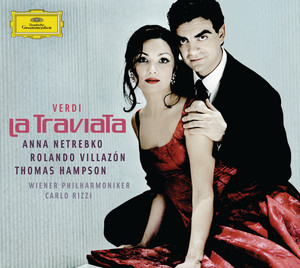 | La traviata / Act 3: "Prendi, quest'è l'immagine" | Giuseppe Verdi, Anna Netrebko, Rolando Villazón, Thomas Hampson, Diane Pilcher, Luigi Roni, Wiener Philharmoniker, Carlo Rizzi | D♭ Minor | 1 | 12A | 87 BPM | |
 | La Wally / Act 1: "Ebben? Ne andrò lontana" | Alfredo Catalani, Renata Tebaldi, Monte-Carlo Philharmonic Orchestra, Fausto Cleva | E Major | 1 | 12B | 66 BPM | |
 | Pagliacci / Act 1: "Recitar!" - "Vesti la giubba" | Ruggero Leoncavallo, Carlo Bergonzi, Orchestra Del Teatro Alla Scala, Milano, Herbert von Karajan | E Minor | 2 | 9A | 83 BPM | |
 | La Traviata, Teil 3 | La Traviata | B♭ Major | 0 | 6B | 0 BPM | |
 | Verdi: La traviata, Act 1: "Un dì felice" (Alfredo, Violetta, Gastone) | Giuseppe Verdi, Carlo Rizzi, Edita Gruberova, London Symphony Orchestra, Neil Shicoff | A♭ Major | 0 | 4B | 181 BPM | |
 | Macbeth: Preludio | Giuseppe Verdi, Giuseppe Altomare, Olha Zhuravel, Pavel Kudinov, Rubens Pelizzari, Marco Voleri, Luca Dall'Amico, William Corro, Andrea Pistolesi, Coro Lirico Marchigiano 'V. Bellini', Marchigiana Philharmonic Orchestra, Daniele Callegari | B♭ Minor | 0 | 3A | 116 BPM | |
 | Donizetti: Don Pasquale, Act 1: "Sogno soave e casto" (Ernesto, Pasquale) | Gaetano Donizetti, Gösta Winbergh, Sesto Bruscantini, Philharmonia Orchestra, Riccardo Muti | A♭ Major | 1 | 4B | 71 BPM | |
 | Cavalleria rusticana: Voi lo sapete | Pietro Mascagni, Agnes Baltsa, Munich Radio Orchestra, Heinz Wallberg | F Major | 3 | 7B | 172 BPM | |
 | Mozart: Così fan tutte, K. 588, Act I, Scene 1: No. 3, Terzetto. "Una bella serenata" (Ferrando, Guglielmo, Don Alfonso) | Wolfgang Amadeus Mozart, Alfredo Kraus, Giuseppe Taddei, Heinrich Schmidt, Walter Berry, Karl Böhm, Philharmonia Orchestra | F Major | 1 | 7B | 85 BPM | |
 | Rigoletto, Act III: Bella figlia dell'amore (Quartet) | Giuseppe Verdi, Luciano Pavarotti, Dame Joan Sutherland, Huguette Tourangeau, Sherrill Milnes, London Symphony Orchestra, Richard Bonynge | D♭ Major | 3 | 3B | 89 BPM | |
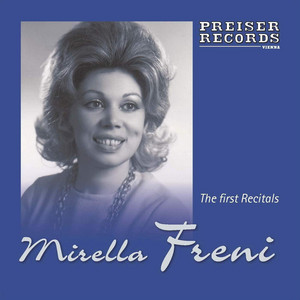 | L´Amico Fritz: Son pochi fiori | Mirella Freni, Munchener Rundfunkorchester, Ino Savini | B♭ Major | 2 | 6B | 63 BPM | |
 | Verdi: La traviata, Act 2: "Pura siccome un angelo" (Germont, Violetta) | Giuseppe Verdi, Philharmonia Orchestra, Riccardo Muti, Renata Scotto, Renato Bruson | A♭ Major | 1 | 4B | 85 BPM | |
| Handel: Serse, HWV 40, Act 1, Scene 1: Arioso. "Ombra mai fù" (Serse) | George Frideric Handel, Jennifer Larmore, Jesús López-Cobos, Orchestre de Chambre de Lausanne | A♭ Major | 0 | 4B | 181 BPM | |
 | La Traviata: Parigi, o cara | Giuseppe Verdi, Orquesta Sinfonica del Teatro Nacional de Santa Carlos, Lisboa, Alfredo Kraus, Franco Ghione, Maria Cristina de Castro, Maria Callas | D♭ Major | 2 | 3B | 89 BPM | |
 | Ponchielli: La Gioconda, Op. 9, Act 4 Scene 2: "Suicidio! … In questi fieri momenti" (Gioconda) | Amilcare Ponchielli, Maria Callas, Orchestra Del Teatro Alla Scala, Milano, Antonino Votto, Orchestra Del Teatro Alla Scala Di Milan | F♯ Minor | 1 | 11A | 90 BPM | |
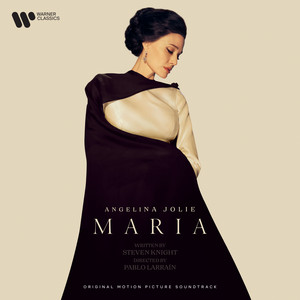 | Piangete voi | Maria Callas | D♭ Major | 2 | 3B | 126 BPM | |
 | La Wally (1997 Digital Remaster): Ebben?...Ne andrò lontana | Maria Callas, Tullio Serafin, Philharmonia Orchestra | C Major | 2 | 8B | 71 BPM | |
 | Lucia di Lammermoor, Act III: Il dolce suono mi colpi, "Mad Scene" | Gaetano Donizetti, Maria Callas, RAI Chorus, Rome, RAI Symphony Orchestra, Rome, Oliviero de Fabritiis | E♭ Major | 1 | 5B | 80 BPM | |
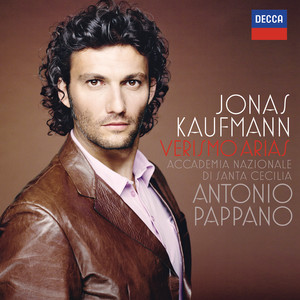 | Pagliacci / Act 1: "Recitar!...Vesti la giubba" | Ruggero Leoncavallo, Jonas Kaufmann, Orchestra dell'Accademia Nazionale di Santa Cecilia, Antonio Pappano | E Minor | 4 | 9A | 81 BPM | |
 | Werther, Act III Scene 1: Air des lettres, "Qui m'aurait dit la place que dans mon coeur ... Des cris joyeux d'enfants montent sous ma fenêtre" (Charlotte) - 1963 Columbia Recording | Orchestre De La Société Des Concerts Du Conservatoire, Georges Prêtre, Maria Callas | C Major | 1 | 8B | 86 BPM | |
 | Cavalleria rusticana: Part I: Gli aranci olezzano (Women, Men) | Pietro Mascagni, Maria Callas, Giuseppe Di Stefano, Rolando Panerai, Anna Maria Canali, Ebe Ticozzi, Vittore Veneziani, Milan La Scala Chorus, Orchestra Del Teatro Alla Scala, Milano, Tullio Serafin | B Major | 1 | 1B | 85 BPM | |
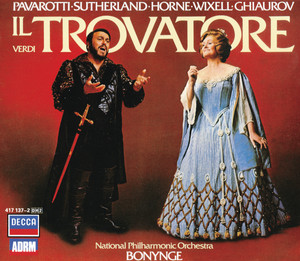 | Il Trovatore / Act 2: "Il balen del suo sorriso...Qual suono! o ciel!" | Giuseppe Verdi, Ingvar Wixell, Nicolai Ghiaurov, The London Opera Chorus, National Philharmonic Orchestra, Richard Bonynge | D♭ Major | 3 | 3B | 94 BPM | |
 | Rossini: Il barbiere di Siviglia, Act 1, No. 5: Una voce poco fa | Gioachino Rossini, Jesús López-Cobos, Orchestre de Chambre de Lausanne | E Major | 1 | 12B | 68 BPM | |
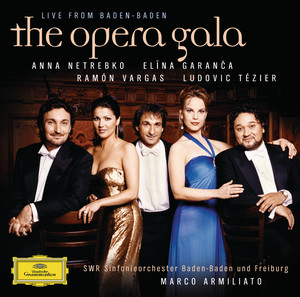 | Lakmé / Act 1: Viens, Mallika, ... Dôme épais (Flower Duet) | Léo Delibes, Anna Netrebko, Elina Garanca, SWR Symphony Orchestra, Marco Armiliato | B Major | 1 | 1B | 80 BPM |
- ISRC
- This song does not have an ISRC.
- Label
- L-M Records/RCA Records