- BPM
- 151
- Key
- G Major
- Camelot
- 9B
The Nutcracker, Op. 72: Trepak by Pyotr Ilyich Tchaikovsky, Iain Sutherland Concert Orchestra Song Details
On November 22, 2024, the song "The Nutcracker, Op. 72: Trepak" was released by Pyotr Ilyich Tchaikovsky, Iain Sutherland Concert Orchestra. With This song being less than two minutes long, at 1:10, we are fairly confident that this song is not explicit and is safe for all ages. Based on the duration of this song, this song duration is much smaller than the average song duration. The track order of this song in Iain Sutherland Concert Orchestra's "Iain Sutherland's Christmas Cracker" album is number 7 out of 20. On top of that, United States appears to be the country where this track was created. Based on our statistics, The Nutcracker, Op. 72: Trepak's popularity is unknown right now. The overall mood can be danceable to some, especially with it's high amount of postive energy.
BPM and Tempo
We consider the tempo marking of The Nutcracker, Op. 72: Trepak by Pyotr Ilyich Tchaikovsky, Iain Sutherland Concert Orchestra to be Allegro (fast, quick, and bright) because the track has a tempo of 151 BPM, a half-time of 76BPM, and a double-time of 302 BPM. Based on that, the speed of the song's tempo is fast. Activities such as, running, can go well with this song. The time signature for this track is 4/4.
Music Key
This song has a musical key of G Major. This also means that this song has a camelot key of 9B. So, the perfect camelot match for 9B would be either 9B or 10A. While, 10B can give you a low energy boost. For moderate energy boost, you would use 6B and a high energy boost can either be 11B or 4B. Though, if you want a low energy drop, you should looking for songs with either a camelot key of 9A or 8B will give you a low energy drop, 12B would be a moderate one, and 7B or 2B would be a high energy drop. Lastly, 6A allows you to change the mood.
Want to find the BPM and music key for other songs? Check out our BPM and Key Finder page!
- Popularity
- 0%
- Loudness
- -14.408 dB
- Acousticness
- 95%
- Danceability
- 44%
- Energy
- 37%
- Instrumentalness
- 94%
- Liveness
- 21%
- Loudness
- 76%
- Speechiness
- 4%
- Valence
- 97%
Recommendations
| Track | Artist | Key | Energy | Camelot | BPM | ||
|---|---|---|---|---|---|---|---|
 | Waltz in A flat major, Op.39 No. 15 | Johannes Brahms, Radio Symphony Orchestra | A Major | 1 | 11B | 89 BPM | |
 | A Midsummer Night's Dream, Incidental Music, Op.61, MWV M 13: No.1 Scherzo | Felix Mendelssohn, Judi Dench, Boston Symphony Orchestra, Seiji Ozawa | G Minor | 2 | 6A | 123 BPM | |
 | The Firebird (Original Version): No. 20, Lullaby | Igor Stravinsky, City Of Birmingham Symphony Orchestra, Andris Nelsons | E♭ Minor | 0 | 2A | 172 BPM | |
 | Giselle / Act 1: Introduction | Adolphe Adam, Wiener Philharmoniker, Herbert von Karajan | E♭ Major | 1 | 5B | 135 BPM | |
 | Peer Gynt, Op. 23: No. 16, Anitra's Dance | Edvard Grieg, San Francisco Symphony, Herbert Blomstedt | A Minor | 0 | 8A | 82 BPM | |
 | 12 Songs, Op. 21: V. Lilacs (Transcr. Rachmaninoff for Solo Piano) | Sergei Rachmaninoff, Sergei Babayan | A♭ Major | 0 | 4B | 78 BPM | |
 | Souvenir d'un lieu cher, Op. 42: 3. Mélodie | Pyotr Ilyich Tchaikovsky, Janine Jansen, Mahler Chamber Orchestra, Daniel Harding | E♭ Major | 0 | 5B | 99 BPM | |
 | Cello Concerto No. 1 in C Major, Hob.VIIb:1: III. Allegro molto | Joseph Haydn, Steven Isserlis, Chamber Orchestra of Europe, Sir Roger Norrington | C Major | 1 | 8B | 147 BPM | |
 | Faust, CG 4, Ballet Music: VI. Variations du miroir. Allegretto | Charles Gounod, Berliner Philharmoniker, Herbert von Karajan | E Major | 1 | 12B | 90 BPM | |
 | Prélude in C-Sharp Minor, Op. 3, No. 2 | Sergei Rachmaninoff | F♯ Minor | 1 | 11A | 115 BPM | |
 | Peer Gynt Suite No. 1, Op. 46: I. Morning Mood | Edvard Grieg, Berliner Philharmoniker, Herbert von Karajan | E Major | 0 | 12B | 141 BPM | |
 | Swan Lake, Op. 20 (Mariinsky Version), Act I: No. 4, Pas de trois: Var. 1. Allegro semplice | Pyotr Ilyich Tchaikovsky, Mariinsky Orchestra, Valery Gergiev | E♭ Major | 2 | 5B | 97 BPM | |
 | Grieg: Peer Gynt, Op. 23, Act 4: No. 13, Prelude. Morning Mood | Edvard Grieg, Sir Neville Marriner, Academy of St. Martin in the Fields | E Major | 0 | 12B | 137 BPM | |
 | String Quartet No. 1 in D Major, Op. 11: II. Andante cantabile | Pyotr Ilyich Tchaikovsky, New Haydn Quartet | B♭ Major | 0 | 6B | 89 BPM | |
 | Cello Concerto No. 1 in A Minor, Op. 33: I. Allegro non troppo | Camille Saint-Saëns, Mischa Maisky, Orpheus Chamber Orchestra | F Major | 2 | 7B | 131 BPM | |
 | Carmen Suite No. 1 (Arr. E. Guiraud): III. Intermezzo | Georges Bizet, Orquestra Simfònica de Barcelona i Nacional de Catalunya, Pablo González | E♭ Major | 0 | 5B | 81 BPM | |
 | The Red Poppy, Op. 70: V. Valse | Reinhold Glière, Sir Edward Downes, BBC Philharmonic | D Major | 1 | 10B | 163 BPM | |
 | In the Steppes of Central Asia | Alexander Borodin, Royal Philharmonic Orchestra, Vladimir Ashkenazy | A Major | 0 | 11B | 69 BPM | |
 | Barber: Adagio for Strings | Samuel Barber, Sir Simon Rattle, Berliner Philharmoniker | B♭ Minor | 1 | 3A | 73 BPM | |
 | Masquerade Suite: Mazurka | Aram Khachaturian, St. Petersburg State Symphony Orchestra, Andre Anichanov | A♭ Major | 3 | 4B | 178 BPM | |
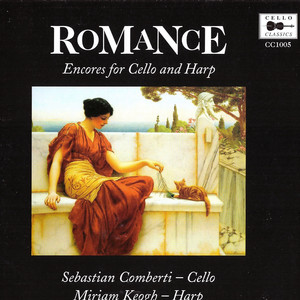 | Carnival of the Animals: The Swan - Arranged for Cello and Harp by Miriam Keogh | Camille Saint-Saëns, None, Sebastian Comberti, Miriam Keogh | G Major | 1 | 9B | 123 BPM | |
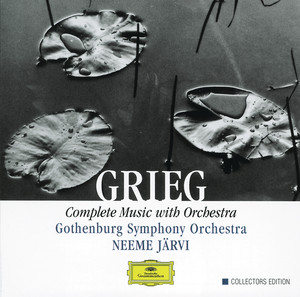 | In Autumn, Op. 11 | Edvard Grieg, Gothenburg Symphony Orchestra, Neeme Järvi | A Minor | 1 | 8A | 109 BPM | |
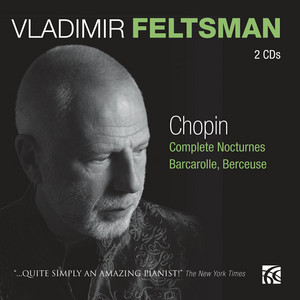 | Nocturne in C-Sharp Minor | Frédéric Chopin, Vladimir Feltsman | D♭ Minor | 0 | 12A | 79 BPM | |
 | Les saisons (The Seasons), Op. 37b: II. February: Carnival | Ilya Rachkovsky | E Major | 1 | 12B | 131 BPM | |
 | Variations on a Rococo Theme, Op. 33, TH 57: Var: VI. Andante | Pyotr Ilyich Tchaikovsky, Jean-Guihen Queyras, BBC Symphony Orchestra, Jiří Bělohlávek | D Major | 0 | 10B | 114 BPM |
- ISRC
- USX762402907
- Label
- L-M Records/RCA Records