- BPM
- 101
- Key
- F♯ Major
- Camelot
- 2B
Goldberg Variations: Aria by Johann Sebastian Bach, Konstantin Lifschitz Song Details
Johann Sebastian Bach, Konstantin Lifschitz's ' "Goldberg Variations: Aria" was released on its scheduled release date, January 1, 2009. The duration of This song is about two minutes long, specifically at 2:11. This song does not appear to have any foul language. Goldberg Variations: Aria's duration is considered a little bit shorter than the average duration of a typical track. There are a total of 30 in the song's album "The Most Relaxing Classical Music In The Universe". In this album, this song's track order is #14. In terms of popularity, Goldberg Variations: Aria is currently below average in popularity. Based on the vibe, this track doesn't seem to be that danceable, however its valence properties can make this some somewhat danceable.
BPM and Tempo
With Goldberg Variations: Aria by Johann Sebastian Bach, Konstantin Lifschitz having a BPM of 101 with a half-time of 50 BPM and a double-time of 202 BPM, we would consider this track to have a Andante (at a walking pace) tempo marking. Because of this, we believe that the song has an overall slow tempo. The time signature for this track is 4/4.
Music Key
This song is in the music key of F♯ Major. Or for those who are familiar with the camelot wheel, this song has a camelot key of 2B. So, the perfect camelot match for 2B would be either 2B or 3A. While, 3B can give you a low energy boost. For moderate energy boost, you would use 11B and a high energy boost can either be 4B or 9B. Though, if you want a low energy drop, you should looking for songs with either a camelot key of 2A or 1B will give you a low energy drop, 5B would be a moderate one, and 12B or 7B would be a high energy drop. Lastly, 11A allows you to change the mood.
Want to find the BPM and music key for other songs? Check out our BPM and Key Finder page!
- Popularity
- 25%
- Loudness
- -17.881 dB
- Acousticness
- 79%
- Danceability
- 33%
- Energy
- 18%
- Instrumentalness
- 13%
- Liveness
- 7%
- Loudness
- 70%
- Speechiness
- 4%
- Valence
- 44%
Recommendations
| Track | Artist | Key | Energy | Camelot | BPM | ||
|---|---|---|---|---|---|---|---|
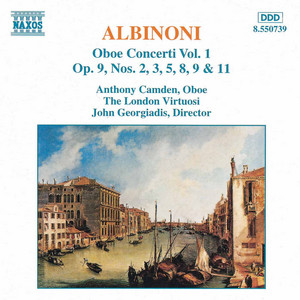 | Oboe Concerto in D Minor, Op. 9, No. 2: II. Adagio | Tomaso Albinoni, Anthony Camden, London Virtuosi, John Georgiadis | B♭ Major | 1 | 6B | 75 BPM | |
 | Adagio in F, H.XVII No. 9 | Joseph Haydn, Alfred Brendel | F Major | 0 | 7B | 71 BPM | |
 | The Well-Tempered Clavier, Book 1, BWV 846-869: Prelude No. 3 in C sharp major, BWV 848 | Luc Beauséjour | C Major | 5 | 8B | 125 BPM | |
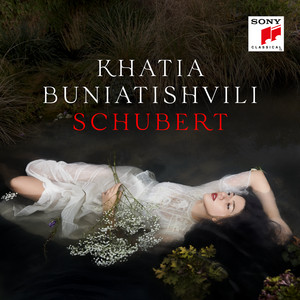 | Ständchen, S. 560 (Trans. from Schwanengesang No. 4, D. 957) | Franz Schubert, Franz Liszt, Khatia Buniatishvili | D Major | 0 | 10B | 67 BPM | |
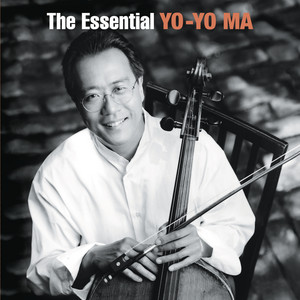 | Wachet auf, ruft uns die Stimme, BWV 645 | Yo-Yo Ma, Ton Koopman, Amsterdam Baroque Orchestra | D Major | 0 | 10B | 79 BPM | |
 | Music: Stolzel: Bist Du Bei Mir | John Shrapnel, Jeremy Siepmann, Johann Sebastian Bach | E♭ Major | 1 | 5B | 64 BPM | |
 | Orfeo ed Euridice, Wq. 30 / Act II: Dance of the Blessed Spirits (Arr. by Mathieu Herzog for Cello and Strings) | Christoph Willibald Gluck, Camille Thomas, Brussels Philharmonic, Mathieu Herzog | B Minor | 1 | 10A | 87 BPM | |
| Music: Prelude In E Flat Minor - The Well-tempered Clavier, Book I | John Shrapnel, Jeremy Siepmann, Johann Sebastian Bach | A♭ Minor | 0 | 1A | 139 BPM | |
 | II. Adagio cantabile from Piano Sonata No. 8 in C minor, Op. 13 "Pathetique" - Instrumental | Ludwig van Beethoven, Murray Perahia | A♭ Major | 0 | 4B | 62 BPM | |
 | Zdes' khorosho ('How Fair This Spot'), Op. 21, No. 7 | Sergei Rachmaninoff, Pablo Ferrandez, Denis Kozhukhin | A Major | 0 | 11B | 87 BPM | |
 | Prelude, Fugue And Allegro In E Flat Major, BWV 998 : Prelude, Fugue And Allegro In E Flat Major, BWV 998 | Janos Sebestyen, Johann Sebastian Bach | E♭ Major | 2 | 5B | 135 BPM | |
 | Goldberg Variations, BWV 988: Var. 1 - 1981 Version | Johann Sebastian Bach, Glenn Gould | G Major | 4 | 9B | 165 BPM | |
 | Keyboard Sonata in D Minor, Wq. 51/4, H. 128, "Fortsetzung Sonata No. 4": I. Allegro assai | Carl Philipp Emanuel Bach, Christopher Hinterhuber | F Major | 2 | 7B | 142 BPM | |
 | Haydn: Cello Concerto No. 1 in C Major, Hob. VIIb, 1: II. Adagio (Cadenza by Britten) | Franz Joseph Haydn, Mstislav Rostropovich, Academy of St. Martin in the Fields | F Major | 1 | 7B | 124 BPM | |
 | Concerto Grosso In D Major, Op. 6, No. 1 : V. Largo | Arcangelo Corelli, Quido Holbling, Daniela Ruso, Ludovit Kanta, Anna Holbling, Capella Istropolitana | B Minor | 1 | 10A | 87 BPM | |
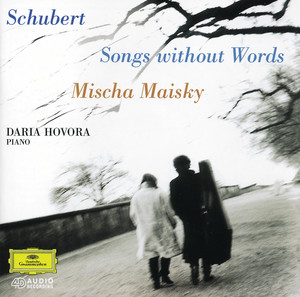 | Die schöne Müllerin, D. 795: No. 19, Der Müller und der Bach - Performed on Cello & Piano | Franz Schubert, Mischa Maisky, Daria Hovora | G Major | 0 | 9B | 96 BPM | |
 | Serenade No. 13 in G Major, K. 525, "Eine kleine Nachtmusik": II. Romance | Wolfgang Amadeus Mozart, Capella Istropolitana, Wolfgang Sobotka | C Major | 0 | 8B | 143 BPM | |
 | Orchestral Suite No. 3 in D, BWV 1068: 2. Air | Johann Sebastian Bach, Janine Jansen, Boris Brovtsyn, Cindy Albracht, Frederik Paulsson, Julia-Maria Kretz, Tijmen Huisingh, Monika Urbonaite, Nimrod Guez, Pauline Sachse, Maarten Jansen, Rick Stotijn, Jan Jansen | D Major | 2 | 10B | 66 BPM | |
 | Concerto No. 3 in D Major, BWV 1054: III. Allegro | Johann Sebastian Bach, Sonya Bach, English Chamber Orchestra | D Major | 2 | 10B | 99 BPM | |
 | Brandenburg Concerto No. 4 in G Major, BWV 1049: I. Allegro - Live from Teatro Romolo Valli, Reggio Emilia, 2007 | Johann Sebastian Bach, Giuliano Carmignola, Michala Petri, Nikola Tarasov, Orchestra Mozart, Claudio Abbado | C Major | 0 | 8B | 120 BPM | |
 | Violin Concerto in E Major, Bwv 1042: II. Adagio | Arthur Grumiaux, Johann Sebastian Bach, Zurich Chamber Orchestra, Edmond De Stoutz | D♭ Minor | 1 | 12A | 79 BPM | |
 | Concerto In F Major, F Dur BWV978, After Antonio Vivaldi: (Allegro) | Arts Music Recording, Rotterdam, Pieter Dirksen, Johann Sebastian Bach | E Minor | 1 | 9A | 81 BPM | |
 | Le carnaval des animaux, R. 125: Le cygne | Camille Saint-Saëns, Mischa Maisky, Orpheus Chamber Orchestra | C Major | 0 | 8B | 83 BPM | |
 | Goldberg Variations (‘Air with Thirty Variations’), BWV 988: I. Largamente e cantato | Chiyan Wong, Johann Sebastian Bach, Ferruccio Busoni | E Minor | 0 | 9A | 96 BPM | |
 | Montero: Chaconne (after the "Ciaccona" from Bach's "Violin Partita No. 2", BWV 1004): | Gabriela Montero, Johann Sebastian Bach | D Minor | 2 | 7A | 151 BPM |
- ISRC
- This song does not have an ISRC.
- Label
- L-M Records/RCA Records