- BPM
- 94
- Key
- C Major
- Camelot
- 8B
Bernstein: Wonderful Town, Act 1: "One Hundred Easy Ways to Lose a Man" (Ruth) by Leonard Bernstein, Sir Simon Rattle, Kim Criswell, Birmingham Contemporary Music Group Song Details
Leonard Bernstein, Sir Simon Rattle, Kim Criswell, Birmingham Contemporary Music Group's ' "Bernstein: Wonderful Town, Act 1: "One Hundred Easy Ways to Lose a Man" (Ruth)" was released on its scheduled release date, January 1, 1999. The duration of This song is about 3 minutes long, at 3:22. Based on our data, This song appears to be safe for all ages and is not considered explicit. This track is about the average length of a typical track. The song is number 5 out of 20 in Bernstein: Wonderful Town by Leonard Bernstein, Sir Simon Rattle, Birmingham Contemporary Music Group. Going off of the ISRC code of this track, we detected that the origin of this track is from United Kingdom. In terms of popularity, Bernstein: Wonderful Town, Act 1: "One Hundred Easy Ways to Lose a Man" (Ruth) is currently not that popular. The overall tone is very danceable, especially with its high energy, which produces more of a euphoric, cheerful, or happy vibe.
BPM and Tempo
The tempo marking of Bernstein: Wonderful Town, Act 1: "One Hundred Easy Ways to Lose a Man" (Ruth) by Leonard Bernstein, Sir Simon Rattle, Kim Criswell, Birmingham Contemporary Music Group is Andante (at a walking pace), since this song has a tempo of 94 BPM. With that information, we can conclude that the song has a slow tempo. This song can go great with yoga or pilates. The time signature for this track is 4/4.
Music Key
This song is in the music key of C Major. This also means that this song has a camelot key of 8B. So, the perfect camelot match for 8B would be either 8B or 9A. While, 9B can give you a low energy boost. For moderate energy boost, you would use 5B and a high energy boost can either be 10B or 3B. Though, if you want a low energy drop, you should looking for songs with either a camelot key of 8A or 7B will give you a low energy drop, 11B would be a moderate one, and 6B or 1B would be a high energy drop. Lastly, 5A allows you to change the mood.
Want to find the BPM and music key for other songs? Check out our BPM and Key Finder page!
- Popularity
- 1%
- Loudness
- -15.953 dB
- Acousticness
- 73%
- Danceability
- 66%
- Energy
- 22%
- Instrumentalness
- 0%
- Liveness
- 72%
- Loudness
- 73%
- Speechiness
- 50%
- Valence
- 67%
Recommendations
| Track | Artist | Key | Energy | Camelot | BPM | ||
|---|---|---|---|---|---|---|---|
 | Marche slave, Op. 31, TH 45 | Pyotr Ilyich Tchaikovsky, Leonard Bernstein, New York Philharmonic | B♭ Minor | 4 | 3A | 109 BPM | |
 | Romeo and Juliet Suite No. 2, Op. 64ter: I. Montagues and Capulets (Live) | Sergei Prokofiev, Riccardo Muti, Chicago Symphony Orchestra | A Minor | 1 | 8A | 93 BPM | |
 | Brook Green Suite: II. Air | Gustav Holst, English Sinfonia, Howard Griffiths | E♭ Major | 0 | 5B | 128 BPM | |
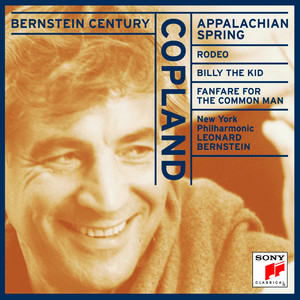 | Billy the Kid Suite: III. Mexican Dance and Finale | Aaron Copland, Leonard Bernstein, New York Philharmonic | C Major | 3 | 8B | 141 BPM | |
 | Carmen Suite No. 1 (Arr. E. Guiraud): IV. Séguedille | Georges Bizet, Orquestra Simfònica de Barcelona i Nacional de Catalunya, Pablo González | G Minor | 0 | 6A | 66 BPM | |
 | Piano Concerto No. 2 in F Major, Op. 102: II. Andante | Dmitri Shostakovich, Boris Giltburg, Royal Liverpool Philharmonic Orchestra, Vasily Petrenko | C Minor | 0 | 5A | 80 BPM | |
 | Symphony No. 7 in A Major, Op. 92: II. Allegretto | Ludwig van Beethoven, Leonard Bernstein, New York Philharmonic | E Minor | 0 | 9A | 121 BPM | |
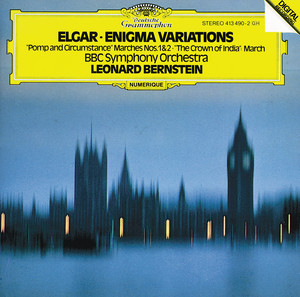 | Enigma Variations, Op. 36: Var. 5. Moderato "R.P.A." | Edward Elgar, BBC Symphony Orchestra, Leonard Bernstein | C Minor | 0 | 5A | 83 BPM | |
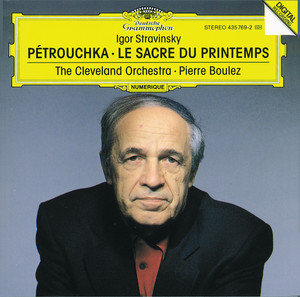 | Petrouchka / Tableau I: Fête populaire de la semaine grasse | Igor Stravinsky, Cleveland Orchestra, Pierre Boulez | D Minor | 2 | 7A | 116 BPM | |
 | Symphony No. 40 in G Minor, K. 550 (1st Version, No Clarinets): I. Molto allegro | Wolfgang Amadeus Mozart, Wiener Philharmoniker, Karl Böhm | B Major | 0 | 1B | 94 BPM | |
 | Rhapsody in Blue | George Gershwin, Columbia Symphony Orchestra, Leonard Bernstein | A Major | 2 | 11B | 71 BPM | |
 | Debussy: La plus que lente, L. 121 | Claude Debussy, San Francisco Symphony, Michael Tilson Thomas | G Major | 0 | 9B | 133 BPM | |
 | Piano Concerto No. 4 in G Major, Op. 58: II. Andante con moto - Live | Ludwig van Beethoven, Krystian Zimerman, Wiener Philharmoniker, Leonard Bernstein | F Major | 1 | 7B | 172 BPM | |
 | Symphony No. 10 in E Minor, Op. 93: II. Allegro | Dmitri Shostakovich, Royal Liverpool Philharmonic Orchestra, Vasily Petrenko | B♭ Minor | 6 | 3A | 89 BPM | |
 | Symphony No. 3 In C Minor, Op. 78 "Organ Symphony": 2b. Maestoso - Più allegro - Molto allegro | Camille Saint-Saëns, Simon Preston, Berliner Philharmoniker, James Levine | C Major | 3 | 8B | 106 BPM | |
| Enigma Variations, Op. 36: Var. 8. Allegretto "W.N." | Edward Elgar, BBC Symphony Orchestra, Leonard Bernstein | G Major | 0 | 9B | 84 BPM | |
 | Come, Sweet Death | Johann Sebastian Bach, Eugene Ormandy, Philadelphia Orchestra | E Minor | 1 | 9A | 87 BPM | |
 | Symphony No. 2 "Resurrection": Ic. Schnell - Live | Gustav Mahler, New York Philharmonic, Leonard Bernstein | E♭ Minor | 2 | 2A | 64 BPM | |
 | Candide, Act I (Remastered): Overture - 2017 Remastered Version | Leonard Bernstein, Samuel Krachmalnick, Candide Orchestra | E♭ Major | 4 | 5B | 166 BPM | |
 | Voices of Spring, Op. 410 | Johann Strauss II, Leonard Bernstein | B♭ Major | 2 | 6B | 110 BPM | |
 | West Side Story Symphonic Dances: IV. Mambo - Live | Leonard Bernstein, Los Angeles Philharmonic | C Major | 1 | 8B | 117 BPM | |
 | Shéhérazade, Op. 35: III. The Young Prince and the Young Princess | Nikolai Rimsky-Korsakov, Sergej Galaktionov, Gianandrea Noseda, Filarmonica Teatro Regio Torino | G Major | 0 | 9B | 103 BPM | |
 | Symphony No. 5 in E Minor, Op. 64: IV. Finale. Andante maestoso – Allegro vivace – Moderato assai e molto maestoso – Presto – Molto meno mosso | Pyotr Ilyich Tchaikovsky, Berliner Philharmoniker, Kirill Petrenko | E Major | 3 | 12B | 141 BPM | |
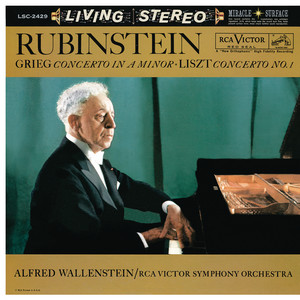 | Piano Concerto in A Minor, Op. 16: I. Allegro molto moderato - Remastered | Edvard Grieg, Arthur Rubinstein, RCA Victor Symphony Orchestra, Alfred Wallenstein | A Minor | 1 | 8A | 82 BPM | |
| Variations On An Original Theme, Op.36 "Enigma": 11. G.R.S. (Allegro di molto) | Edward Elgar, BBC Symphony Orchestra, Leonard Bernstein | D Major | 3 | 10B | 85 BPM |
- ISRC
- GBAYC9802848
- Label
- L-M Records/RCA Records