- BPM
- 71
- Key
- A Major
- Camelot
- 11B
Symphony No. 2, Op. 9, "Antar": III. Allegro risoluto by Nikolai Rimsky-Korsakov, St. Petersburg State Symphony Orchestra, Andre Anichanov Song Details
"Symphony No. 2, Op. 9, "Antar": III. Allegro risoluto" by Nikolai Rimsky-Korsakov, St. Petersburg State Symphony Orchestra, Andre Anichanov had its release date on October 4, 1994. With this song being about 5 minutes long, at This song is fairly a long song compared to the average song length. This song does not have an "Explicit" tag, making it safe for all ages. There are a total of 8 in the song's album "Rimsky-Korsakov: Symphonies Nos. 1 and 2". In this album, this song's track order is #7. Furthermore, we believe that the track originated from Hong Kong. Symphony No. 2, Op. 9, "Antar": III. Allegro risoluto is below average in popularity right now. In our opinion, the overall tone is not very danceable and projects negative sounds, such as being sad, depressed, or angry.
BPM and Tempo
With Symphony No. 2, Op. 9, "Antar": III. Allegro risoluto by Nikolai Rimsky-Korsakov, St. Petersburg State Symphony Orchestra, Andre Anichanov having a BPM of 71 with a half-time of 36 BPM and a double-time of 142 BPM, we would consider this track to have a Adagio (slowly with great expression) tempo marking. Because of this, we believe that the song has an overall slow tempo. The time signature for this track is 5/4.
Music Key
This song has a musical key of A Major. Or for those who are familiar with the camelot wheel, this song has a camelot key of 11B. So, the perfect camelot match for 11B would be either 11B or 12A. While, 12B can give you a low energy boost. For moderate energy boost, you would use 8B and a high energy boost can either be 1B or 6B. Though, if you want a low energy drop, you should looking for songs with either a camelot key of 11A or 10B will give you a low energy drop, 2B would be a moderate one, and 9B or 4B would be a high energy drop. Lastly, 8A allows you to change the mood.
Want to find the BPM and music key for other songs? Check out our BPM and Key Finder page!
- Popularity
- 20%
- Loudness
- -27.55 dB
- Acousticness
- 99%
- Danceability
- 13%
- Energy
- 4%
- Instrumentalness
- 93%
- Liveness
- 7%
- Loudness
- 54%
- Speechiness
- 5%
- Valence
- 15%
Recommendations
| Track | Artist | Key | Energy | Camelot | BPM | ||
|---|---|---|---|---|---|---|---|
 | Ritter Pázmán: Csárdás | Johann Strauss II, Carlos Kleiber, Wiener Philharmoniker | D Major | 3 | 10B | 75 BPM | |
 | Elgar: Serenade for Strings, Op. 20: I. Allegro piacevole | Edward Elgar, London Philharmonic Orchestra, Sir Adrian Boult | E Minor | 1 | 9A | 125 BPM | |
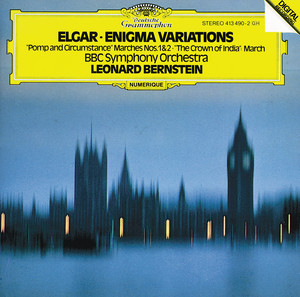 | Enigma Variations, Op. 36: Var. 14. Finale. Allegro "E.D.U." | Edward Elgar, BBC Symphony Orchestra, Leonard Bernstein | G Major | 2 | 9B | 115 BPM | |
 | Shéhérazade, Op. 35: III. The Young Prince and the Young Princess | Nikolai Rimsky-Korsakov, Sergej Galaktionov, Gianandrea Noseda, Filarmonica Teatro Regio Torino | G Major | 0 | 9B | 103 BPM | |
 | Symphony No. 2 in C minor - "Resurrection" / 3rd Movement - (Scherzo): (Trumpets & trombones) | Gustav Mahler, Wiener Philharmoniker, Gilbert Kaplan | F Major | 2 | 7B | 165 BPM | |
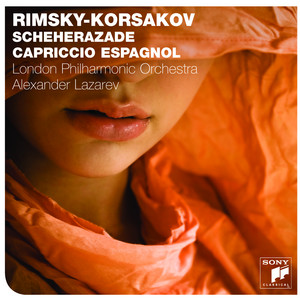 | Scheherazade: The Sea & Sinbad's Ship | Nikolai Rimsky-Korsakov, Lars Hjalmar Joakim | E Major | 1 | 12B | 82 BPM | |
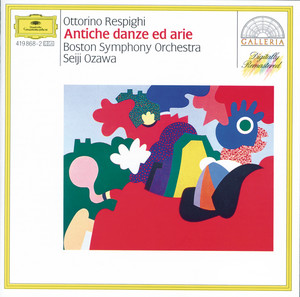 | Ancient Airs & Dances, Suite III, P. 172: IV. Passacaglia (Roncalli) | Ottorino Respighi, Boston Symphony Orchestra, Seiji Ozawa | G Minor | 3 | 6A | 116 BPM | |
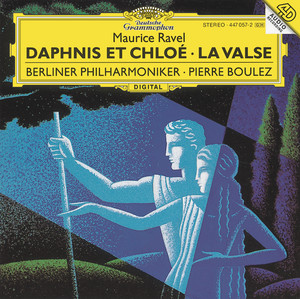 | Daphnis et Chloé, M. 57, Pt. 3: XIa-b. Pantomime. Daphnis et Chloé miment l'aventure de Pan et de Syrinx | Maurice Ravel, Berliner Philharmoniker, Pierre Boulez | F♯ Minor | 0 | 11A | 169 BPM | |
 | Symphony No. 5 in B Flat Major, Op. 100: II. Allegro marcato | Sergei Prokofiev, Thomas Søndergård, Royal Scottish National Orchestra | G Major | 2 | 9B | 81 BPM | |
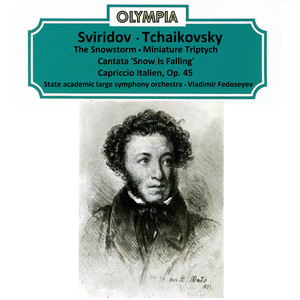 | The Snowstorm: III. Spring and autumn | Georgy Sviridov, Vladimir Fedoseyev, State Academic Large Symphony Orchestra, State academic large symphony orchestra | E Minor | 1 | 9A | 61 BPM | |
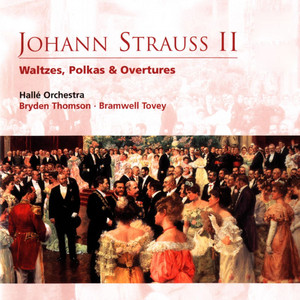 | Pesther Csárdás Op. 23 | Johann Strauss II, Hallé, Bramwell Tovey | C Major | 1 | 8B | 147 BPM | |
 | Delirien Waltz, Op. 212 | Josef Strauss, Berliner Philharmoniker, Herbert von Karajan | C Major | 2 | 8B | 97 BPM | |
 | La Sylphide: Act I: Overture | Herman Severin Løvenskiold, Kim Sjøgren, Royal Danish Orchestra, David Garforth | E Major | 1 | 12B | 132 BPM | |
 | Chamber Symphony No. 5 in A-Flat Major, Op. 118a: II. Allegretto furioso | Dmitri Shostakovich, Yuli Turovsky, I Musici de Montréal | D♭ Major | 0 | 3B | 78 BPM | |
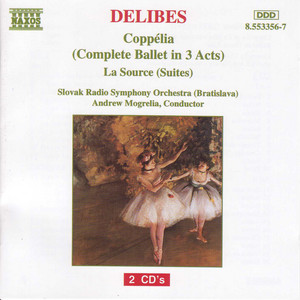 | La source, ou Naila: Suite No. 3: Suite No. 3: Romance | Léo Delibes, Slovak Radio Symphony Orchestra, Andrew Mogrelia | D♭ Major | 0 | 3B | 173 BPM | |
| Morning Papers - Waltz Op. 279 | Johann Strauss II, Hallé, Bramwell Tovey | C Major | 1 | 8B | 99 BPM | |
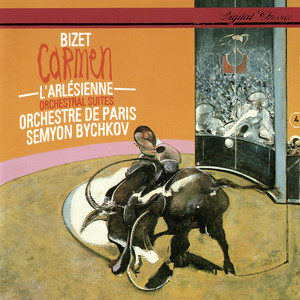 | L'Arlésienne Suite No. 2, WD 28: 3. Menuet | Georges Bizet, Orchestre de Paris, Semyon Bychkov | E♭ Major | 0 | 5B | 78 BPM | |
 | III. The Betrothal | Sergei Prokofiev, Ukrainian State Symphony Orchestra, Theodore Kuchar | C Minor | 1 | 5A | 91 BPM | |
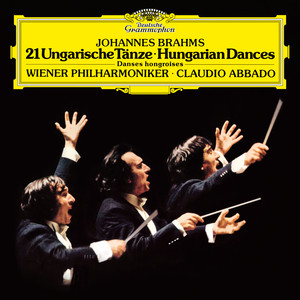 | 21 Hungarian Dances, WoO 1: Hungarian Dance No. 2 in D Minor. Allegro non assai (Orch. Hallén) | Johannes Brahms, Wiener Philharmoniker, Claudio Abbado | G Minor | 2 | 6A | 69 BPM | |
| Der Zigeunerbaron: Overture | Johann Strauss II, Hallé, Bramwell Tovey | C Major | 0 | 8B | 77 BPM | |
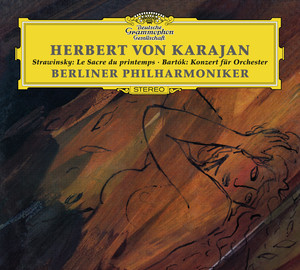 | Le Sacre du Printemps - Revised version for Orchestra (published 1947) / Part 1: The Adoration of the Earth: Ritual of the Rival Tribes | Igor Stravinsky, Berliner Philharmoniker, Herbert von Karajan | C Minor | 4 | 5A | 82 BPM | |
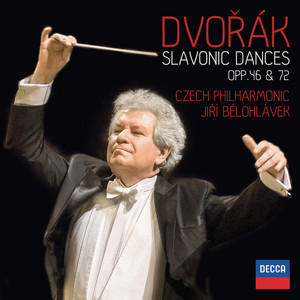 | 8 Slavonic Dances, Op. 46, B.83: No. 3 in A Flat Major (Poco allegro) | Antonín Dvořák, Czech Philharmonic, Jiří Bělohlávek | A♭ Major | 1 | 4B | 98 BPM | |
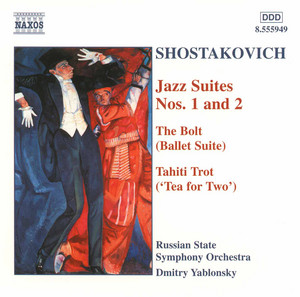 | Bolt, Op. 27a (Ballet Suite No. 5): IV. Koelkov's Dance with Friends (Tango) | Dmitri Shostakovich, Russian State Symphony Orchestra, Dmitry Yablonsky | E♭ Minor | 2 | 2A | 144 BPM | |
| 8 Slavonic Dances, Op. 46, B.83: No. 5 in A Major (Allegro vivace) | Antonín Dvořák, Czech Philharmonic, Jiří Bělohlávek | E Major | 3 | 12B | 142 BPM | |
 | Ruslan and Ludmila: Overture | Mikhail Glinka, The USSR Bolshoy Theatre Orchestra, Yevgeny Svetlanov | F Major | 3 | 7B | 81 BPM |
- ISRC
- HKI199293607
- Label
- L-M Records/RCA Records