- BPM
- 116
- Key
- G Minor
- Camelot
- 6A
Ancient Airs & Dances, Suite III, P. 172: IV. Passacaglia (Roncalli) by Ottorino Respighi, Boston Symphony Orchestra, Seiji Ozawa Song Details
Ottorino Respighi, Boston Symphony Orchestra, Seiji Ozawa's ' "Ancient Airs & Dances, Suite III, P. 172: IV. Passacaglia (Roncalli)" was released on its scheduled release date, January 1, 1979. The duration of This song is about 3 minutes long, at 3:23. Based on our data, This song appears to be safe for all ages and is not considered explicit. This track is about the average length of a typical track. There are a total of 12 in the song's album "Respighi: Ancient Airs and Dances". In this album, this song's track order is #12. Furthermore, we believe that the track originated from Germany. In terms of popularity, Ancient Airs & Dances, Suite III, P. 172: IV. Passacaglia (Roncalli) is currently below average in popularity. Based on the vibe, this track doesn't seem to be that danceable, however its valence properties can make this some somewhat danceable.
BPM and Tempo
With Ancient Airs & Dances, Suite III, P. 172: IV. Passacaglia (Roncalli) by Ottorino Respighi, Boston Symphony Orchestra, Seiji Ozawa having a BPM of 116 with a half-time of 58 BPM and a double-time of 232 BPM, we would consider this track to have a Moderato (at a moderate speed) tempo marking. Because of this, we believe that the song has an overall moderate tempo. Looking at the BPM of this song, this song might go great with walking. The time signature for this track is 4/4.
Music Key
This song has a musical key of G Minor. Which also means that the camelot key for this song is 6A. So, the perfect camelot match for 6A would be either 6A or 5B. While, a low energy boost can consist of either 6B or 7A. For moderate energy boost, you would use 3A and a high energy boost can either be 8A or 1A. However, if you are looking for a low energy drop, finding a song with a camelot key of 5A would be a great choice. Where 9A would give you a moderate drop, and 4A or 11A would be a high energy drop. Lastly, 9B allows you to change the mood.
Want to find the BPM and music key for other songs? Check out our BPM and Key Finder page!
- Popularity
- 26%
- Loudness
- -13.854 dB
- Acousticness
- 95%
- Danceability
- 30%
- Energy
- 28%
- Instrumentalness
- 93%
- Liveness
- 16%
- Loudness
- 77%
- Speechiness
- 3%
- Valence
- 40%
Recommendations
| Track | Artist | Key | Energy | Camelot | BPM | ||
|---|---|---|---|---|---|---|---|
 | L'Arlésienne Suite No. 1, WD 40: II. Minuetto | Georges Bizet, Daniel Deffayet, Berliner Philharmoniker, Herbert von Karajan | A♭ Major | 0 | 4B | 175 BPM | |
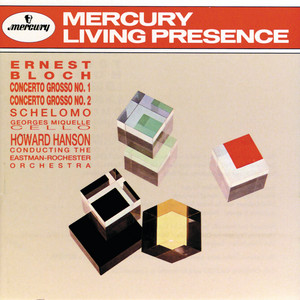 | Concerto grosso No.1: 1. Prelude: Allegro energico e pesante | Ernest Bloch, Eastman-Rochester Orchestra, Howard Hanson | B♭ Major | 3 | 6B | 129 BPM | |
| L'Arlésienne Suite No.1: Adagietto | Georges Bizet, Berliner Philharmoniker, Herbert von Karajan | F Major | 0 | 7B | 112 BPM | |
 | Peer Gynt, Op. 23: No. 16, Anitra's Dance | Edvard Grieg, San Francisco Symphony, Herbert Blomstedt | A Minor | 0 | 8A | 82 BPM | |
 | Adagio from Violin Sonata in G Minor, Op. 5 No. 5 (Arr. Leopold Stokowski) | Arcangelo Corelli, Matthias Bamert, BBC Philharmonic | G Minor | 0 | 6A | 175 BPM | |
| L'Arlésienne Suite No. 1, WD 40: IV. Carillon | Georges Bizet, Daniel Deffayet, Berliner Philharmoniker, Herbert von Karajan | E Major | 0 | 12B | 65 BPM | |
 | Brook Green Suite: II. Air | Gustav Holst, English Sinfonia, Howard Griffiths | E♭ Major | 0 | 5B | 128 BPM | |
 | Sinfonietta, FP 141: I. Allegro con fuoco | Francis Poulenc, RTÉ National Symphony Orchestra, Jean-Luc Tingaud | G Major | 0 | 9B | 111 BPM | |
 | Romeo and Juliette, Op. 64 (Arr. for Viola and Piano by Vadim Borisovsky, Orchestration for Viola and String Orchestra by François Vallières): Introduction | Sergei Prokofiev, Elvira Misbakhova, I Musici de Montréal, Jean-François Rivest | D Major | 1 | 10B | 99 BPM | |
 | Gymnopédie No. 1 (Orchestrated by Claude Debussy) - Recorded 1949 | Erik Satie, Serge Koussevitzky, Boston Symphony Orchestra | B♭ Minor | 2 | 3A | 103 BPM | |
 | Piano Quintet in C Minor: I. Andante | Alexander Borodin, Ilona Prunyi, New Budapest Quartet | C Minor | 1 | 5A | 68 BPM | |
 | Roman Carnival Overture, Op. 9, H. 95 | Hector Berlioz, Charles Münch, Boston Symphony Orchestra | A Major | 3 | 11B | 90 BPM | |
 | Pictures at an Exhibition (Orch. Ravel): VIIIb. Cum mortuis in lingua mortua | Modest Mussorgsky, Wiener Philharmoniker, Gustavo Dudamel | F♯ Major | 0 | 2B | 69 BPM | |
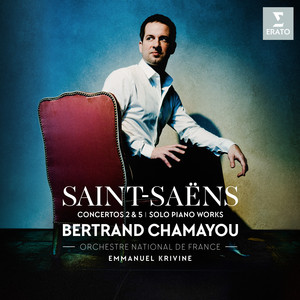 | Saint-Saëns: Piano Concerto No. 5 in F Major, Op. 103 "Egyptian": III. Molto allegro | Camille Saint-Saëns, Bertrand Chamayou, Emmanuel Krivine, Orchestre National De France | G Major | 0 | 9B | 130 BPM | |
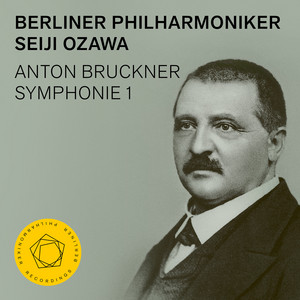 | Symphony No. 1 in C Minor, WAB 101 "Linz" (1866 Version): III. Scherzo. Schnell – Trio. Langsamer | Anton Bruckner, Berliner Philharmoniker, Seiji Ozawa | C Minor | 1 | 5A | 109 BPM | |
 | Capriccio espagnol, Op. 34: II. Variations | Nikolai Rimsky-Korsakov, Seattle Symphony Orchestra, Gerard Schwarz | F Major | 0 | 7B | 92 BPM | |
 | Pantomime: Vivace | Philip Lane, Royal Ballet Sinfonia, David Lloyd-Jones | G Minor | 2 | 6A | 113 BPM | |
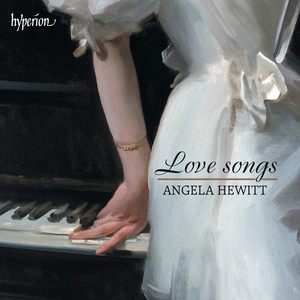 | Morgen, Op. 27 No. 4 (Arr. Reger for Piano) | Richard Strauss, Angela Hewitt | A Major | 2 | 11B | 143 BPM | |
 | Le roi s'amuse: Passepied | Léo Delibes, Slovak Philharmonic, Ondrej Lenard | A Major | 1 | 11B | 88 BPM | |
 | Piano Concerto No. 2 in F Major, Op. 102: III. Allegro | Dmitri Shostakovich, I Musici de Montréal, Maxim Shostakovich | F Major | 3 | 7B | 164 BPM | |
 | Elgar: Serenade for Strings, Op. 20: II. Larghetto | Edward Elgar, London Philharmonic Orchestra, Sir Adrian Boult | C Major | 1 | 8B | 72 BPM | |
 | Symphony No. 3 in C Minor, Op. 78, "Organ": II. Poco adagio | Camille Saint-Saëns, Charles Münch, Berj Zamkochian, Boston Symphony Orchestra | D♭ Major | 1 | 3B | 90 BPM | |
 | A Midsummer Night's Dream, Incidental Music, Op. 61, MWV M 13: No. 5 Intermezzo | Felix Mendelssohn, Judi Dench, Boston Symphony Orchestra, Seiji Ozawa | D Minor | 1 | 7A | 127 BPM | |
 | Variations On An Original Theme, Op.36 "Enigma": 12. B.G.N. (Andante) | Edward Elgar, BBC Symphony Orchestra, Leonard Bernstein | B♭ Major | 0 | 6B | 82 BPM | |
 | Fontane di Roma, P. 106: I. La fontana di Valle Giulia all'alba | Ottorino Respighi, New York Philharmonic, Giuseppe Sinopoli | F♯ Major | 2 | 2B | 73 BPM |
- ISRC
- DEF057804347
- Label
- L-M Records/RCA Records