- BPM
- 124
- Key
- C Major
- Camelot
- 8B
String Quartet No. 9 in C Major, Op. 59, No. 3 "Rasumovsky": IV. Allegro molto by Ludwig van Beethoven, Emerson String Quartet Song Details
Ludwig van Beethoven, Emerson String Quartet's 'String Quartet No. 9 in C Major, Op. 59, No. 3 "Rasumovsky": IV. Allegro molto' had a release date set for January 1, 2001. This song is about six minutes long, preciously at 6:06, making this song fairly long compared to other songs. There are a total of 36 in the song's album "The Haydn Project". In this album, this song's track order is #8. Furthermore, we believe that the track originated from Germany. Based on our statistics, String Quartet No. 9 in C Major, Op. 59, No. 3 "Rasumovsky": IV. Allegro molto's popularity is not that popular right now. In our opinion, the overall tone is not very danceable and projects negative sounds, such as being sad, depressed, or angry.
BPM and Tempo
With String Quartet No. 9 in C Major, Op. 59, No. 3 "Rasumovsky": IV. Allegro molto by Ludwig van Beethoven, Emerson String Quartet having a BPM of 124 with a half-time of 62 BPM and a double-time of 248 BPM, we would consider this track to have a Allegro (fast, quick, and bright) tempo marking. Because of this, we believe that the song has an overall fast tempo. Looking at the BPM of this song, this song might go great with walking. The time signature for this track is 3/4.
Music Key
This song is in the music key of C Major. Or for those who are familiar with the camelot wheel, this song has a camelot key of 8B. So, the perfect camelot match for 8B would be either 8B or 9A. While, 9B can give you a low energy boost. For moderate energy boost, you would use 5B and a high energy boost can either be 10B or 3B. Though, if you want a low energy drop, you should looking for songs with either a camelot key of 8A or 7B will give you a low energy drop, 11B would be a moderate one, and 6B or 1B would be a high energy drop. Lastly, 5A allows you to change the mood.
Want to find the BPM and music key for other songs? Check out our BPM and Key Finder page!
- Popularity
- 3%
- Loudness
- -15.565 dB
- Acousticness
- 97%
- Danceability
- 32%
- Energy
- 11%
- Instrumentalness
- 75%
- Liveness
- 12%
- Loudness
- 74%
- Speechiness
- 4%
- Valence
- 38%
Recommendations
| Track | Artist | Key | Energy | Camelot | BPM | ||
|---|---|---|---|---|---|---|---|
 | 6 Impromptus, Op. 5: Impromptu V | Jean Sibelius, Leif Ove Andsnes | B Minor | 0 | 10A | 72 BPM | |
 | Piano Concerto No. 2 in C Minor, Op. 18: I. Moderato | Sergei Rachmaninoff, Khatia Buniatishvili, Paavo Järvi, Czech Philharmonic | C Minor | 1 | 5A | 79 BPM | |
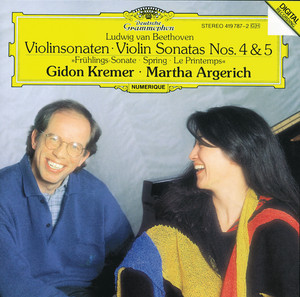 | Violin Sonata No. 5 in F Major, Op. 24 "Spring": I. Allegro | Ludwig van Beethoven, Gidon Kremer, Martha Argerich | F Major | 1 | 7B | 147 BPM | |
 | Piano Sonata No. 16 in C Major, K. 545 "Sonata facile": I. Allegro | Wolfgang Amadeus Mozart, Lang Lang | F Major | 1 | 7B | 96 BPM | |
 | Die Fledermaus: Overture | Johann Strauss II, Bavarian State Orchestra, Carlos Kleiber | G Major | 1 | 9B | 100 BPM | |
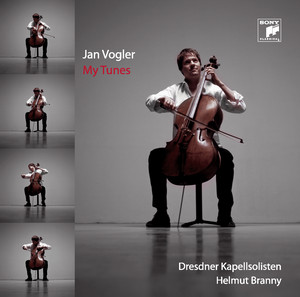 | Kol Nidrei, Op. 47 | Max Bruch, Jan Vogler, Helmut Branny | D Major | 1 | 10B | 136 BPM | |
 | Pavane, Op. 50 (Version for Piano) | Gabriel Fauré, Jorge Federico Osorio | F♯ Minor | 0 | 11A | 75 BPM | |
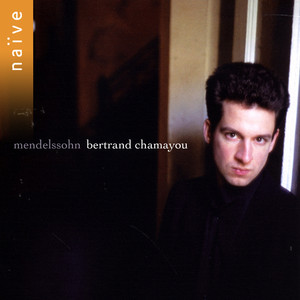 | Songs Without Words, Book VI Opus 67: No. 2 in F-Sharp Minor | Felix Mendelssohn, Bertrand Chamayou | F♯ Minor | 1 | 11A | 69 BPM | |
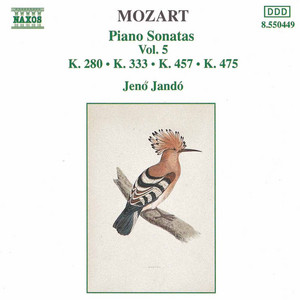 | Piano Sonata No. 14 In C Minor, K. 457: III. Allegro Assai | Jenő Jandó, Wolfgang Amadeus Mozart | C Minor | 1 | 5A | 78 BPM | |
 | 1st Movement: Adaggio / Allegro Molto | London Philharmonic Orchestra | E Minor | 1 | 9A | 116 BPM | |
 | Ascanio in Alba, K. 111: Overture | Wolfgang Amadeus Mozart, Raphaël Boulay, Michael Chance, Jill Feldman, Rosa Mannion, Howard Milner, Lorna Windsor, Paris Sorbonne University Choir, Concerto Armonico Budapest, Jacques Grimbert | A♭ Major | 1 | 4B | 150 BPM | |
 | Lieder ohne Worte II, Op. 30: VI. Venetian Gondola Song. Allegretto, MWV U110 | Felix Mendelssohn, Daniel Barenboim | F Major | 1 | 7B | 96 BPM | |
 | Lyric Pieces, Book 5, Op. 54: Nocturne | Edvard Grieg, Alessio Bax | C Major | 0 | 8B | 72 BPM | |
 | Adagio in F, H.XVII No. 9 | Joseph Haydn, Alfred Brendel | F Major | 0 | 7B | 71 BPM | |
 | Symphony No. 7 in A major, Op. 92: II. Allegretto | Nicolaus Esterhazy Sinfonia | E Minor | 0 | 9A | 143 BPM | |
 | 12 Songs, Op. 21: V. Lilacs (Transcr. Rachmaninoff for Solo Piano) | Sergei Rachmaninoff, Sergei Babayan | A♭ Major | 0 | 4B | 78 BPM | |
 | Capriccio brillant, Op. 22: Andante | Felix Mendelssohn, Matthias Kirschnereit, Michael Sanderling, Frankfurt Radio Symphony Orchestra | B Major | 0 | 1B | 91 BPM | |
 | Bagatelle No. 25 in A Minor, WoO 59 "Für Elise" | Ludwig van Beethoven, Igor Levit | A Minor | 0 | 8A | 126 BPM | |
 | Mozart / Arr. Grieg for Two Pianos: Piano Sonata No. 16 in C Major, K. 545 "Semplice": I. Allegro (Live) | Martha Argerich, Piotr Anderszewski | B♭ Major | 3 | 6B | 77 BPM | |
 | Satie / Orch. Ducros: Gymnopédie No. 1 | Erik Satie, Gautier Capuçon, Jerome Ducros, Adrien Perruchon, Orchestre de chambre de Paris | G Minor | 0 | 6A | 170 BPM | |
 | II. Adagio cantabile from Piano Sonata No. 8 in C minor, Op. 13 "Pathetique" - Instrumental | Ludwig van Beethoven, Murray Perahia | A♭ Major | 0 | 4B | 62 BPM | |
 | Carnival of the Animals, R. 125: XIII. The Swan | Camille Saint-Saëns, Marian Lapsansky, Peter Toperczer, Slovak Radio Symphony Orchestra, Ondrej Lenard | G Major | 0 | 9B | 79 BPM | |
 | Symphony No. 10 in E Minor, Op. 93: II. Allegro | Dmitri Shostakovich, Royal Liverpool Philharmonic Orchestra, Vasily Petrenko | B♭ Minor | 6 | 3A | 89 BPM | |
 | Mozart: Piano Sonata No. 16 in C Major, K. 545 "Sonata facile": II. Andante | Wolfgang Amadeus Mozart, Khatia Buniatishvili, Academy of St. Martin in the Fields | G Major | 0 | 9B | 179 BPM | |
 | Kinderszenen | Robert Schumann, Ivan Moravec | F Major | 0 | 7B | 131 BPM |
- ISRC
- DEF059404954
- Label
- L-M Records/RCA Records