- BPM
- 98
- Key
- G Major
- Camelot
- 9B
Suite in E Minor, RCT 2: I. Allemande by Jean-Philippe Rameau, Natalia Sokolovskaya Song Details
"Suite in E Minor, RCT 2: I. Allemande" by Jean-Philippe Rameau, Natalia Sokolovskaya had its release date on November 30, 2024. With this song being around four minutes long, at 4:01, the duration of this song is pretty average compared to other songs. This track is safe for children and doesn't appear to contain any foul language, since the "Explicit" tag was not present in this track. There are a total of 11 in the song's album "Rameau: Suite in E Minor, RCT 2". In this album, this song's track order is #1. Furthermore, we believe that the track originated from Italy. In terms of popularity, Suite in E Minor, RCT 2: I. Allemande is currently not that popular. In our opinion, the overall tone is not very danceable and projects negative sounds, such as being sad, depressed, or angry.
BPM and Tempo
With Suite in E Minor, RCT 2: I. Allemande by Jean-Philippe Rameau, Natalia Sokolovskaya having a BPM of 98 with a half-time of 49 BPM and a double-time of 196 BPM, we would consider this track to have a Andante (at a walking pace) tempo marking. Because of this, we believe that the song has an overall slow tempo. The time signature for this track is 4/4.
Music Key
This song is in the music key of G Major. Or for those who are familiar with the camelot wheel, this song has a camelot key of 9B. So, the perfect camelot match for 9B would be either 9B or 10A. While, 10B can give you a low energy boost. For moderate energy boost, you would use 6B and a high energy boost can either be 11B or 4B. Though, if you want a low energy drop, you should looking for songs with either a camelot key of 9A or 8B will give you a low energy drop, 12B would be a moderate one, and 7B or 2B would be a high energy drop. Lastly, 6A allows you to change the mood.
Want to find the BPM and music key for other songs? Check out our BPM and Key Finder page!
- Popularity
- 6%
- Loudness
- -27.16 dB
- Acousticness
- 100%
- Danceability
- 32%
- Energy
- 3%
- Instrumentalness
- 92%
- Liveness
- 9%
- Loudness
- 55%
- Speechiness
- 4%
- Valence
- 15%
Recommendations
| Track | Artist | Key | Energy | Camelot | BPM | ||
|---|---|---|---|---|---|---|---|
 | Two Airs for a Violin or German Flute, Violin, Cello & Harpsichord: Auld Bob Morrice. Affetuoso - Allegro | Francesco Geminiani, Rachel Podger, Brecon Baroque | F♯ Major | 1 | 2B | 97 BPM | |
 | String Quartet No. 1 in D Major, Op. 11: II. Andante cantabile | Pyotr Ilyich Tchaikovsky, Streichquartett der Staatskapelle Berlin | C Major | 0 | 8B | 77 BPM | |
 | Jesu, meine Freude in E Minor, BuxWV 60: I. Sonata | Dietrich Buxtehude, Ensemble Masques, Olivier Fortin | E Minor | 1 | 9A | 167 BPM | |
 | Concerto grosso in C Minor, Op. 2, No. 1: IV. Allegro | Francesco Geminiani, Capella Istropolitana, Jaroslav Krcek | C Minor | 1 | 5A | 180 BPM | |
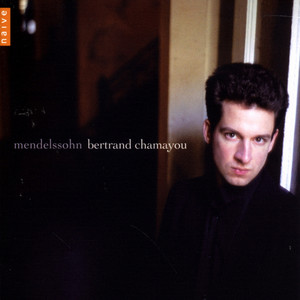 | Lied opus 34 no.2, transcription Franz Liszt: Auf Flügeln Des Gesanges | Felix Mendelssohn, Bertrand Chamayou | A♭ Major | 0 | 4B | 71 BPM | |
 | Rêverie au bord de la mer, WoO | Jacques Offenbach, Raphaela Gromes, Julian Riem | G Major | 1 | 9B | 73 BPM | |
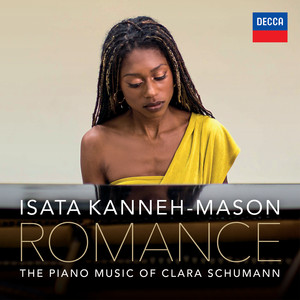 | 3 Romances, Op. 11: No. 1, Andante | Clara Schumann, Isata Kanneh-Mason | E♭ Minor | 0 | 2A | 127 BPM | |
 | WHEN THE GRASS WAS GREENER / Nino Rota: Valzer | Nino Rota, Alice Sara Ott | E Major | 1 | 12B | 71 BPM | |
 | Sonata sesta for violino solo: I. Adagio | Daniel Purcell, Théotime Langlois de Swarte, Thomas Dunford | E Minor | 0 | 9A | 100 BPM | |
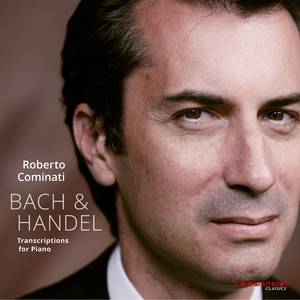 | Minuet in G Minor, HWV 434 No. 4 (Transc. W. Kempff) | George Frideric Handel, Roberto Cominati | G Minor | 0 | 6A | 66 BPM | |
 | Schluss | Fanny Mendelssohn, Heather Schmidt | E Major | 1 | 12B | 87 BPM | |
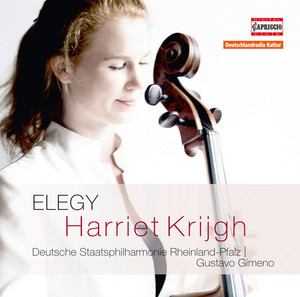 | El cant dels ocells (Version for Cello & Orchestra) | Pablo Casals, Harriet Krijgh, Gustavo Gimeno, Deutsche Staatsphilharmonie Rheinland-Pfalz | D Major | 0 | 10B | 128 BPM | |
 | Orfeo ed Euridice, Wq. 30 / Act II: Dance of the Blessed Spirits (Arr. by Mathieu Herzog for Cello and Strings) | Christoph Willibald Gluck, Camille Thomas, Brussels Philharmonic, Mathieu Herzog | B Minor | 1 | 10A | 87 BPM | |
 | Cinquième concert: II. La Cupis | Jean-Philippe Rameau, Víkingur Ólafsson | D Minor | 0 | 7A | 136 BPM | |
 | Anacréon - original version / Scene 1: "Règne, ô divin Bacchus!" - "Que le transport de ton ivresse" (Anacréon) | Jean-Philippe Rameau, Thierry Felix, Les Musiciens du Louvre, Marc Minkowski, Chorus Of Les Musiciens Du Louvre | E♭ Major | 1 | 5B | 106 BPM | |
 | Messiah, HWV 56, Pt. I: Pastoral Symphony, "Pifa" (Arr. L. Stokowski) | George Frideric Handel, Bournemouth Symphony Orchestra, José Serebrier | C Major | 0 | 8B | 84 BPM | |
 | Viola Concerto in G Major, TWV 51:G9: Viola Concerto in G Major, TWV 51:G9: I. Largo | Georg Philipp Telemann, Antoine Tamestit, Akademie für Alte Musik Berlin, Bernhard Forck | F♯ Major | 1 | 2B | 104 BPM | |
| Dido & Aeneas, Z. 626: When I Am Laid in Earth "Dido's Lament" (Transcr. L. Stokowski) | Henry Purcell, Timothy Walden, Bournemouth Symphony Orchestra, José Serebrier | E Major | 0 | 12B | 76 BPM | |
 | Overture No. 6 in B-Flat Major: II. Largo | Francesco Maria Veracini, L'Arte dell' Arco, Federico Guglielmo | F♯ Major | 0 | 2B | 96 BPM | |
 | 6 Piano Pieces, Op. 118: No. 2: Intermezzo in A Major | Johannes Brahms, Igor Levit | F♯ Minor | 0 | 11A | 78 BPM | |
 | Concerto in F Major, S. 234: I. Vivace | Johann David Heinichen, Musica Antiqua Köln, Reinhard Goebel | E Major | 2 | 12B | 133 BPM | |
 | Keyboard Sonata in D Minor, Kk. 1 | Domenico Scarlatti, Ivo Pogorelich | D Minor | 1 | 7A | 107 BPM | |
 | Pièces froides / II. Danses de travers: 1. En y regardant à deux fois | Hélène Grimaud | A Minor | 0 | 8A | 72 BPM | |
 | Concerto Per Oboe, Archi E Continuo In Re Minore: I. Andante Spiccato | Alessandro Marcello, Venice Baroque Orchestra | D♭ Minor | 0 | 12A | 79 BPM | |
 | Nocturne No. 12 in E Major, H. 13 “Nocturne Caractéristique: Noontide” | John Field, Alice Sara Ott | F Major | 0 | 7B | 67 BPM |
- ISRC
- ITBZ82402208
- Label
- L-M Records/RCA Records