- BPM
- 106
- Key
- B♭ Major
- Camelot
- 6B
Arthur Honegger: Intrada For Trumpet And Piano by Arthur Honegger, Ole Edvard Antonsen, Einar Henning Smebye Song Details
Arthur Honegger, Ole Edvard Antonsen, Einar Henning Smebye's 'Arthur Honegger: Intrada For Trumpet And Piano' had a release date set for 1989. With this song being around four minutes long, at 3:54, the duration of this song is pretty average compared to other songs. This track is safe for children and doesn't appear to contain any foul language, since the "Explicit" tag was not present in this track. There are a total of 14 in the song's album "Ole Edvard Antonsen, Trumpet/ Einar Henning Smebye, Piano". In this album, this song's track order is #9. Furthermore, we believe that the track originated from Norway. In terms of popularity, Arthur Honegger: Intrada For Trumpet And Piano is currently not that popular. Although the tone can be danceable to some, this track does projects more of a negative sound rather than a postive one.
BPM and Tempo
With Arthur Honegger: Intrada For Trumpet And Piano by Arthur Honegger, Ole Edvard Antonsen, Einar Henning Smebye having a BPM of 106 with a half-time of 53 BPM and a double-time of 212 BPM, we would consider this track to have a Andante (at a walking pace) tempo marking. Because of this, we believe that the song has an overall slow tempo. The time signature for this track is 4/4.
Music Key
B♭ Major is the music key of this track. Or for those who are familiar with the camelot wheel, this song has a camelot key of 6B. So, the perfect camelot match for 6B would be either 6B or 7A. While, 7B can give you a low energy boost. For moderate energy boost, you would use 3B and a high energy boost can either be 8B or 1B. Though, if you want a low energy drop, you should looking for songs with either a camelot key of 6A or 5B will give you a low energy drop, 9B would be a moderate one, and 4B or 11B would be a high energy drop. Lastly, 3A allows you to change the mood.
Want to find the BPM and music key for other songs? Check out our BPM and Key Finder page!
- Popularity
- 1%
- Loudness
- -44.48 dB
- Acousticness
- 46%
- Danceability
- 45%
- Energy
- 0%
- Instrumentalness
- 71%
- Liveness
- 7%
- Loudness
- 26%
- Speechiness
- 13%
- Valence
- 25%
Recommendations
| Track | Artist | Key | Energy | Camelot | BPM | ||
|---|---|---|---|---|---|---|---|
 | Mahler: Symphony No. 10 in F-Sharp Major: III. Purgatorio. Allegro moderato (1972 Cooke Version) | Gustav Mahler, Sir Simon Rattle, Bournemouth Symphony Orchestra | F Minor | 1 | 4A | 179 BPM | |
 | 5 Songs for Soprano & Orchestra: 3. Winter | Polish National Radio Symphony Orchestra, Witold Lutosławski, Halina Lukomska | D♭ Major | 2 | 3B | 78 BPM | |
 | Max Bruch Romanze Op.85 | Christian Yoo | F Major | 1 | 7B | 140 BPM | |
 | Sibelius: Symphony No. 5 in E-Flat Major, Op. 82: II. Andante mosso, quasi allegretto (1915 Version) | Jean Sibelius, San Francisco Symphony, Esa-Pekka Salonen | G Major | 0 | 9B | 131 BPM | |
 | Poulenc: Sextet for Piano and Winds, FP 100: I. Allegro vivace | Francis Poulenc, Les Vents Français | E Minor | 1 | 9A | 76 BPM | |
 | Wiener Träume | Helene von Alpenheim | F Major | 0 | 7B | 83 BPM | |
 | Symphony No. 1 in B-Flat Minor: II. Scherzo. Presto, con malizia | William Walton, London Symphony Orchestra, Sir Colin Davis | F Major | 2 | 7B | 153 BPM | |
 | Gurrelieder, Pt. 1: No. 1, Orchestral Prelude | Arnold Schoenberg, Wiener Philharmoniker, Claudio Abbado | E♭ Major | 0 | 5B | 83 BPM | |
 | Sinfonietta, JW VI/18: II. The Castle, Brno. Andante – Allegretto | Leoš Janáček, Bavarian Radio Symphony Orchestra, Rafael Kubelík | A♭ Minor | 2 | 1A | 144 BPM | |
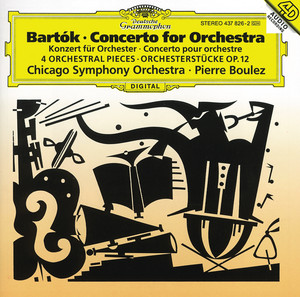 | Four Orchestral Pieces Op. 12 (Sz 51): II. Scherzo: Allegro | Béla Bartók, Chicago Symphony Orchestra, Pierre Boulez | D Major | 1 | 10B | 73 BPM | |
 | Karadec Suite, Op. 34: II. Chanson | Vincent d'Indy, Malmö Symphony Orchestra, Darrell Ang | E♭ Major | 0 | 5B | 71 BPM | |
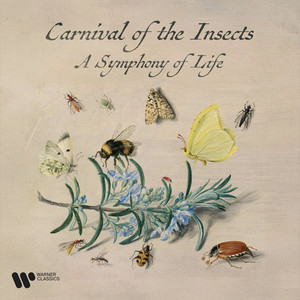 | Roussel: Le festin de l'araignée, Op. 17, Pt. 2: XIII. Funérailles de l'Éphémère | Albert Roussel, Jean Martinon, Orchestre National de l'O.R.T.F. | D♭ Major | 2 | 3B | 99 BPM | |
 | Brahms: Symphony No. 3 in F Major, Op. 90: II. Andante | Johannes Brahms, Munich Philharmonic Orchestra, Zubin Mehta | C Major | 0 | 8B | 67 BPM | |
 | Music for Strings, Percussion and Celesta, Sz. 106: III. Adagio | Béla Bartók, Chicago Symphony Orchestra, Sir Georg Solti | B♭ Minor | 0 | 3A | 82 BPM | |
 | König David: Pt. III: Marsch der Israeliten | Arthur Honegger, Pamela Coburn, Cornelia Kallisch, Hans Peter Blochwitz, Wolfgang Reichmann, Lola Müthel, Frankfurter Kantorei, Freiburg Collegium Musicum, Wolfgang Schäfer | A Major | 1 | 11B | 92 BPM | |
 | D'un matin de printemps | Lili Boulanger, Yan Pascal Tortelier, BBC Philharmonic | C Major | 1 | 8B | 130 BPM | |
 | Ravel: Ma mère l'Oye, M. 60: I. Pavane de la Belle au bois dormant | Maurice Ravel, Armin Jordan, Orchestre de Chambre de Lausanne | C Minor | 1 | 5A | 129 BPM | |
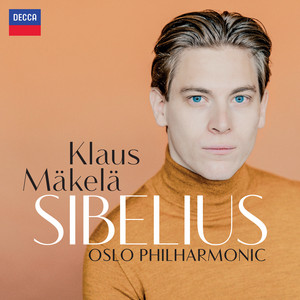 | Symphony No. 2 in D Major, Op. 43: III. Vivacissimo | Jean Sibelius, Oslo Philharmonic Orchestra, Klaus Mäkelä | F♯ Minor | 1 | 11A | 66 BPM | |
 | Eine Alpensinfonie, Op. 64, TrV 233: Sonnenuntergang (Sunset) - | Richard Strauss, Bavarian Radio Symphony Orchestra, Mariss Jansons | G Major | 2 | 9B | 72 BPM | |
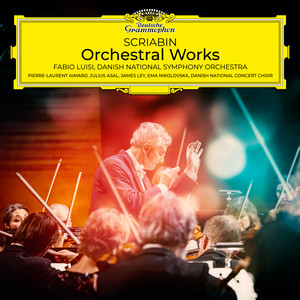 | Piano Concerto in F-Sharp Minor, Op. 20: IIa. Andante | Alexander Scriabin, Danish National Symphony Orchestra, Fabio Luisi | B♭ Minor | 2 | 3A | 86 BPM | |
 | The Dream of Gerontius, Op. 38, Pt. 1: I. Prelude | Edward Elgar, The Orchestra Of Opera North, Martyn Brabbins | D Minor | 0 | 7A | 66 BPM | |
 | Symphony No. 1 in F Minor, Op. 10: III. Lento | Dmitri Shostakovich, Michael Sanderling, Dresdner Philharmonie | D♭ Major | 0 | 3B | 80 BPM | |
 | Symphony No. 3 in C Minor, Op. 78, "Organ": II. Poco adagio | Camille Saint-Saëns, Charles Münch, Berj Zamkochian, Boston Symphony Orchestra | D♭ Major | 1 | 3B | 90 BPM | |
 | Sibelius: Symphony No. 1 in E Minor, Op. 39: III. Scherzo. Allegro | Jean Sibelius, Paavo Berglund, Helsinki Philharmonic Orchestra | C Major | 2 | 8B | 109 BPM | |
 | Le Roi David, H 37, Part. 3: Mort de David | Arthur Honegger, Ensemble Vocal de Lausanne, Lucie Chartin, Daniel Reuss, L'Orchestre de la Suisse Romande | E Minor | 1 | 9A | 58 BPM |
- ISRC
- NOFZS8903090
- Label
- L-M Records/RCA Records