- BPM
- 116
- Key
- F Major
- Camelot
- 7B
String Quartet No. 16 in F Major, Op. 135 - Version for String Orchestra: 2. Vivace - Live by Ludwig van Beethoven, Wiener Philharmoniker, Leonard Bernstein Song Details
Ludwig van Beethoven, Wiener Philharmoniker, Leonard Bernstein's ' "String Quartet No. 16 in F Major, Op. 135 - Version for String Orchestra: 2. Vivace - Live" was released on its scheduled release date, January 1, 1992. The duration of This song is about 3 minutes long, at 3:28. Based on our data, This song appears to be safe for all ages and is not considered explicit. This track is about the average length of a typical track. The song is number 9 out of 11 in Beethoven: String Quartet No.14 in C Sharp Minor, Op.131; String Quartet No.16 in F, Op.135 by Ludwig van Beethoven, Wiener Philharmoniker, Leonard Bernstein. In terms of popularity, String Quartet No. 16 in F Major, Op. 135 - Version for String Orchestra: 2. Vivace - Live is currently not that popular. The overall mood can be danceable to some, especially with it's high amount of postive energy.
BPM and Tempo
The tempo marking of String Quartet No. 16 in F Major, Op. 135 - Version for String Orchestra: 2. Vivace - Live by Ludwig van Beethoven, Wiener Philharmoniker, Leonard Bernstein is Moderato (at a moderate speed), since this song has a tempo of 116 BPM. With that information, we can conclude that the song has a moderate tempo. This song can go great with walking. The time signature for this track is 4/4.
Music Key
This song is in the music key of F Major. This also means that this song has a camelot key of 7B. So, the perfect camelot match for 7B would be either 7B or 8A. While, 8B can give you a low energy boost. For moderate energy boost, you would use 4B and a high energy boost can either be 9B or 2B. Though, if you want a low energy drop, you should looking for songs with either a camelot key of 7A or 6B will give you a low energy drop, 10B would be a moderate one, and 5B or 12B would be a high energy drop. Lastly, 4A allows you to change the mood.
Want to find the BPM and music key for other songs? Check out our BPM and Key Finder page!
- Popularity
- 12%
- Loudness
- -20.991 dB
- Acousticness
- 93%
- Danceability
- 44%
- Energy
- 26%
- Instrumentalness
- 95%
- Liveness
- 11%
- Loudness
- 65%
- Speechiness
- 5%
- Valence
- 68%
Recommendations
| Track | Artist | Key | Energy | Camelot | BPM | ||
|---|---|---|---|---|---|---|---|
 | Appalachian Spring: VII. Doppio movimento | Aaron Copland, Leonard Bernstein, New York Philharmonic | D♭ Major | 1 | 3B | 78 BPM | |
 | Rienzi, WWV 49: Overture | Richard Wagner, Wiener Philharmoniker, Karl Böhm | D Major | 3 | 10B | 103 BPM | |
 | String Quartet In C Major, Hob. lll:77 (Op. 76 No. 3 - "Emperor"): 2. Poco adagio, cantabile | Joseph Haydn, Amadeus Quartet | G Major | 0 | 9B | 87 BPM | |
 | Armide, Acte I: Ouverture | Jean-Baptiste Lully, Louis-Joseph Francoeur, Le Concert Spirituel, Herve Niquet | F Minor | 3 | 4A | 166 BPM | |
![Fra Holbergs tid, Op. 40: IV. Air (From Holberg's Time) [Version for Orchestra] by Edvard Grieg, Malmö Symphony Orchestra, Bjarte Engeset](https://i.scdn.co/image/ab67616d00001e02209b553c5165f53a4a26f5be) | Fra Holbergs tid, Op. 40: IV. Air (From Holberg's Time) [Version for Orchestra] | Edvard Grieg, Malmö Symphony Orchestra, Bjarte Engeset | A♭ Major | 1 | 4B | 102 BPM | |
 | Violin Concerto No. 1 in G Minor, Op. 26: III. Finale. Allegro energico | Max Bruch, Bomsori, Bamberger Symphoniker, Jakub Hrůša | G Major | 1 | 9B | 95 BPM | |
| Violin Concerto No. 1 in G Minor, Op. 26: II. Adagio | Max Bruch, Bomsori, Bamberger Symphoniker, Jakub Hrůša | E♭ Major | 2 | 5B | 94 BPM | |
 | Piano Quartet in E-Flat Major, Op. 47: II. Scherzo. Molto vivace | Robert Schumann, Isabelle Faust, Antoine Tamestit, Jean-Guihen Queyras, Alexander Melnikov | B♭ Major | 3 | 6B | 108 BPM | |
 | Gayaneh: Gayaneh's Adagio | Aram Khachaturian, Wiener Philharmoniker | A♭ Major | 0 | 4B | 82 BPM | |
 | Má Vlast, JB1:112: 3. Sarka | Bedřich Smetana, Czech Philharmonic, Jiří Bělohlávek | A Major | 1 | 11B | 100 BPM | |
 | Romance No. 2 In F Major, Op. 50 | Slovak Philharmonic, Takako Nishizaki, Ludwig van Beethoven | F Major | 1 | 7B | 88 BPM | |
 | Symphony No. 9 in D Minor, WAB 109: II. Scherzo. Bewegt lebhaft - Trio. Schnell | Anton Bruckner, Berliner Philharmoniker, Herbert von Karajan | B♭ Major | 1 | 6B | 96 BPM | |
| Tristan und Isolde, Act III: Liebestod (Concert Version) | Richard Wagner, Wiener Philharmoniker, Karl Böhm | A Major | 4 | 11B | 98 BPM | |
 | Haydn: Symphony No. 100 in G Major, Hob. I:100 "Military": I. (a) Adagio | Joseph Haydn, English Chamber Orchestra, Jeffrey Tate | C Minor | 4 | 5A | 130 BPM | |
 | Piano Sonata No. 4 In E Flat Major, Op. 7: 3. Allegro | Ludwig van Beethoven, Daniel Barenboim | E♭ Major | 1 | 5B | 70 BPM | |
 | Symphony No. 5 in B-Flat Major, D. 485: 3. Menuetto (Allegro molto) | Franz Schubert, Wiener Philharmoniker, Claudio Abbado | G Minor | 1 | 6A | 181 BPM | |
 | Symphony, " Salomon " , No. 104 in D-Major, Hob.I:104: IV. Finale: Spiriuoso | Slovak Philharmonic, Alfred Scholz | D Major | 2 | 10B | 138 BPM | |
 | Symphony in D Major, Bryan D2: IV. Allegro | Johann Baptist Vanhal, Toronto Chamber Orchestra, Kevin Mallon | G Major | 1 | 9B | 146 BPM | |
 | Symphony No. 1 in D Major, Op. 25 "Classical Symphony": IV. Finale. Molto vivace | Sergei Prokofiev, Berliner Philharmoniker, Herbert von Karajan | G Major | 2 | 9B | 80 BPM | |
 | Glück: I. Andante | Siegfried Wagner, Rundfunk-Sinfonieorchester Frankfurt, Dimitrij Kitajenko | A Minor | 0 | 8A | 86 BPM | |
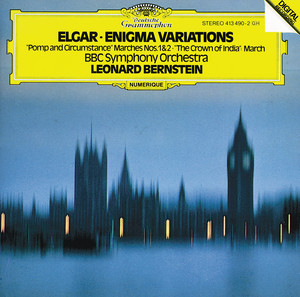 | Enigma Variations, Op. 36: Theme. Andante | Edward Elgar, BBC Symphony Orchestra, Leonard Bernstein | G Minor | 0 | 6A | 113 BPM | |
 | Symphony No. 1 in B Flat Major, Op. 38 "Spring": I. Andante un poco maestoso - Allegro molto vivace | Robert Schumann, Staatskapelle Berlin, Daniel Barenboim | C Major | 1 | 8B | 143 BPM | |
 | Symphony No. 1 in C major, Op. 21: III. Menuetto: Allegro molto e vivace | Nicolaus Esterhazy Sinfonia | C Major | 1 | 8B | 152 BPM | |
 | Symphony No. 7 in E Major, WAB 107 (Ed. Haas): II. Adagio. Sehr feierlich und sehr langsam | Anton Bruckner, Wiener Philharmoniker, Herbert von Karajan | D♭ Major | 1 | 3B | 85 BPM | |
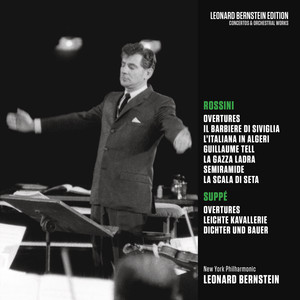 | La scala de seta: Overture | Gioachino Rossini, Leonard Bernstein, New York Philharmonic | C Major | 3 | 8B | 124 BPM |
- ISRC
- This song does not have an ISRC.
- Label
- L-M Records/RCA Records