- BPM
- 99
- Key
- A Major
- Camelot
- 11B
The Rake's Progress, Act II Scene 1: Recitative. O Nature, green unnatural mother… (Tom) by Igor Stravinsky, Jayne West, Jon Garrison, Arthur Woodley, John Cheek, Shirley Love, Wendy White, Melvin Lowery, Jeffrey Johnson, Gregg Smith Singers, Orchestra of St. Luke's, Robert Craft Song Details
Igor Stravinsky, Jayne West, Jon Garrison, Arthur Woodley, John Cheek, Shirley Love, Wendy White, Melvin Lowery, Jeffrey Johnson, Gregg Smith Singers, Orchestra of St. Luke's, Robert Craft's ' "The Rake's Progress, Act II Scene 1: Recitative. O Nature, green unnatural mother… (Tom)" was released on its scheduled release date, May 26, 2009. The duration of This song is about two minutes long, specifically at 2:07. This song does not appear to have any foul language. The Rake's Progress, Act II Scene 1: Recitative. O Nature, green unnatural mother… (Tom)'s duration is considered a little bit shorter than the average duration of a typical track. There are a total of 73 in the song's album "Stravinsky, I.: Rake's Progress (The) [Opera]". In this album, this song's track order is #28. Furthermore, we believe that the track originated from Hong Kong. In terms of popularity, The Rake's Progress, Act II Scene 1: Recitative. O Nature, green unnatural mother… (Tom) is currently unknown. Since there is more of a neutral sound being played, this makes the track somewhat danceable.
BPM and Tempo
With The Rake's Progress, Act II Scene 1: Recitative. O Nature, green unnatural mother… (Tom) by Igor Stravinsky, Jayne West, Jon Garrison, Arthur Woodley, John Cheek, Shirley Love, Wendy White, Melvin Lowery, Jeffrey Johnson, Gregg Smith Singers, Orchestra of St. Luke's, Robert Craft having a BPM of 99 with a half-time of 50 BPM and a double-time of 198 BPM, we would consider this track to have a Andante (at a walking pace) tempo marking. Because of this, we believe that the song has an overall slow tempo. The time signature for this track is 4/4.
Music Key
This song is in the music key of A Major. Or for those who are familiar with the camelot wheel, this song has a camelot key of 11B. So, the perfect camelot match for 11B would be either 11B or 12A. While, 12B can give you a low energy boost. For moderate energy boost, you would use 8B and a high energy boost can either be 1B or 6B. Though, if you want a low energy drop, you should looking for songs with either a camelot key of 11A or 10B will give you a low energy drop, 2B would be a moderate one, and 9B or 4B would be a high energy drop. Lastly, 8A allows you to change the mood.
Want to find the BPM and music key for other songs? Check out our BPM and Key Finder page!
- Popularity
- 0%
- Loudness
- -21.165 dB
- Acousticness
- 97%
- Danceability
- 41%
- Energy
- 18%
- Instrumentalness
- 0%
- Liveness
- 43%
- Loudness
- 65%
- Speechiness
- 6%
- Valence
- 54%
Recommendations
| Track | Artist | Key | Energy | Camelot | BPM | ||
|---|---|---|---|---|---|---|---|
 | Britten: Four Sea Interludes from Peter Grimes, Op. 33a: No. 3, Moonlight | Benjamin Britten, André Previn, London Symphony Orchestra | G Minor | 1 | 6A | 117 BPM | |
 | Capriccio Espagnol: Variazioni | Nikolai Rimsky-Korsakov, London Philharmonic Orchestra, Alexander Lazarev, Lars Hjalmar Joakim | F Major | 1 | 7B | 81 BPM | |
 | Turangalîla Symphonie: 1. Introduction | Olivier Messiaen, Yvonne Loriod, Jeanne Loriod, Orchestre de l'Opéra Bastille, Myung-Whun Chung | E♭ Minor | 4 | 2A | 143 BPM | |
 | Nocturnes, CD 98: I. Nuages | Claude Debussy, Berliner Philharmoniker, Claudio Abbado | C Major | 0 | 8B | 83 BPM | |
 | Symphony No. 9: III. Rondo-Burleske. Allegro assai. Sehr trotzig | Gustav Mahler, Chicago Symphony Orchestra, Pierre Boulez | E Major | 1 | 12B | 80 BPM | |
 | Suk: Serenade for Strings in E-Flat Major, Op. 6: IV. Allegro giocoso ma non troppo presto | Josef Suk, Christopher Warren-Green, Andrew Shulman, Lyn Fletcher, Roger Chase, Nigel Warren-Green, London Chamber Orchestra | B♭ Major | 2 | 6B | 106 BPM | |
 | Sibelius: Symphony No. 5 in E-Flat Major, Op. 82: III. Allegro molto (1915 Version) | Jean Sibelius, San Francisco Symphony, Esa-Pekka Salonen | E♭ Major | 1 | 5B | 76 BPM | |
 | The Rite of Spring, Part 1: II. The Augurs of Spring - Dances of the Young Girls | Igor Stravinsky, Vasily Petrenko, Royal Liverpool Philharmonic Orchestra | B♭ Major | 3 | 6B | 115 BPM | |
 | Introduction And Allegro For Harp, String Quartet, Flute And Clarinet | Maurice Ravel, Nash Ensemble, Skaila Kanga, Philippa Davies, Michael Collins | E♭ Minor | 1 | 2A | 70 BPM | |
 | The Rite of Spring, K15, Pt. 1: IV. Spring Rounds | Igor Stravinsky, Berliner Philharmoniker, Herbert von Karajan | B♭ Minor | 0 | 3A | 61 BPM | |
 | Prince Igor (Knyaz Igor): Overture | Alexander Borodin, Ukraine National Radio Symphony Orchestra, Theodore Kuchar | G Minor | 1 | 6A | 73 BPM | |
 | Finlandia, Op. 26 | Jean Sibelius, Berliner Philharmoniker, Herbert von Karajan | A♭ Major | 3 | 4B | 67 BPM | |
 | Danse macabre, Op. 40 | Camille Saint-Saëns, Royal Concertgebouw Orchestra, Charles Münch | D Major | 2 | 10B | 81 BPM | |
 | Symphony No. 7 in C Major, Op. 105: Adagio | Jean Sibelius, Berliner Philharmoniker, Sir Simon Rattle | C Major | 0 | 8B | 78 BPM | |
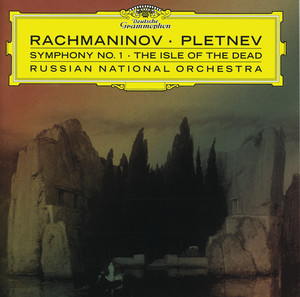 | Symphony No. 1 in D Minor, Op. 13: III. Larghetto | Sergei Rachmaninoff, Russian National Orchestra, Mikhail Pletnev | C Minor | 0 | 5A | 69 BPM | |
 | The Rake's Progress, Act I Scene 3: Aria. Quietly, night… (Anne) | Igor Stravinsky, Jayne West, Jon Garrison, Arthur Woodley, John Cheek, Shirley Love, Wendy White, Melvin Lowery, Jeffrey Johnson, Gregg Smith Singers, Orchestra of St. Luke's, Robert Craft | E Minor | 1 | 9A | 119 BPM | |
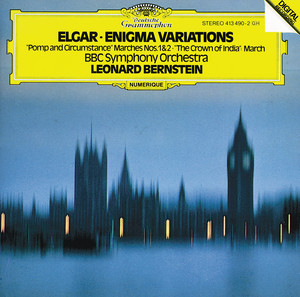 | Enigma Variations, Op. 36: Var. 9. Adagio "Nimrod" | Edward Elgar, BBC Symphony Orchestra, Leonard Bernstein | E♭ Major | 0 | 5B | 79 BPM | |
 | Aladdin Suite, Op. 34, FS 89: IV. Chinese Dance | Carl Nielsen, South Jutland Symphony Orchestra, Niklas Willen | E Minor | 1 | 9A | 96 BPM | |
 | Tristan und Isolde, WWV 90: Prelude To Act I | Richard Wagner, Gewandhausorchester Leipzig, Andris Nelsons | A Minor | 1 | 8A | 79 BPM | |
 | Háry János Suite: I. Prelude. The Fairy Tale Begins | Zoltán Kodály, Neeme Järvi, Chicago Symphony Orchestra, Laurence Kaptain | F Major | 1 | 7B | 84 BPM | |
 | Concerto for Orchestra, Sz. 116: II. Giuoco della coppie. Allegretto scherzando | Béla Bartók, Berliner Philharmoniker, Herbert von Karajan | A Major | 1 | 11B | 80 BPM | |
 | Symphony No. 8 in C Minor, WAB 108: I. Allegro moderato | Anton Bruckner, Wiener Philharmoniker, Pierre Boulez | B♭ Minor | 1 | 3A | 110 BPM | |
 | Eine Alpensinfonie: VIII. Stille vor den Sturm - Gewitter und Sturm, Abstieg - Sonnenuntergang | Richard Strauss, Bernard Haitink, London Symphony Orchestra | F♯ Major | 2 | 2B | 73 BPM | |
 | A Midsummer Night's Dream, Incidental Music, Op.61, MWV M 13: No.1 Scherzo | Felix Mendelssohn, Judi Dench, Boston Symphony Orchestra, Seiji Ozawa | G Minor | 2 | 6A | 123 BPM | |
 | The Hebrides Overture, Op. 26, MWV P7 "Fingal's Cave" | Felix Mendelssohn, London Symphony Orchestra, Claudio Abbado | D Major | 1 | 10B | 126 BPM |
- ISRC
- HKI190908228
- Label
- L-M Records/RCA Records