- BPM
- 67
- Key
- D Major
- Camelot
- 10B
Piano Concerto in F-Sharp Minor, Op. 20: I. Allegro by Alexander Scriabin, Daniil Trifonov, Mariinsky Orchestra, Valery Gergiev Song Details
"Piano Concerto in F-Sharp Minor, Op. 20: I. Allegro" by Alexander Scriabin, Daniil Trifonov, Mariinsky Orchestra, Valery Gergiev had its release date on November 6, 2020. Since This song is still less than 10 minute long, it is still considered a pretty long duration song compared to the average song length. This song does not appear to be explicit due to the lack of the "E" tag. There are a total of 30 in the song's album "Silver Age". In this album, this song's track order is #24. Furthermore, we believe that the track originated from Germany. Piano Concerto in F-Sharp Minor, Op. 20: I. Allegro is not that popular right now. In our opinion, the overall tone is not very danceable and projects negative sounds, such as being sad, depressed, or angry.
BPM and Tempo
With Piano Concerto in F-Sharp Minor, Op. 20: I. Allegro by Alexander Scriabin, Daniil Trifonov, Mariinsky Orchestra, Valery Gergiev having a BPM of 67 with a half-time of 34 BPM and a double-time of 134 BPM, we would consider this track to have a Adagio (slowly with great expression) tempo marking. Because of this, we believe that the song has an overall slow tempo. The time signature for this track is 4/4.
Music Key
D Major is the music key of this track. Or for those who are familiar with the camelot wheel, this song has a camelot key of 10B. So, the perfect camelot match for 10B would be either 10B or 11A. While, 11B can give you a low energy boost. For moderate energy boost, you would use 7B and a high energy boost can either be 12B or 5B. Though, if you want a low energy drop, you should looking for songs with either a camelot key of 10A or 9B will give you a low energy drop, 1B would be a moderate one, and 8B or 3B would be a high energy drop. Lastly, 7A allows you to change the mood.
Want to find the BPM and music key for other songs? Check out our BPM and Key Finder page!
- Popularity
- 12%
- Loudness
- -19.512 dB
- Acousticness
- 98%
- Danceability
- 12%
- Energy
- 12%
- Instrumentalness
- 92%
- Liveness
- 13%
- Loudness
- 67%
- Speechiness
- 4%
- Valence
- 5%
Recommendations
| Track | Artist | Key | Energy | Camelot | BPM | ||
|---|---|---|---|---|---|---|---|
 | Ravel: Piano Trio in A Minor, M. 67: I. Modéré | Maurice Ravel, Renaud Capuçon, Gautier Capuçon, Frank Braley | C Major | 1 | 8B | 89 BPM | |
 | 12 Études d'exécution transcendante, S. 139: No. 3 Paysage (Poco adagio) | Franz Liszt, Daniil Trifonov | F Major | 0 | 7B | 67 BPM | |
 | Piano Quartet No. 1 in C Minor, Op. 15: IV. Finale (Allegro molto) | Gabriel Fauré, Trio Wanderer, Antoine Tamestit | B♭ Major | 2 | 6B | 104 BPM | |
 | Piano Concerto No.2 in G minor, Op.16: 1. Andantino | Sergei Prokofiev, YUNDI, Berliner Philharmoniker, Seiji Ozawa | G Minor | 2 | 6A | 69 BPM | |
 | Piano Concerto No. 1 in C Minor, Op. 35: II. Lento | Dmitri Shostakovich, Boris Giltburg, Rhys Owens, Royal Liverpool Philharmonic Orchestra, Vasily Petrenko | C Major | 0 | 8B | 71 BPM | |
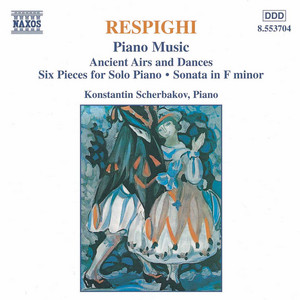 | Antiche Danze Ed Arie Per Liuto (Ancient Airs And Dances), P. 114: VI. Passacaglia | Ottorino Respighi, Konstantin Scherbakov | G Minor | 2 | 6A | 96 BPM | |
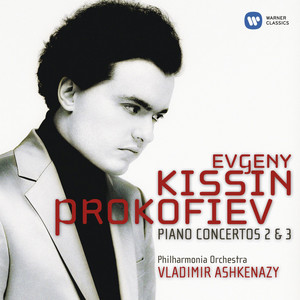 | Prokofiev: Piano Concerto No. 3 in C Major, Op. 26: III. Allegro, ma non troppo | Sergei Prokofiev, Evgeny Kissin, Vladimir Ashkenazy, Philharmonia Orchestra | C Major | 2 | 8B | 103 BPM | |
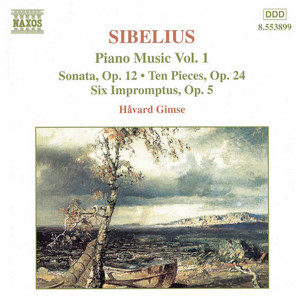 | Piano Sonata in F Major, Op. 12: Allegro molto | Jean Sibelius, Håvard Gimse | C Major | 1 | 8B | 107 BPM | |
 | Piano Concerto in A Minor, Op. 16: I. Allegro molto moderato | Edvard Grieg, Jean-Yves Thibaudet, Rotterdam Philharmonic Orchestra, Valery Gergiev | F Major | 2 | 7B | 123 BPM | |
 | Bist du bei mir (Formerly Attrib. J.S. Bach as BWV 508, Notebook for Anna Magdalena Bach, 1725) | Gottfried Heinrich Stölzel, Daniil Trifonov | E♭ Major | 0 | 5B | 133 BPM | |
 | Piano Sonata No. 2 in D Minor, Op. 14: I. Allegro, ma non troppo | Sergei Prokofiev, Matti Raekallio | F Major | 0 | 7B | 71 BPM | |
 | Violin Sonata No. 3, Op. 45: III. Allegro animato | Edvard Grieg, Augustin Dumay, Maria João Pires | F Major | 0 | 7B | 78 BPM | |
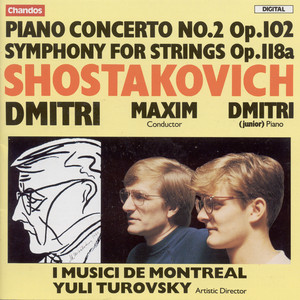 | Piano Concerto No. 2 in F Major, Op. 102: I. Allegro | Dmitri Shostakovich, I Musici de Montréal, Maxim Shostakovich | B♭ Major | 3 | 6B | 160 BPM | |
 | Prokofiev: Piano Concerto No. 3 in C Major, Op. 26: I. Andante - Allegro | Sergei Prokofiev, Martha Argerich, Charles Dutoit, Orchestre Symphonique de Montréal | D Major | 3 | 10B | 120 BPM | |
 | Prélude, Fugue et Variation, Op. 18: IV. Andantino (Arr. pour piano) | César Franck, Nikolai Lugansky | B Minor | 0 | 10A | 69 BPM | |
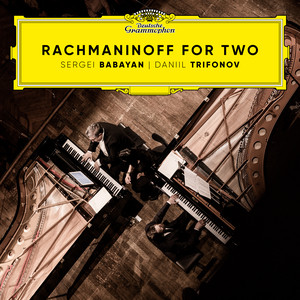 | Suite No. 2 for 2 Pianos, Op. 17: III. Romance | Sergei Rachmaninoff, Daniil Trifonov, Sergei Babayan | D Minor | 3 | 7A | 92 BPM | |
 | 4 Piano Pieces, Op.119: 2. Intermezzo In E Minor | Johannes Brahms, Radu Lupu | C Major | 1 | 8B | 140 BPM | |
 | 2 Piano Pieces, KSS 17: No. 1, In the Hothouse | Kaikhosru Sorabji, Michael Habermann | D♭ Major | 9 | 3B | 188 BPM | |
 | Piano Sonata in C Minor: III. Finale. Presto | Fanny Mendelssohn, Heather Schmidt | E Major | 1 | 12B | 114 BPM | |
 | Polonaise, Op.21 | Igor Zhukov, Alexander Scriabin | F♯ Major | 1 | 2B | 81 BPM | |
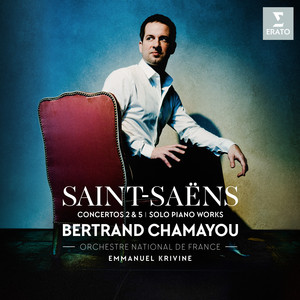 | Saint-Saëns: 6 Études, Op. 111: No. 4, Les cloches de Las Palmas | Camille Saint-Saëns, Bertrand Chamayou | D♭ Minor | 1 | 12A | 133 BPM | |
 | 2 Pieces for the Left Hand, Op. 9: No. 2, Nocturne in D-Flat Major | Alexander Scriabin, Maria Lettberg | A♭ Major | 0 | 4B | 74 BPM | |
 | Desdemona, Op. 101 | Mel Bonis, Maria Stembolskaya | B♭ Major | 3 | 6B | 165 BPM | |
 | Piano Concerto No. 3 in C Minor, Op. 32: III. Andante | Sergei Bortkiewicz, David Porcelijn, Stefan Doniga, Janáček Philharmonic Orchestra | A♭ Major | 2 | 4B | 104 BPM | |
 | Piano Sonata No. 1 in F-Sharp Minor, Op. 11: II. Aria | Robert Schumann, Murray Perahia | D♭ Major | 0 | 3B | 130 BPM |
- ISRC
- DEN961904401
- Label
- L-M Records/RCA Records