- BPM
- 78
- Key
- F Major
- Camelot
- 7B
Violin Sonata No. 3, Op. 45: III. Allegro animato by Edvard Grieg, Augustin Dumay, Maria João Pires Song Details
"Violin Sonata No. 3, Op. 45: III. Allegro animato" by Edvard Grieg, Augustin Dumay, Maria João Pires had its release date on January 1, 1993. Since This song is still less than 10 minute long, it is still considered a pretty long duration song compared to the average song length. This song does not appear to be explicit due to the lack of the "E" tag. The track order of this song in Edvard Grieg, Augustin Dumay, Maria João Pires's "Grieg: Violin Sonatas Opp. 8, 13 & 45" album is number 9 out of 9. On top of that, Germany appears to be the country where this track was created. Violin Sonata No. 3, Op. 45: III. Allegro animato is not that popular right now. In our opinion, the overall tone is not very danceable and projects negative sounds, such as being sad, depressed, or angry.
BPM and Tempo
We consider the tempo marking of Violin Sonata No. 3, Op. 45: III. Allegro animato by Edvard Grieg, Augustin Dumay, Maria João Pires to be Andante (at a walking pace) because the track has a tempo of 78 BPM, a half-time of 39BPM, and a double-time of 156 BPM. Based on that, the speed of the song's tempo is slow. The time signature for this track is 4/4.
Music Key
F Major is the music key of this track. This also means that this song has a camelot key of 7B. So, the perfect camelot match for 7B would be either 7B or 8A. While, 8B can give you a low energy boost. For moderate energy boost, you would use 4B and a high energy boost can either be 9B or 2B. Though, if you want a low energy drop, you should looking for songs with either a camelot key of 7A or 6B will give you a low energy drop, 10B would be a moderate one, and 5B or 12B would be a high energy drop. Lastly, 4A allows you to change the mood.
Want to find the BPM and music key for other songs? Check out our BPM and Key Finder page!
- Popularity
- 7%
- Loudness
- -25.655 dB
- Acousticness
- 99%
- Danceability
- 16%
- Energy
- 4%
- Instrumentalness
- 96%
- Liveness
- 7%
- Loudness
- 57%
- Speechiness
- 4%
- Valence
- 15%
Recommendations
| Track | Artist | Key | Energy | Camelot | BPM | ||
|---|---|---|---|---|---|---|---|
 | 13 Pieces for Piano, Op. 76: II. Etude | Jean Sibelius, Jian Wang, Göran Söllscher | G Minor | 0 | 6A | 124 BPM | |
 | Lieder ohne Worte (Songs without Words), Book 2, Op. 30: No. 7 in E-Flat Major, Op. 30, No. 1, MWV U103 | Felix Mendelssohn, Péter Nagy | E♭ Major | 0 | 5B | 65 BPM | |
 | Ancient Airs & Dances, Suite III, P. 172: I. Italiana (Anonymous) | Ottorino Respighi, Filarmonica della Scala, Riccardo Chailly | B♭ Major | 1 | 6B | 172 BPM | |
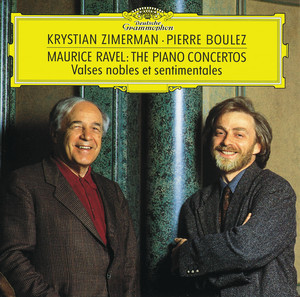 | Piano Concerto in G Major, M. 83: II. Adagio assai | Maurice Ravel, Krystian Zimerman, Cleveland Orchestra, Pierre Boulez | E Major | 0 | 12B | 74 BPM | |
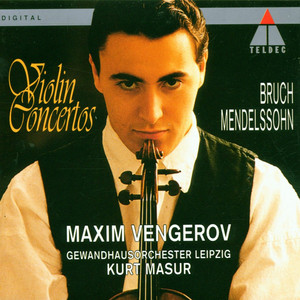 | Bruch : Violin Concerto No.1 in G minor Op.26 : III Finale - Allegro energico | Max Bruch, Maxim Vengerov, Kurt Masur, Gewandhausorchester Leipzig | G Major | 2 | 9B | 90 BPM | |
 | Piano Concerto in C-Sharp Minor, FP 146: I. Allegretto commodo - Live | Francis Poulenc, Yannick Nézet-Séguin, London Philharmonic Orchestra, Alexandre Tharaud | A♭ Major | 1 | 4B | 86 BPM | |
 | Peer Gynt Suite No.1 op. 46 Death of Aase (Andante doloroso) | Academy of St. Martin in the Fields | G Major | 0 | 9B | 109 BPM | |
 | Orpheo ed Euridice, Wq. 30, Act II: Dance of the Blessed Spirits | Christoph Willibald Gluck, Eugene Ormandy, Philadelphia Orchestra | D Minor | 1 | 7A | 67 BPM | |
 | Elgar: Mina | Edward Elgar, Northern Sinfonia Orchestra, Sir Neville Marriner | B♭ Major | 1 | 6B | 85 BPM | |
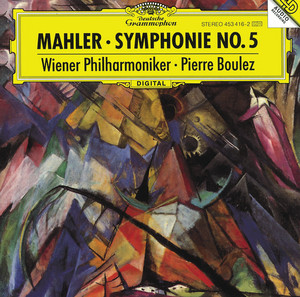 | Symphony No. 5: IV. Adagietto. Sehr langsam | Gustav Mahler, Wiener Philharmoniker, Pierre Boulez | F Major | 0 | 7B | 87 BPM | |
 | Après un rêve, Op. 7: No. 1 | Gabriel Fauré, Joshua Bell, Frederic Chiu | G Minor | 2 | 6A | 91 BPM | |
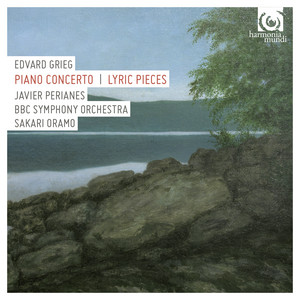 | Piano Concerto in A Minor, Op. 16: I. Allegro molto moderato | Edvard Grieg, Javier Perianes, BBC Symphony Orchestra, Sakari Oramo | A Minor | 1 | 8A | 86 BPM | |
 | Die Fledermaus: Overture | Johann Strauss II, Bavarian State Orchestra, Carlos Kleiber | G Major | 1 | 9B | 100 BPM | |
 | Ma mère l'oye, M. 62: Apothéose. Le jardin féerique | Maurice Ravel, Orchestre National De Lyon, Leonard Slatkin | C Major | 0 | 8B | 62 BPM | |
 | La lisonjera, Op. 50 | Cécile Chaminade, Péter Nagy | D♭ Major | 1 | 3B | 132 BPM | |
 | Violin Concerto No. 1 in G Minor, Op. 26: III. Allegro energico | Max Bruch, Itzhak Perlman, Bernard Haitink, Royal Concertgebouw Orchestra | G Major | 3 | 9B | 97 BPM | |
 | Piano Concerto No. 2 Op. 102 in F Major: II. Andante | Dmitri Shostakovich, Alexander Melnikov, Mahler Chamber Orchestra, Teodor Currentzis | C Minor | 0 | 5A | 78 BPM | |
 | Rachmaninov: Rhapsody on a Theme of Paganini, Op. 43: Variation XVIII | Sergei Rachmaninoff, Nikolai Lugansky, Sakari Oramo, City Of Birmingham Symphony Orchestra | D♭ Major | 1 | 3B | 61 BPM | |
 | I. Prélude. Andantino | César Franck, Jean-Pierre Armengaud | D Major | 0 | 10B | 66 BPM | |
 | Gottes Zeit ist die allerbeste Zeit, BWV 106 "Actus tragicus": I. Sonatina | Johann Sebastian Bach, Márta Kurtág, György Kurtág | F Major | 3 | 7B | 102 BPM | |
 | Má vlast, JB 1:112: II. Vltava "The Moldau" | Bedřich Smetana, Chicago Symphony Orchestra, Daniel Barenboim | G Major | 1 | 9B | 142 BPM | |
 | Recueil de chants, Op. 65: No. 6, Barcarolle | Charles-Valentin Alkan, Bruce Liu | G Minor | 0 | 6A | 70 BPM | |
 | Kinderszenen, Op. 15: I. Von fremden Ländern und Menschen | Robert Schumann, Martha Argerich | G Major | 0 | 9B | 128 BPM | |
 | Lyric Pieces: Melodie / Melody, Op. 47, 3 | Edvard Grieg, Heidi Kommerell | D♭ Minor | 1 | 12A | 73 BPM | |
 | String Quartet No. 62 in C Major, Op. 76 No. 3, Hob. III:77 "Emperor": II. Poco adagio, cantabile | Joseph Haydn, Kodály Quartet | G Major | 1 | 9B | 110 BPM |
- ISRC
- DEF059302073
- Label
- L-M Records/RCA Records