- BPM
- 69
- Key
- E♭ Major
- Camelot
- 5B
Strauss, R: An Alpine Symphony, Op. 64: XII. Dangerous Moments by Richard Strauss, Rudolf Kempe, Staatskapelle Dresden Song Details
"Strauss, R: An Alpine Symphony, Op. 64: XII. Dangerous Moments" by Richard Strauss, Rudolf Kempe, Staatskapelle Dresden had its release date on 2013. With This song being less than two minutes long, at 1:22, we are fairly confident that this song is not explicit and is safe for all ages. Based on the duration of this song, this song duration is much smaller than the average song duration. There are a total of 103 in the song's album "Strauss, Richard: Complete Orchestral Works". In this album, this song's track order is #31. Furthermore, we believe that the track originated from United Kingdom. Strauss, R: An Alpine Symphony, Op. 64: XII. Dangerous Moments is not that popular right now. In our opinion, the overall tone is not very danceable and projects negative sounds, such as being sad, depressed, or angry.
BPM and Tempo
With Strauss, R: An Alpine Symphony, Op. 64: XII. Dangerous Moments by Richard Strauss, Rudolf Kempe, Staatskapelle Dresden having a BPM of 69 with a half-time of 34 BPM and a double-time of 138 BPM, we would consider this track to have a Adagio (slowly with great expression) tempo marking. Because of this, we believe that the song has an overall slow tempo. The time signature for this track is 4/4.
Music Key
This song has a musical key of E♭ Major. Or for those who are familiar with the camelot wheel, this song has a camelot key of 5B. So, the perfect camelot match for 5B would be either 5B or 6A. While, 6B can give you a low energy boost. For moderate energy boost, you would use 2B and a high energy boost can either be 7B or 12B. Though, if you want a low energy drop, you should looking for songs with either a camelot key of 5A or 4B will give you a low energy drop, 8B would be a moderate one, and 3B or 10B would be a high energy drop. Lastly, 2A allows you to change the mood.
Want to find the BPM and music key for other songs? Check out our BPM and Key Finder page!
- Popularity
- 2%
- Loudness
- -11.419 dB
- Acousticness
- 92%
- Danceability
- 21%
- Energy
- 38%
- Instrumentalness
- 94%
- Liveness
- 16%
- Loudness
- 81%
- Speechiness
- 3%
- Valence
- 11%
Recommendations
| Track | Artist | Key | Energy | Camelot | BPM | ||
|---|---|---|---|---|---|---|---|
 | Symphony in C Major, GB 115: I. Allegro vivo | Georges Bizet, Marc Soustrot, Aarhus Symphony Orchestra | G Major | 1 | 9B | 80 BPM | |
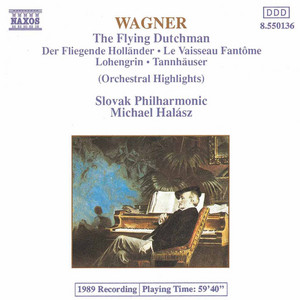 | Lohengrin, Act III: Prelude | Richard Wagner, Slovak Philharmonic Orchestra, Michael Halasz | G Major | 2 | 9B | 94 BPM | |
 | Schoenberg: Verklärte Nacht, Op. 4: III. A tempo | Arnold Schoenberg, Daniel Barenboim, Chicago Symphony Orchestra, Charles Pikler, John Sharp, Joseph Golan, Li-Kuo Chang, Ruben Gonzalez, Stephen Balderston | B♭ Minor | 1 | 3A | 86 BPM | |
 | Poulenc: Concerto for Two Pianos in D Minor, FP 61: II. Larghetto | Francis Poulenc, James Conlon, François-René Duchâble, Jean-Philippe Collard, Rotterdam Philharmonic Orchestra | B♭ Major | 0 | 6B | 84 BPM | |
 | In the Steppes of Central Asia | Alexander Borodin, Royal Philharmonic Orchestra, Vladimir Ashkenazy | A Major | 0 | 11B | 69 BPM | |
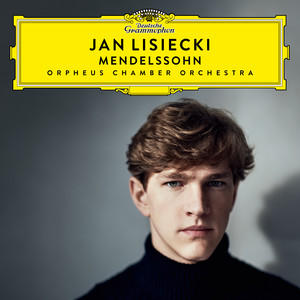 | Piano Concerto No. 1 in G Minor, Op. 25, MWV O7: 1. Molto allegro con fuoco | Felix Mendelssohn, Jan Lisiecki, Orpheus Chamber Orchestra | A♭ Major | 2 | 4B | 80 BPM | |
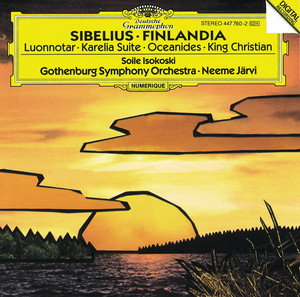 | Andante Festivo | Jean Sibelius, Gothenburg Symphony Orchestra, Neeme Järvi | G Major | 1 | 9B | 86 BPM | |
 | Hungarian Dance No. 1 in G Minor: Allegro molto | Johannes Brahms, Staatskapelle Berlin | G Minor | 1 | 6A | 91 BPM | |
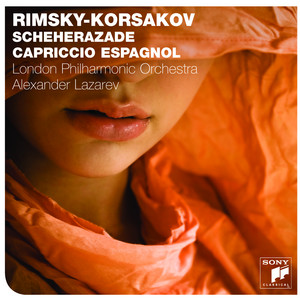 | Scheherazade: The Young Prince | Nikolai Rimsky-Korsakov, Lars Hjalmar Joakim | G Major | 1 | 9B | 91 BPM | |
 | Symphony No.2 in C minor - "Resurrection" / 1st Movement - Allegro maestoso (Totenfeier): Wie zu Anfang | Gustav Mahler, Wiener Philharmoniker, Gilbert Kaplan | E♭ Major | 1 | 5B | 82 BPM | |
 | Scottish Fantasy for Violin and Orchestra, Op. 46: I. Introduction: Grave, Adagio cantabile | Max Bruch, Joshua Bell, Academy of St. Martin in the Fields | E♭ Major | 2 | 5B | 60 BPM | |
 | Overture "A Midsummer Night's Dream", Op. 21 | Felix Mendelssohn, Boston Symphony Orchestra, Seiji Ozawa | E Major | 1 | 12B | 139 BPM | |
 | Souvenir d'un lieu cher, Op. 42: 3. Mélodie | Pyotr Ilyich Tchaikovsky, Janine Jansen, Mahler Chamber Orchestra, Daniel Harding | E♭ Major | 0 | 5B | 99 BPM | |
 | Tristan und Isolde, WWV 90: Prelude | Richard Wagner, Bayreuth Festival Orchestra, Karl Böhm | C Major | 1 | 8B | 77 BPM | |
 | Mahler: Blumine | Gustav Mahler, San Francisco Symphony, Michael Tilson Thomas | C Major | 1 | 8B | 100 BPM | |
 | Lieder ohne Worte (Songs without Words), Book 2, Op. 30: No. 7 in E-Flat Major, Op. 30, No. 1, MWV U103 | Felix Mendelssohn, Péter Nagy | E♭ Major | 0 | 5B | 65 BPM | |
 | 4 Pieces, Op. 51: No. 4, Danse languide | Alexander Scriabin, Evgeny Kissin | E♭ Major | 0 | 5B | 74 BPM | |
 | Symphony No. 2 in E Minor, Op. 27: II. Allegro molto | Sergei Rachmaninoff, Philadelphia Orchestra, Yannick Nézet-Séguin | D Minor | 1 | 7A | 70 BPM | |
 | Symphony No. 6 in B Minor, Op. 74 "Pathétique": II. Allegro con grazia | Pyotr Ilyich Tchaikovsky, Berliner Philharmoniker, Kirill Petrenko | D Major | 1 | 10B | 85 BPM | |
 | Symphony No. 7 in A Major, Op. 92: IV. Allegro con brio | Ludwig van Beethoven, Berliner Philharmoniker, Kirill Petrenko | A Major | 4 | 11B | 80 BPM | |
 | Shéhérazade, Op. 35: I. The Sea and Sinbad's Ship | Nikolai Rimsky-Korsakov, Sergej Galaktionov, Gianandrea Noseda, Filarmonica Teatro Regio Torino | E Major | 1 | 12B | 136 BPM | |
 | Ludus pro Patria, La Nuit et l'Amour: La Nuit et l'Amour: Interlude de l'ode symphonique - Ludus pro Patria | Augusta Holmès, Staatsphilharmonie Rheinland-Pfalz, Patrick Davin | B♭ Major | 0 | 6B | 78 BPM | |
 | L'Apprenti sorcier | Paul Dukas, Berliner Philharmoniker, James Levine | F Minor | 4 | 4A | 125 BPM | |
| Schoenberg: Verklärte Nacht, Op. 4: IV. Adagio (1943 Version) | Arnold Schoenberg, Daniel Barenboim, Chicago Symphony Orchestra | D Major | 1 | 10B | 82 BPM | |
 | El amor brujo: Ritual Fire Dance | Manuel de Falla, Fritz Reiner, Chicago Symphony Orchestra | G Major | 1 | 9B | 134 BPM |
- ISRC
- GBAYC1201657
- Label
- L-M Records/RCA Records