- BPM
- 46
- Key
- A♭ Minor
- Camelot
- 1A
Strauss, R: An Alpine Symphony, Op. 64: X. Lost in the Thickets and Undergrowth by Richard Strauss, Rudolf Kempe, Staatskapelle Dresden Song Details
Richard Strauss, Rudolf Kempe, Staatskapelle Dresden's 'Strauss, R: An Alpine Symphony, Op. 64: X. Lost in the Thickets and Undergrowth' had a release date set for 2013. With This song being less than two minutes long, at 1:28, we are fairly confident that this song is not explicit and is safe for all ages. Based on the duration of this song, this song duration is much smaller than the average song duration. There are a total of 103 in the song's album "Strauss, Richard: Complete Orchestral Works". In this album, this song's track order is #29. Furthermore, we believe that the track originated from United Kingdom. Strauss, R: An Alpine Symphony, Op. 64: X. Lost in the Thickets and Undergrowth is not that popular right now. In our opinion, the overall tone is not very danceable and projects negative sounds, such as being sad, depressed, or angry.
BPM and Tempo
With Strauss, R: An Alpine Symphony, Op. 64: X. Lost in the Thickets and Undergrowth by Richard Strauss, Rudolf Kempe, Staatskapelle Dresden having a BPM of 46 with a half-time of 23 BPM and a double-time of 92 BPM, we would consider this track to have a Lento (slowly) tempo marking. Because of this, we believe that the song has an overall slow tempo. The time signature for this track is 4/4.
Music Key
This song has a musical key of A♭ Minor. Which also means that the camelot key for this song is 1A. So, the perfect camelot match for 1A would be either 1A or 12B. While, a low energy boost can consist of either 1B or 2A. For moderate energy boost, you would use 10A and a high energy boost can either be 3A or 8A. However, if you are looking for a low energy drop, finding a song with a camelot key of 12A would be a great choice. Where 4A would give you a moderate drop, and 11A or 6A would be a high energy drop. Lastly, 4B allows you to change the mood.
Want to find the BPM and music key for other songs? Check out our BPM and Key Finder page!
- Popularity
- 2%
- Loudness
- -12.557 dB
- Acousticness
- 87%
- Danceability
- 27%
- Energy
- 52%
- Instrumentalness
- 81%
- Liveness
- 32%
- Loudness
- 79%
- Speechiness
- 5%
- Valence
- 31%
Recommendations
| Track | Artist | Key | Energy | Camelot | BPM | ||
|---|---|---|---|---|---|---|---|
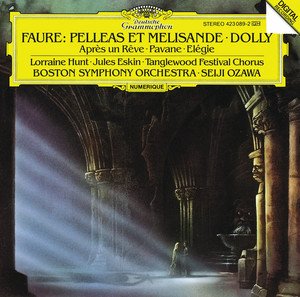 | Pelléas et Mélisande, Op. 80, Suite: IV. La mort de Mélisande | Gabriel Fauré, Boston Symphony Orchestra, Seiji Ozawa | D Minor | 0 | 7A | 82 BPM | |
 | Symphonie fantastique, H. 48: IV. Marche au supplice | Hector Berlioz, Chicago Symphony Orchestra, Claudio Abbado | G Minor | 2 | 6A | 166 BPM | |
 | 4 Impromptus, Op.90, D.899: No.3 in G Flat Major: Andante | Franz Schubert, Radu Lupu | F♯ Major | 0 | 2B | 173 BPM | |
 | Piano Concerto in A Minor, Op. 7: Romanze. Andante non troppo con grazia | Clara Schumann, Francesco Nicolosi, Alma Mahler Sinfonietta, Stefania Rinaldi | A Minor | 1 | 8A | 103 BPM | |
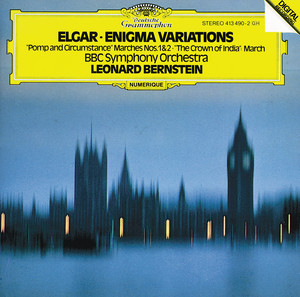 | Enigma Variations, Op. 36: Theme. Andante | Edward Elgar, BBC Symphony Orchestra, Leonard Bernstein | G Minor | 0 | 6A | 113 BPM | |
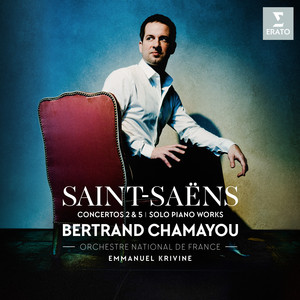 | Saint-Saëns: Piano Concerto No. 2 in G Minor, Op. 22: I. Andante sostenuto | Camille Saint-Saëns, Bertrand Chamayou, Emmanuel Krivine, Orchestre National De France | G Minor | 2 | 6A | 94 BPM | |
 | Salome, Op. 54 / Scene 3: "Du bist verflucht" | Richard Strauss, Cheryl Studer, Bryn Terfel, Orchester der Deutschen Oper Berlin, Giuseppe Sinopoli | C Minor | 0 | 5A | 64 BPM | |
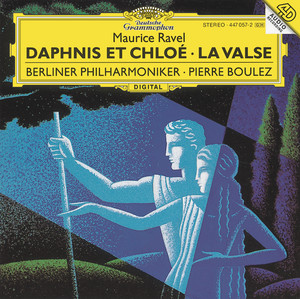 | Daphnis et Chloé, M. 57 / Troisième partie: Danse générale | Maurice Ravel, Berliner Philharmoniker, Pierre Boulez, Rundfunkchor Berlin | D♭ Minor | 4 | 12A | 173 BPM | |
 | Die Frau ohne Schatten, Op. 65, TrV 234, Act I: Licht überm See (Live) | Richard Strauss, Frankfurter Opern- und Museumsorchester, Tanja Ariane Baumgartner, Dietrich Volle, Sebastian Weigle | B Major | 2 | 1B | 132 BPM | |
 | Piano Concerto in G Major, M. 83: I. Allegramente | Maurice Ravel, Krystian Zimerman, The Cleveland Orchestra, Pierre Boulez | D Major | 1 | 10B | 129 BPM | |
 | Symphony No. 1 in D Major: III. Feierlich und gemessen, ohne zu schleppen - Live | Gustav Mahler, Berliner Philharmoniker, Claudio Abbado | G Minor | 0 | 6A | 56 BPM | |
 | Tchaikovsky: Variations on a Rococo Theme, Op. 33: Introduction - Thema | Pyotr Ilyich Tchaikovsky, Munich Philharmonic Orchestra, Valery Gergiev | B♭ Minor | 1 | 3A | 136 BPM | |
 | Strauss, R: Vier letzte Lieder, TrV 196: I. Frühling | Richard Strauss, Elisabeth Schwarzkopf, George Szell, Radio-Sinfonie-Orchester Berlin | A♭ Major | 2 | 4B | 83 BPM | |
 | Capriccio Espagnol: Fandango asturiano | Nikolai Rimsky-Korsakov, London Philharmonic Orchestra, Alexander Lazarev, Lars Hjalmar Joakim | A Major | 4 | 11B | 68 BPM | |
 | Mahler: Symphony No. 2 in C Minor "Resurrection": V. (b) Wieder sehr breit | Gustav Mahler, Sir Simon Rattle, Berliner Philharmoniker | F Minor | 2 | 4A | 69 BPM | |
 | Fantasia & Fugue in C Minor, Op. 86 (After J.S. Bach's BWV 537): Fantasia | Edward Elgar, Seattle Symphony Orchestra, Gerard Schwarz | F Minor | 1 | 4A | 143 BPM | |
 | Vier letzte Lieder, TrV 296: 2. September | Richard Strauss, Jessye Norman, Gewandhausorchester, Kurt Masur | D Major | 1 | 10B | 153 BPM | |
 | Symphonie fantastique, Op. 14: Marche au supplice (Allegro non troppo) | Hector Berlioz, Swedish Radio Symphony Orchestra, Daniel Harding | B♭ Major | 2 | 6B | 147 BPM | |
 | String Quartet No. 12 in F major, Op. 96 - "American" B.179: 2. Lento | Antonín Dvořák, Hagen Quartett | D Minor | 1 | 7A | 88 BPM | |
 | Serenade for Strings in E Major, Op. 22, B. 52: I. Moderato | Antonín Dvořák, Prague Chamber Orchestra, Petr Skvor | E Major | 1 | 12B | 83 BPM | |
 | La Mer, L.109: 1. From Dawn Till Noon On The Sea (De l'aube à midi sur la mer) | Claude Debussy, Orchestre Symphonique de Montréal, Charles Dutoit | F♯ Major | 1 | 2B | 61 BPM | |
 | Schwanengesang, S. 560: VII. Ständchen (2nd Version, After Schubert D. 957/4) | Franz Liszt, Angela Hewitt | A Major | 2 | 11B | 143 BPM | |
 | Borodin - String Quartet No.2 in D major: Notturno: Andante | Alexander Borodin, Borodin Quartet | A Major | 2 | 11B | 74 BPM | |
 | Piano Concerto in G Major, M. 83: II. Adagio assai | Maurice Ravel, Martha Argerich, Berliner Philharmoniker, Claudio Abbado | E Major | 0 | 12B | 75 BPM | |
 | Die Meistersinger Von Nurnberg (The Mastersingers Of Nuremberg): Wach Auf! | Slovak Radio Symphony Orchestra, Slovak Philharmonic Chorus, Richard Wagner | G Major | 2 | 9B | 112 BPM |
- ISRC
- GBAYC1201655
- Label
- L-M Records/RCA Records