- BPM
- 110
- Key
- D♭ Major
- Camelot
- 3B
バッカスとアリアーヌ, 作品 43 第 2組曲: Allegro brilante by Albert Roussel, 小林英之, 矢崎彦太郎, 東京シティ・フィルハーモニック管弦楽団 Song Details
Albert Roussel, 小林英之, 矢崎彦太郎, 東京シティ・フィルハーモニック管弦楽団's ' "バッカスとアリアーヌ, 作品 43 第 2組曲: Allegro brilante" was released on its scheduled release date, 2008. With this song being about 5 minutes long, at This song is fairly a long song compared to the average song length. This song does not have an "Explicit" tag, making it safe for all ages. There is only one song in フランス音楽の彩と翳 「音楽と航海者たち」 サン=サーンス:交響曲 第 3番、ルーセル:バッカスとアリアーヌ, so we believe that "バッカスとアリアーヌ, 作品 43 第 2組曲: Allegro brilante" is a single. In terms of popularity, バッカスとアリアーヌ, 作品 43 第 2組曲: Allegro brilante is currently unknown. The overall tone is very danceable, especially with its high energy, which produces more of a euphoric, cheerful, or happy vibe.
BPM and Tempo
The tempo marking of バッカスとアリアーヌ, 作品 43 第 2組曲: Allegro brilante by Albert Roussel, 小林英之, 矢崎彦太郎, 東京シティ・フィルハーモニック管弦楽団 is Moderato (at a moderate speed), since this song has a tempo of 110 BPM. With that information, we can conclude that the song has a moderate tempo. The time signature for this track is 5/4.
Music Key
D♭ Major is the music key of this track. This also means that this song has a camelot key of 3B. So, the perfect camelot match for 3B would be either 3B or 4A. While, 4B can give you a low energy boost. For moderate energy boost, you would use 12B and a high energy boost can either be 5B or 10B. Though, if you want a low energy drop, you should looking for songs with either a camelot key of 3A or 2B will give you a low energy drop, 6B would be a moderate one, and 1B or 8B would be a high energy drop. Lastly, 12A allows you to change the mood.
Want to find the BPM and music key for other songs? Check out our BPM and Key Finder page!
- Popularity
- 0%
- Loudness
- -21.815 dB
- Acousticness
- 90%
- Danceability
- 64%
- Energy
- 19%
- Instrumentalness
- 50%
- Liveness
- 46%
- Loudness
- 64%
- Speechiness
- 3%
- Valence
- 75%
Recommendations
| Track | Artist | Key | Energy | Camelot | BPM | ||
|---|---|---|---|---|---|---|---|
 | Fastnachts-Sinfonie: Tranquillo non troppo sostenuto (1) | Richard Flury, BBC Symphony Orchestra, Paul Mann | B Minor | 1 | 10A | 103 BPM | |
 | Concerto in E-Fat Major, Hob. Vlle: 1: II. Andante | Joseph Haydn, Rex Richardson, Classic FM Radio Orchestra, Grigor Palikarov | G Major | 1 | 9B | 125 BPM | |
 | Aladdin Suite, Op. 34, FS 89: IV. Chinese Dance | Carl Nielsen, South Jutland Symphony Orchestra, Niklas Willen | E Minor | 1 | 9A | 96 BPM | |
 | Trys Preliudai I | Mikalojus Konstantinas Čiurlionis, Arvydas Malcys | A Minor | 1 | 8A | 78 BPM | |
 | Petrouchka: Danse des cochers et des palefreniers | Ferenc Fricsay, Berliner Philharmoniker | A Minor | 6 | 8A | 121 BPM | |
 | Danzas fantásticas, Op. 22: I. Exaltación | Joaquín Turina, Juanjo Mena, BBC Philharmonic | E Minor | 0 | 9A | 129 BPM | |
| Petrouchka: Valse la ballerine et le maure | Ferenc Fricsay, Berliner Philharmoniker | F♯ Major | 3 | 2B | 149 BPM | |
 | Heut triumphieret Gottes Sohn, BWV 630 (Arr. for Orchestra by Sir Andrew Davis) | Johann Sebastian Bach, Martyn Brabbins, BBC Philharmonic | E♭ Major | 0 | 5B | 73 BPM | |
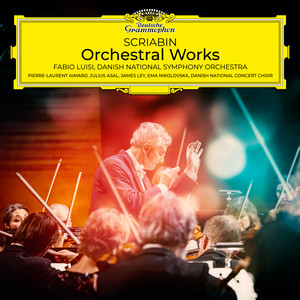 | Symphony No. 1 in E Major, Op. 26: I. Lento | Alexander Scriabin, Danish National Symphony Orchestra, Fabio Luisi | B♭ Minor | 2 | 3A | 86 BPM | |
 | Kodály: Duo for Violin and Cello, Op. 7: II. Adagio (Live at Saratoga Performing Arts Centre, 1998) | Zoltán Kodály, Truls Mørk, Chantal Juillet | B Minor | 1 | 10A | 103 BPM | |
 | Schumann: 3 Romances for Oboe and Piano, Op. 94: No. 1, Nicht schnell | Robert Schumann, Albrecht Mayer, Markus Becker | A Minor | 0 | 8A | 77 BPM | |
 | Dance Preludes for Clarinet and Piano: No. 2, Andantino | Witold Lutosławski, Anastasia Schmidlin, Denis Zhdanov | B♭ Minor | 0 | 3A | 133 BPM | |
 | Bach, CPE: Duet for Clarinets in C Major, Wq. 142: I. Adagio e sostenuto | Carl Philipp Emanuel Bach, Sabine Meyer, Wolfgang Meyer | C Major | 0 | 8B | 74 BPM | |
 | Poeme in D-Flat Major, Op. 39a | Zdeněk Fibich, Deutsche Streicherphilharmonie, Wolfgang Hentrich | D Major | 1 | 10B | 89 BPM | |
 | Strauss, R: Der Bürger als Edelmann Suite, Op. 60-IIIa: V. Das Menuett des Lully | Richard Strauss, Jeffrey Tate, English Chamber Orchestra | B Minor | 1 | 10A | 103 BPM | |
 | Piano Quartet No. 2 in G Minor, Op. 45: III. Adagio non troppo | Gabriel Fauré, Trio Wanderer, Antoine Tamestit | B♭ Major | 2 | 6B | 104 BPM | |
 | Poulenc: Concerto for Two Pianos in D Minor, FP 61: I. Allegro ma non troppo | Francis Poulenc, James Conlon, Rotterdam Philharmonic Orchestra | E♭ Major | 1 | 5B | 103 BPM | |
 | Bassoon Scherzo No. 1 in F-Sharp Minor (Original Recording) by Nikolas Eleftheriou | Nikolas Eleftheriou | F♯ Minor | 1 | 11A | 67 BPM | |
| Strauss, R: Der Bürger als Edelmann Suite, Op. 60-IIIa: IX. Das Diner | Richard Strauss, Jeffrey Tate, English Chamber Orchestra, Clifford Benson | B Minor | 1 | 10A | 103 BPM | |
 | Chants sahariens, 5 poèmes touaregs: II La nuit passée | Maurice Jaubert, Felicity Lott, Armin Jordan, Kammersensemble de Paris, Jean-Claude Bouveresse | D♭ Major | 0 | 3B | 82 BPM | |
 | Sibelius: Symphony No. 1 in E Minor, Op. 39: I. Andante, ma non troppo - Allegro energico | Jean Sibelius, Paavo Berglund, Helsinki Philharmonic Orchestra | C Major | 2 | 8B | 109 BPM | |
 | Roussel: Symphony No. 1 in D Minor, Op. 7 "Le poème de la forêt": III. Soir d'été | Albert Roussel, Charles Dutoit, Orchestre National De France | F♯ Major | 0 | 2B | 75 BPM | |
 | Symphony in C Major, Op. 46: II. Sehr langsam - | Hans Pfitzner, Seattle Symphony Orchestra, Gerard Schwarz | F Major | 0 | 7B | 87 BPM | |
 | Die erste Walpurgisnacht, Op. 60: Ouverture: Der Ubergang zum Fruhling | Felix Mendelssohn, Kurt Masur, Leipzig Gewandhaus Orchestra | E♭ Major | 0 | 5B | 58 BPM | |
| Petrouchka: Bohémien et marchand malhonnête | Ferenc Fricsay, Berliner Philharmoniker | C Major | 5 | 8B | 136 BPM |
- ISRC
- JPG200810607
- Label
- L-M Records/RCA Records