- BPM
- 139
- Key
- G Minor
- Camelot
- 6A
Francesca da Rimini, Act III: Andate in allegrezza per la corte (Live) by Riccardo Zandonai, Orchestra del Teatro Lirico Giuseppe Verdi di Trieste, Leyla Gencer, Franco Capuana Song Details
"Francesca da Rimini, Act III: Andate in allegrezza per la corte (Live)" by Riccardo Zandonai, Orchestra del Teatro Lirico Giuseppe Verdi di Trieste, Leyla Gencer, Franco Capuana had its release date on August 1, 2014. With this song being around four minutes long, at 3:40, the duration of this song is pretty average compared to other songs. This track is safe for children and doesn't appear to contain any foul language, since the "Explicit" tag was not present in this track. This song is part of Zandonai: Francesca da Rimini (Live) by Riccardo Zandonai, Raimondo Botteghelli, Renato Cioni, Coro del Teatro Lirico Giuseppe Verdi di Trieste, Mario Ferrara, Anna Gasparini, Leyla Gencer, Claudio Giombi, Rosa Laghezza, Silvana Alessio Martinelli, Eno Mucchiutti, Orchestra del Teatro Lirico Giuseppe Verdi di Trieste, Enzo Viaro, Franco Capuana. The song's track number on the album is #3 out of 31 tracks. Based on our data, United States was the country where this track was produced or recorded. Based on our statistics, Francesca da Rimini, Act III: Andate in allegrezza per la corte (Live)'s popularity is unknown right now. In our opinion, the overall tone is not very danceable and projects negative sounds, such as being sad, depressed, or angry.
BPM and Tempo
Since Francesca da Rimini, Act III: Andate in allegrezza per la corte (Live) by Riccardo Zandonai, Orchestra del Teatro Lirico Giuseppe Verdi di Trieste, Leyla Gencer, Franco Capuana has a tempo of 139 beats per a minute, the tempo markings of this song would be Allegro (fast, quick, and bright). With Francesca da Rimini, Act III: Andate in allegrezza per la corte (Live) being at 139 BPM, the half-time would be 70 BPM with a double-time of 278 BPM.In addition, we consider the tempo speed to be pretty fast for this song. This makes this song perfect for activities such as, walking. The time signature for this track is 3/4.
Music Key
This song has a musical key of G Minor. Which also means that the camelot key for this song is 6A. So, the perfect camelot match for 6A would be either 6A or 5B. While, a low energy boost can consist of either 6B or 7A. For moderate energy boost, you would use 3A and a high energy boost can either be 8A or 1A. However, if you are looking for a low energy drop, finding a song with a camelot key of 5A would be a great choice. Where 9A would give you a moderate drop, and 4A or 11A would be a high energy drop. Lastly, 9B allows you to change the mood.
Want to find the BPM and music key for other songs? Check out our BPM and Key Finder page!
- Popularity
- 0%
- Loudness
- -26.99 dB
- Acousticness
- 99%
- Danceability
- 29%
- Energy
- 4%
- Instrumentalness
- 0%
- Liveness
- 24%
- Loudness
- 55%
- Speechiness
- 5%
- Valence
- 4%
Recommendations
| Track | Artist | Key | Energy | Camelot | BPM | ||
|---|---|---|---|---|---|---|---|
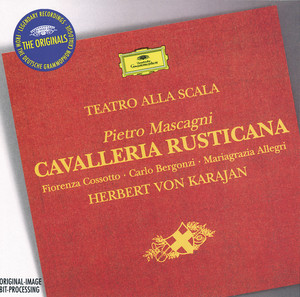 | Cavalleria rusticana: A voi tutti salute! | Pietro Mascagni, Adriane Martino, Carlo Bergonzi, Gian Giacomo Guelfi, Orchestra Del Teatro Alla Scala, Milano, Herbert von Karajan, Coro Del Teatro Alla Scala Di Milano | E Major | 1 | 12B | 174 BPM | |
 | Don Pasquale, Act II Quinta Scena: Riunita immantinento (Norina/Pasquale/Malatesta) | Gaetano Donizetti, Mirella Freni, Riccardo Muti, Philharmonia Orchestra | D♭ Minor | 2 | 12A | 135 BPM | |
 | Mozart: Così fan tutte, K. 588, Act 1: Terzetto. "É la fede delle femmine" (Ferrando, Don Alfonso, Guglielmo) | Wolfgang Amadeus Mozart, Nikolaus Harnoncourt, Royal Concertgebouw Orchestra, Deon Van Der Walt, Gilles Cachemaille, Thomas Hampson | D Major | 0 | 10B | 113 BPM | |
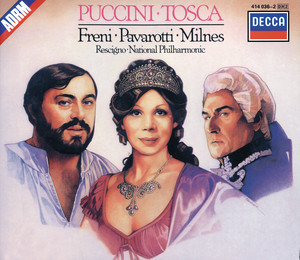 | Tosca, Act II: Tosca è un buon falco! | Giacomo Puccini, Sherrill Milnes, Paul Hudson, National Philharmonic Orchestra, Nicola Rescigno | E♭ Minor | 3 | 2A | 85 BPM | |
 | Francesca da Rimini, Act II: Paolo! …Francesca! (Live) | Riccardo Zandonai, Renato Cioni, Orchestra del Teatro Lirico Giuseppe Verdi di Trieste, Coro del Teatro Lirico Giuseppe Verdi di Trieste, Leyla Gencer, Eno Mucchiutti, Claudio Giombi, Franco Capuana | D♭ Major | 5 | 3B | 87 BPM | |
 | Puccini : Tosca : Act 2 "Vissi d'arte" [Tosca] | Giacomo Puccini, Zubin Mehta, Orchestra Sinfonica | E Major | 1 | 12B | 106 BPM | |
 | La traviata / Act 2: "Di sprezzo degno se stesso rende" | Giuseppe Verdi, Juan Pons, Luciano Pavarotti, Wendy White, Anthony Laciura, Bruno Pola, Julien Robbins, Jeffrey Wells, Metropolitan Opera Chorus, John Keenan, Metropolitan Opera Orchestra, James Levine | E♭ Major | 1 | 5B | 88 BPM | |
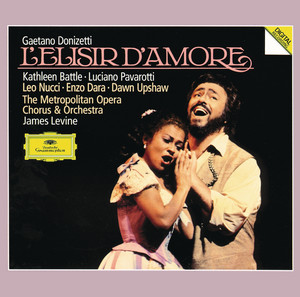 | L'elisir d'amore / Act II: "Saria possibile?" | Gaetano Donizetti, Metropolitan Opera Chorus, David Stivender, Dawn Upshaw, Metropolitan Opera Orchestra, James Levine | B Major | 0 | 1B | 119 BPM | |
 | Der fliegende Holländer, Act III: Willst jenen Tag du nicht dich mehr entsinnen "Cavatina" | Richard Wagner, René Kollo, Chicago Symphony Orchestra, Sir Georg Solti | A Major | 3 | 11B | 87 BPM | |
| Donizetti: Don Pasquale, Act 2: "Via, da brava" (Malatesta, Norina, Pasquale) | Gaetano Donizetti, Riccardo Muti, Leo Nucci, Mirella Freni, Sesto Bruscantini, Philharmonia Orchestra | E Major | 2 | 12B | 122 BPM | |
 | Mozart: Così fan tutte, K. 588, Act 1: Quintetto. "Sento, o Dio, che questo piede" (Guglielmo, Ferrando, Don Alfonso, Fiordiligi, Dorabella) | Wolfgang Amadeus Mozart, Karl Böhm, Alfredo Kraus, Christa Ludwig, Elisabeth Schwarzkopf, Giuseppe Taddei, Heinrich Schmidt, Walter Berry, Philharmonia Orchestra | E♭ Major | 1 | 5B | 104 BPM | |
 | Verdi: Macbeth, Act 1: Giorno non vidi mai sì fiero e bello! (Macbeth/Banco/Streghe) | Giuseppe Verdi, Sherrill Milnes, Riccardo Muti, New Philharmonia Orchestra | C Major | 3 | 8B | 79 BPM | |
| Puccini : Turandot : Act 3 "Tu che di gel sei cinta" [Liù] | Giacomo Puccini, Kiri Te Kanawa, Kent Nagano, Orchestre de l'Opéra de Lyon | B♭ Minor | 2 | 3A | 118 BPM | |
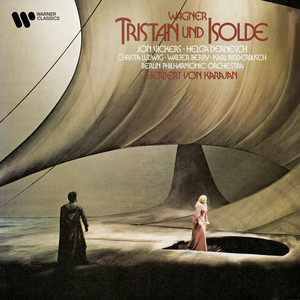 | Wagner: Tristan und Isolde, Act 1: "Welcher Wahn! Welch' eitles Zürnen!" (Brangäne, Isolde) | Richard Wagner, Herbert von Karajan, Christa Ludwig, Helga Dernesch, Berliner Philharmoniker | C Major | 1 | 8B | 131 BPM | |
| Don Pasquale, Act I Seconda Scena: Son rinato. Or si parli al nipotino (Pasquale/Ernesto) | Gaetano Donizetti, Sesto Bruscantini/Leo Nucci/Philharmonia Orchestra/Riccardo Muti, Riccardo Muti, Philharmonia Orchestra | C Major | 1 | 8B | 77 BPM | |
 | Suor Angelica: Il principe Gualtiero vostro padre | Giacomo Puccini, Christa Ludwig, Dame Joan Sutherland, National Philharmonic Orchestra, Richard Bonynge | E Major | 1 | 12B | 98 BPM | |
 | Verdi: Otello: Atto Primo: Fuoco di gioia! | Giuseppe Verdi, Antonio Pappano, Orchestra dell'Accademia Nazionale di Santa Cecilia, Coro dell'Accademia Nazionale Di Santa Cecilia | E Minor | 1 | 9A | 127 BPM | |
![Cavalleria Rusticano: V. Romance and Scene. Voi lo sapete, O mamma (Santuzza) - Miseri noi [Lucia · Santuzza] by Pietro Mascagni, Filippo Arlia, Berliner Symphoniker, Irina Dolzhenko, Alessandra di Giorgio](https://i.scdn.co/image/ab67616d00001e02e9c5e4b106ecc8b913890e2b) | Cavalleria Rusticano: V. Romance and Scene. Voi lo sapete, O mamma (Santuzza) - Miseri noi [Lucia · Santuzza] | Pietro Mascagni, Filippo Arlia, Berliner Symphoniker, Irina Dolzhenko, Alessandra di Giorgio | E Major | 1 | 12B | 83 BPM | |
 | Andrea Chénier / Act 1: Passiamo la sera allegramente! ... O Pastorelle addio! | Umberto Giordano, Hugues Cuénod, Florindo Andreolli, Astrid Varnay, Luciano Pavarotti, Montserrat Caballé, Chorus of the Welsh National Opera, National Philharmonic Orchestra, Riccardo Chailly | A Major | 1 | 11B | 75 BPM | |
 | Puccini: Turandot, Act 1: "O giovinetto! Grazia! Grazia!" (Coro, Calaf) | Giacomo Puccini, Antonio Pappano, Coro dell'Accademia Nazionale Di Santa Cecilia, Jonas Kaufmann, Orchestra dell'Accademia Nazionale di Santa Cecilia | E Major | 0 | 12B | 135 BPM | |
 | Ruster: solenne bevitor di ponce | Riccardo Zandonai, Gianandrea Gavazzeni | A Major | 2 | 11B | 128 BPM | |
 | Giulietta e Romeo / Act 3: Giulietta! Son io! | Riccardo Zandonai, Roberto Alagna, Orchestra of the Royal Opera House, Covent Garden, Sir Mark Elder | F Major | 1 | 7B | 86 BPM | |
 | Un ballo in maschera / Act 2: Ecco l'orrido campo | Giuseppe Verdi, Katia Ricciarelli, Orchestra Del Teatro Alla Scala, Milano, Claudio Abbado | B♭ Minor | 1 | 3A | 78 BPM | |
 | Die Fledermaus / Act 1: "Komm mit mir zum Souper" | Johann Strauss II, Wolfgang Brendel, Olaf Bär, Wiener Philharmoniker, André Previn | E Major | 2 | 12B | 104 BPM | |
 | Lucrezia Borgia / Act 1: Maffio Orsini, signora, son io | Gaetano Donizetti, Marilyn Horne, John Bröcheler, Piero de Palma, Graham Clark, Lieuwe Visser, Giacomo Aragall, National Philharmonic Orchestra, Richard Bonynge | F Minor | 4 | 4A | 103 BPM |
- ISRC
- USB8U1082003
- Label
- L-M Records/RCA Records