- BPM
- 112
- Key
- A Major
- Camelot
- 11B
Rigoletto, Act I Scene 2: Softly, softly we move in to get her (Gilda, Rigoletto, Chorus) by Giuseppe Verdi, Sir Mark Elder, English National Opera Orchestra, Helen Field, John Rawnsley, English National Opera Chorus Song Details
Giuseppe Verdi, Sir Mark Elder, English National Opera Orchestra, Helen Field, John Rawnsley, English National Opera Chorus's ' "Rigoletto, Act I Scene 2: Softly, softly we move in to get her (Gilda, Rigoletto, Chorus)" was released on its scheduled release date, January 1, 2000. The duration of This song is about 3 minutes long, at 3:01. Based on our data, This song appears to be safe for all ages and is not considered explicit. This track is about the average length of a typical track. This song is part of Verdi: Rigoletto by Giuseppe Verdi, Sir Mark Elder, English National Opera Orchestra, John Rawnsley, Helen Field, Arthur Davies, John Tomlinson, Jean Rigby, Norman Bailey. The song's track number on the album is #16 out of 38 tracks. Based on our data, United Kingdom was the country where this track was produced or recorded. In terms of popularity, Rigoletto, Act I Scene 2: Softly, softly we move in to get her (Gilda, Rigoletto, Chorus) is currently unknown. The overall mood can be danceable to some, especially with it's high amount of postive energy.
BPM and Tempo
Since Rigoletto, Act I Scene 2: Softly, softly we move in to get her (Gilda, Rigoletto, Chorus) by Giuseppe Verdi, Sir Mark Elder, English National Opera Orchestra, Helen Field, John Rawnsley, English National Opera Chorus has a tempo of 112 beats per a minute, the tempo markings of this song would be Moderato (at a moderate speed). With Rigoletto, Act I Scene 2: Softly, softly we move in to get her (Gilda, Rigoletto, Chorus) being at 112 BPM, the half-time would be 56 BPM with a double-time of 224 BPM.In addition, we consider the tempo speed to be pretty moderate for this song. The time signature for this track is 4/4.
Music Key
This song is in the music key of A Major. Or for those who are familiar with the camelot wheel, this song has a camelot key of 11B. So, the perfect camelot match for 11B would be either 11B or 12A. While, 12B can give you a low energy boost. For moderate energy boost, you would use 8B and a high energy boost can either be 1B or 6B. Though, if you want a low energy drop, you should looking for songs with either a camelot key of 11A or 10B will give you a low energy drop, 2B would be a moderate one, and 9B or 4B would be a high energy drop. Lastly, 8A allows you to change the mood.
Want to find the BPM and music key for other songs? Check out our BPM and Key Finder page!
- Popularity
- 0%
- Loudness
- -21.38 dB
- Acousticness
- 99%
- Danceability
- 42%
- Energy
- 13%
- Instrumentalness
- 49%
- Liveness
- 40%
- Loudness
- 64%
- Speechiness
- 4%
- Valence
- 68%
Recommendations
| Track | Artist | Key | Energy | Camelot | BPM | ||
|---|---|---|---|---|---|---|---|
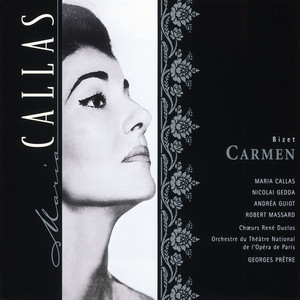 | Bizet: Carmen, Act 1: "Avec la garde montante" (Children's Chorus, Moralès, José) | Georges Bizet, Nicolai Gedda/Claude Calès/Choeurs d'Enfants Jean Pesneaud/Orchestre de l'Opéra National de Paris/Georges Prêtre, Georges Prêtre, Orchestre du Théâtre National de l'Opéra Paris, Orchestre de l'Opéra National de Paris, Paris Opera Orchestra | D Minor | 1 | 7A | 122 BPM | |
 | Requiem In D Minor, K. 626: Sequence: V. Confutatis Maledictis | Slovak Philharmonic, Vladimir Ruso, Slovak Philharmonic Chorus, Stefan Klimo, Magdaléna Hajóssyová, Jaroslava Horska, Jozef Kundlák, Peter Mikulas, Wolfgang Amadeus Mozart | A Minor | 0 | 8A | 101 BPM | |
 | Rigoletto / Act 1: "Questa o quella...Partite? Crudele!" | Giuseppe Verdi, Luciano Pavarotti, Kiri Te Kanawa, Sherrill Milnes, Riccardo Cassinelli, Ambrosian Opera Chorus, London Symphony Orchestra, Richard Bonynge | A♭ Major | 2 | 4B | 77 BPM | |
 | Carmen / Act 2: Chanson: "Les tringles des sistres tintaient" | Georges Bizet, Elina Garanca, Cristina Antoaneta Pasaroiu, Giuseppina Bridelli, Orchestra Sinfonica Nazionale Della RAI, Karel Mark Chichon | C Major | 1 | 8B | 111 BPM | |
 | Il Trovatore / Act 2: "Stride la vampa!...Mesta è la tua canzon!" | Giuseppe Verdi, Marilyn Horne, Luciano Pavarotti, Peter Knapp, The London Opera Chorus, National Philharmonic Orchestra, Richard Bonynge | C Major | 1 | 8B | 83 BPM | |
 | Le nozze di Figaro, K.492 / Act 4: "Deh vieni, non tardar" | Wolfgang Amadeus Mozart, Dawn Upshaw, Metropolitan Opera Orchestra, James Levine | F Major | 0 | 7B | 97 BPM | |
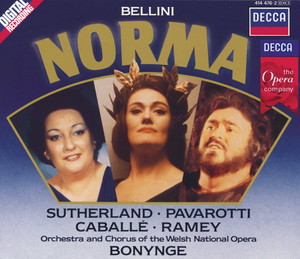 | Norma / Act 1: Casta Diva | Vincenzo Bellini, Dame Joan Sutherland, Samuel Ramey, Welsh National Opera Chorus, Welsh National Opera Orchestra, Richard Bonynge | F Major | 1 | 7B | 67 BPM | |
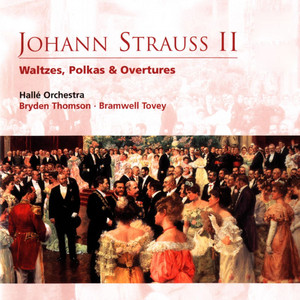 | Strauss: Radetzky March, Op. 228 | Johann Strauss I, Hallé, Bramwell Tovey | A Major | 4 | 11B | 122 BPM | |
 | Les contes d'Hoffmann: Les oiseaux dans la charmille | Jacques Offenbach, Susanne Elmark, Sønderjyllands Symfoniorkester, Robert Reimer | F♯ Minor | 4 | 11A | 86 BPM | |
 | Prokofiev: Suite No. 2 from Romeo and Juliet, Op. 64ter: I. The Montagues and Capulets (Excerpt) | Sergei Prokofiev, Philadelphia Orchestra, Riccardo Muti | A Minor | 3 | 8A | 108 BPM | |
 | Le veau d'or - from Faust | Charles Gounod, Erwin Schrott, Daniele Rustioni | C Minor | 5 | 5A | 121 BPM | |
 | Nessun dorma! from Turandot | Plácido Domingo | D Major | 4 | 10B | 80 BPM | |
 | Una voce poco fa from Il Barbiere di Siviglia, '(The) Barber of Seville' | Maria Callas, Philharmonia Orchestra, Tullio Serafin | E Major | 1 | 12B | 136 BPM | |
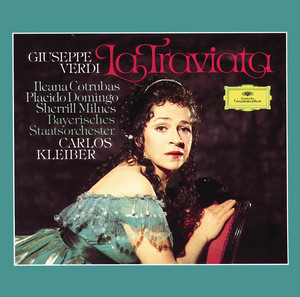 | La Traviata / Act 2: "Di Provenza il mar, il suol" | Giuseppe Verdi, Sherrill Milnes, Bavarian State Orchestra, Carlos Kleiber | D♭ Major | 1 | 3B | 114 BPM | |
 | La Gioconda / Act 1: Feste! Pane! Feste! | Amilcare Ponchielli, Sherrill Milnes, The London Opera Chorus, National Philharmonic Orchestra, Bruno Bartoletti | B♭ Major | 4 | 6B | 67 BPM | |
 | Tuba mirum | Giuseppe Verdi, Cesar Hernandez, Carlo Colombara, Hungarian State Opera Chorus, Hungarian State Opera Orchestra, Pier Giorgio Morandi | D♭ Minor | 3 | 12A | 91 BPM | |
 | Cavalleria rusticana: Voi lo sapete | Pietro Mascagni, Agnes Baltsa, Munich Radio Orchestra, Heinz Wallberg | F Major | 3 | 7B | 172 BPM | |
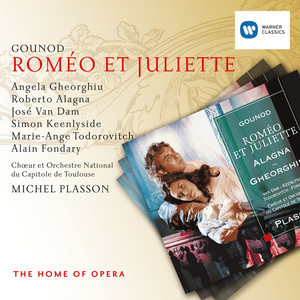 | Gounod: Roméo et Juliette: Ouverture | Charles Gounod, Michel Plasson, Orchestre Du Capitole De Toulouse | D Minor | 3 | 7A | 123 BPM | |
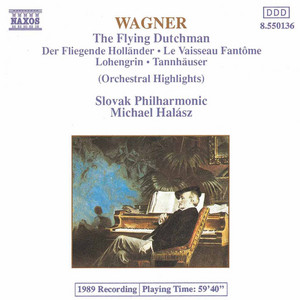 | Lohengrin: Prelude | Richard Wagner, Slovak Philharmonic Orchestra, Michael Halasz | A Major | 0 | 11B | 65 BPM | |
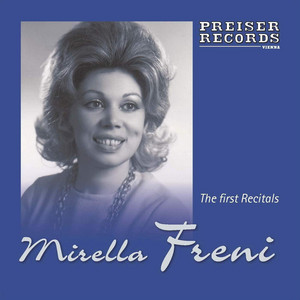 | Turandot: Tu, che di gel sei cinta | Mirella Freni, Vienna Volksoper Orchestra, Argeo Quadri | B Major | 2 | 1B | 87 BPM | |
 | Carmina Burana: I. O fortuna | Carl Orff, Orchester der Deutschen Oper Berlin, Eugen Jochum, Chor der Deutschen Oper Berlin | B♭ Major | 2 | 6B | 70 BPM | |
 | Verdi: La traviata, Act 1: "Sempre libera" (Violetta, Alfredo) | Giuseppe Verdi, Philharmonia Orchestra, Riccardo Muti, Alfredo Kraus, Renata Scotto | A♭ Major | 1 | 4B | 85 BPM | |
 | Addio fiorito asil | Carlo Bergonzi | D♭ Major | 2 | 3B | 74 BPM | |
 | Gaîté parisienne: Barcarolle | Jacques Offenbach, Berliner Philharmoniker, Herbert von Karajan | D Major | 0 | 10B | 82 BPM | |
 | Rigoletto / Act 3: "Bella figlia dell'amore" | Giuseppe Verdi, Renato Bruson, Edita Gruberova, Neil Shicoff, Brigitte Fassbaender, Orchestra dell'Accademia Nazionale di Santa Cecilia, Giuseppe Sinopoli | D♭ Major | 2 | 3B | 119 BPM |
- ISRC
- GBLWD0001016
- Label
- L-M Records/RCA Records