- BPM
- 75
- Key
- A Major
- Camelot
- 11B
Der Sieg des Glaubens, Op. 157, Pt. 2: Höre die Frechen nicht by Ferdinand Ries, Rheinische Kantorei, Das Kleine Konzert, Hermann Max Song Details
"Der Sieg des Glaubens, Op. 157, Pt. 2: Höre die Frechen nicht" by Ferdinand Ries, Rheinische Kantorei, Das Kleine Konzert, Hermann Max had its release date on March 22, 2013. With this song being about 5 minutes long, at This song is fairly a long song compared to the average song length. This song does not have an "Explicit" tag, making it safe for all ages. There are a total of 23 in the song's album "Ries: Der Sieg des Glaubens, Op. 157". In this album, this song's track order is #14. Furthermore, we believe that the track originated from Germany. Der Sieg des Glaubens, Op. 157, Pt. 2: Höre die Frechen nicht is unknown right now. In our opinion, the overall tone is not very danceable and projects negative sounds, such as being sad, depressed, or angry.
BPM and Tempo
With Der Sieg des Glaubens, Op. 157, Pt. 2: Höre die Frechen nicht by Ferdinand Ries, Rheinische Kantorei, Das Kleine Konzert, Hermann Max having a BPM of 75 with a half-time of 38 BPM and a double-time of 150 BPM, we would consider this track to have a Adagio (slowly with great expression) tempo marking. Because of this, we believe that the song has an overall slow tempo. The time signature for this track is 4/4.
Music Key
A Major is the music key of this track. Or for those who are familiar with the camelot wheel, this song has a camelot key of 11B. So, the perfect camelot match for 11B would be either 11B or 12A. While, 12B can give you a low energy boost. For moderate energy boost, you would use 8B and a high energy boost can either be 1B or 6B. Though, if you want a low energy drop, you should looking for songs with either a camelot key of 11A or 10B will give you a low energy drop, 2B would be a moderate one, and 9B or 4B would be a high energy drop. Lastly, 8A allows you to change the mood.
Want to find the BPM and music key for other songs? Check out our BPM and Key Finder page!
- Popularity
- 0%
- Loudness
- -12.362 dB
- Acousticness
- 93%
- Danceability
- 26%
- Energy
- 36%
- Instrumentalness
- 1%
- Liveness
- 12%
- Loudness
- 79%
- Speechiness
- 5%
- Valence
- 10%
Recommendations
| Track | Artist | Key | Energy | Camelot | BPM | ||
|---|---|---|---|---|---|---|---|
 | Symphony No. 1 in C Minor: III. Allegro vivace | Emilie Mayer, NDR Radiophilharmonie, Leo McFall | D♭ Major | 0 | 3B | 81 BPM | |
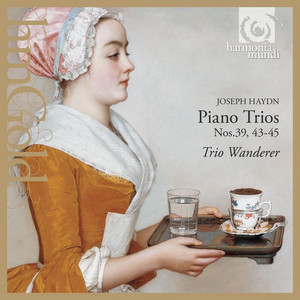 | Piano Trio No. 43 in C Major, Hob. XV: 27: II. Andante | Joseph Haydn, Trio Wanderer | A Minor | 1 | 8A | 106 BPM | |
 | Piano Quartet No. 1 in C Minor, Op. 15: II. Scherzo (Allegro vivo) | Gabriel Fauré, Trio Wanderer, Antoine Tamestit | B♭ Major | 2 | 6B | 104 BPM | |
 | Berlioz: Harold en Italie, Op. 16, H. 68: III. Allegro assai - Allegretto (Sérénade d'un montagnard des Abruzzes à sa maîtresse) | Hector Berlioz, Leonard Bernstein, Orchestre National De France | C Major | 1 | 8B | 85 BPM | |
 | Cello Concerto No. 2 in D Major, Hob. VIIb:2: II. Adagio | Joseph Haydn, Maximilian Hornung, Antonello Manacorda | A Major | 0 | 11B | 126 BPM | |
 | Der Sieg des Glaubens, Op. 157, Pt. 1: Euer Glaube ist uns Spott | Ferdinand Ries, Rheinische Kantorei, Das Kleine Konzert, Hermann Max | A Major | 4 | 11B | 138 BPM | |
 | Violin Sonata in A Major, FWV 8: IV. Allegro poco mosso | César Franck, Isabelle Faust, Alexander Melnikov | A Major | 1 | 11B | 83 BPM | |
 | Serenade No. 1 in D Major, Op. 9: I. Andante | Robert Fuchs, Kolner Kammerorchester, Christian Ludwig | C Minor | 1 | 5A | 111 BPM | |
 | Janáček: In the Mists: II. Molto adagio | Leoš Janáček, Mikhail Rudy | A♭ Minor | 1 | 1A | 80 BPM | |
 | Piano Sonata in C Minor: I. Allegro moderato e con espressione | Fanny Mendelssohn, Heather Schmidt | E Major | 1 | 12B | 114 BPM | |
 | Bach, JS: Concerto for 3 Pianos in D Minor, BWV 1063: II. Alla siciliana | Johann Sebastian Bach, David Fray, Emmanuel Christien, Jacques Rouvier, Orchestre National Du Capitole De Toulouse | F Major | 0 | 7B | 110 BPM | |
 | Liszt, Beethoven: Beethoven Symphonies, S. 464, No. 4 in B-Flat Major: II. Adagio (After Symphony No. 4, Op. 60) | Franz Liszt, Ludwig van Beethoven, Cyprien Katsaris | F Major | 0 | 7B | 115 BPM | |
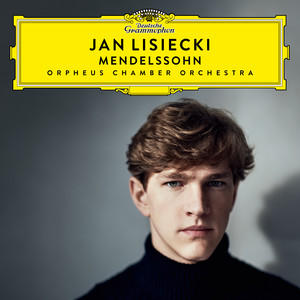 | Piano Concerto No. 2 in D Minor, Op. 40, MWV O11: II. Adagio. Molto sostenuto | Felix Mendelssohn, Jan Lisiecki, Orpheus Chamber Orchestra | B♭ Major | 0 | 6B | 76 BPM | |
 | Variations on "Là ci darem la mano", Op. 2: Theme. Allegretto | Frédéric Chopin, Eldar Nebolsin, Warsaw Philharmonic Orchestra, Antoni Wit | B♭ Major | 2 | 6B | 93 BPM | |
 | Der Fischer und das Milchmädchen: XII. Andantino | Giacomo Meyerbeer, Czech Philharmonic Chamber Orchestra, Dario Salvi | A Major | 1 | 11B | 91 BPM | |
 | Piano Concerto No. 5 In C Major, H. 39, "L'incendie Par L'orage": III. Rondo Allegro | Benjamin Frith, Royal Northern Sinfonia, John Field | C Major | 1 | 8B | 107 BPM | |
 | Piano Concerto No. 20 in D Minor, K.466: II. Romanze | Philharmonia Orchestra, Youri Egorov, Wolfgang Sawallisch | B♭ Major | 0 | 6B | 84 BPM | |
 | Wiegenlied No. 4 Lullaby in E Flat Major, Op. 49 - Strings Version | Classical Music for Cats | B Minor | 2 | 10A | 77 BPM | |
 | Symphony No. 1 in D Major, D. 82: I. Adagio – Allegro vivace | Franz Schubert, Berliner Philharmoniker, Nikolaus Harnoncourt | D Major | 1 | 10B | 73 BPM | |
 | Nocturne In A Flat Major, Op 62 No 3 | A Nanut | A♭ Major | 0 | 4B | 69 BPM | |
 | Symphony No. 1 in E major: I. Alla breve | Hans Rott, Paavo Järvi | E Major | 1 | 12B | 85 BPM | |
 | Symphony No. 3 in G Minor, Op. 36: I. Adagio - Allegro | Louise Farrenc, North German Radio Symphony, Hannover, Johannes Goritzki | G Minor | 1 | 6A | 99 BPM | |
 | Lakštingala, MKČ 466 | Mikalojus Konstantinas Čiurlionis, Onutė Gražinytė | A Minor | 0 | 8A | 85 BPM | |
 | Cello Concerto in C Minor, Op. 43: I. Adagio | Mieczysław Weinberg, Kristina Reiko Cooper, Constantine Orbelian, Kaunas City Symphony Orchestra | D Major | 1 | 10B | 74 BPM | |
 | Symphony No. 4 in E minor, Op. 98: 3. Allegro giocoso | Classic FM Orchestra | E♭ Major | 4 | 5B | 124 BPM |
- ISRC
- DEB200973814
- Label
- L-M Records/RCA Records