- BPM
- 140
- Key
- A Major
- Camelot
- 11B
Delius: A Dance Rhapsody No. 1: I. Lento - by Frederick Delius, Royal Philharmonic Orchestra, Sir Thomas Beecham Song Details
"Delius: A Dance Rhapsody No. 1: I. Lento -" by Frederick Delius, Royal Philharmonic Orchestra, Sir Thomas Beecham had its release date on February 7, 2011. With This song being less than two minutes long, at 1:39, we are fairly confident that this song is not explicit and is safe for all ages. Based on the duration of this song, this song duration is much smaller than the average song duration. There are a total of 88 in the song's album "Sir Thomas Beecham: The English Collection". In this album, this song's track order is #1. Furthermore, we believe that the track originated from United Kingdom. Based on our statistics, Delius: A Dance Rhapsody No. 1: I. Lento -'s popularity is unknown right now. In our opinion, the overall tone is not very danceable and projects negative sounds, such as being sad, depressed, or angry.
BPM and Tempo
With Delius: A Dance Rhapsody No. 1: I. Lento - by Frederick Delius, Royal Philharmonic Orchestra, Sir Thomas Beecham having a BPM of 140 with a half-time of 70 BPM and a double-time of 280 BPM, we would consider this track to have a Allegro (fast, quick, and bright) tempo marking. Because of this, we believe that the song has an overall fast tempo. Looking at the BPM of this song, this song might go great with jogging or cycling. The time signature for this track is 1/4.
Music Key
A Major is the music key of this track. Or for those who are familiar with the camelot wheel, this song has a camelot key of 11B. So, the perfect camelot match for 11B would be either 11B or 12A. While, 12B can give you a low energy boost. For moderate energy boost, you would use 8B and a high energy boost can either be 1B or 6B. Though, if you want a low energy drop, you should looking for songs with either a camelot key of 11A or 10B will give you a low energy drop, 2B would be a moderate one, and 9B or 4B would be a high energy drop. Lastly, 8A allows you to change the mood.
Want to find the BPM and music key for other songs? Check out our BPM and Key Finder page!
- Popularity
- 0%
- Loudness
- -16.492 dB
- Acousticness
- 88%
- Danceability
- 16%
- Energy
- 12%
- Instrumentalness
- 92%
- Liveness
- 14%
- Loudness
- 73%
- Speechiness
- 4%
- Valence
- 4%
Recommendations
| Track | Artist | Key | Energy | Camelot | BPM | ||
|---|---|---|---|---|---|---|---|
 | A Downland Suite: II. Elegy | John Ireland, Sinfonia Of London, John Wilson | E♭ Major | 0 | 5B | 57 BPM | |
 | Scheherazade: Calm at Sea | Nikolai Rimsky-Korsakov, Lars Hjalmar Joakim | E Major | 2 | 12B | 84 BPM | |
 | Vaughan Williams: Job, a Masque for Dancing, Scene 9: Epilogue | Ralph Vaughan Williams, Andrew Davis, BBC Symphony Orchestra | G Minor | 0 | 6A | 99 BPM | |
 | 12 Songs, Op. 21: V. Lilacs (Transcr. Rachmaninoff for Solo Piano) | Sergei Rachmaninoff, Sergei Babayan | A♭ Major | 0 | 4B | 78 BPM | |
 | Ancient Airs & Dances, Suite III, P. 172: I. Italiana (Anonymous) | Ottorino Respighi, Filarmonica della Scala, Riccardo Chailly | B♭ Major | 1 | 6B | 172 BPM | |
 | On hearing the first Cuckoo in Spring | Frederick Delius, Academy of St. Martin in the Fields, Sir Neville Marriner | G Major | 1 | 9B | 80 BPM | |
 | Kol Nidrei, Op. 47 | Max Bruch, Jan Vogler, Helmut Branny | D Major | 1 | 10B | 136 BPM | |
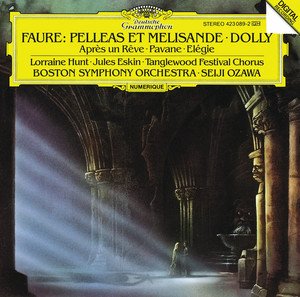 | Après un Rêve Op.7, No.1 | Gabriel Fauré, Jules Eskin, Boston Symphony Orchestra, Seiji Ozawa | F Minor | 1 | 4A | 96 BPM | |
 | 14 Romances, Op. 34/14: No. 14, Vocalise (Arr. For Cello & Piano by Alexander Shtrimer) | Sergei Rachmaninoff, Mikayel Hakhnazaryan, Lia Hakhnazaryan | E Minor | 1 | 9A | 105 BPM | |
 | Crisantemi | Brodsky Quartet | F♯ Minor | 0 | 11A | 75 BPM | |
 | Tu mancavi a tormentarmi, crudelissima speranza (Arr. L. Stokowski) | Antonio Cesti, Brussels Philharmonic, Richard Egarr | E Major | 1 | 12B | 87 BPM | |
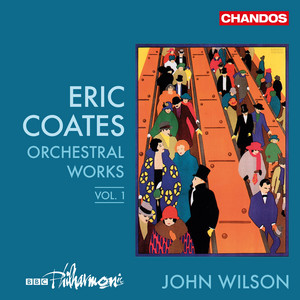 | By the Sleepy Lagoon | Eric Coates, John Wilson, BBC Philharmonic | C Major | 1 | 8B | 77 BPM | |
 | 6 Impromptus, Op. 5: Impromptu V | Jean Sibelius, Leif Ove Andsnes | B Minor | 0 | 10A | 72 BPM | |
 | Masques et bergamasques Suite, Op. 112: IV. Pastorale | Gabriel Fauré, RTE Sinfonietta, John Georgiadis | D Minor | 0 | 7A | 70 BPM | |
 | 49th Parallel Suite: Prelude | RTE Concert Orchestra, Ralph Vaughan Williams | G Major | 1 | 9B | 87 BPM | |
 | Préludes / Book 1, L. 117: La fille aux cheveux de lin (Arr. Koncz) | Claude Debussy, Andreas Ottensamer, Rotterdam Philharmonic Orchestra, Yannick Nézet-Séguin | F Major | 0 | 7B | 72 BPM | |
 | 25 Preludes, Op. 64: No. 15 in D-Flat Major: Andantino | César Cui, Jeffrey Biegel | B♭ Minor | 0 | 3A | 67 BPM | |
 | Orfeo ed Euridice, Wq. 30, Act II: Danse des champs-elysées "Mélodie" (Arr. for Piano by Ignaz Friedman) | Christoph Willibald Gluck, Joseph Banowetz | A Major | 0 | 11B | 72 BPM | |
 | Sailing By | Ronald Binge, Slovak Radio Symphony Orchestra, Ernest Tomlinson | F Major | 0 | 7B | 80 BPM | |
 | Vocalise, Op. 34, No. 14 | Sergei Rachmaninoff, Berliner Philharmoniker, Lorin Maazel | E Minor | 1 | 9A | 76 BPM | |
 | Capriol Suite: 5. Pied-en- l'air | Peter Warlock, Academy of St. Martin in the Fields, Nicholas Kraemer, Sir Neville Marriner | G Major | 1 | 9B | 113 BPM | |
 | Orpheo ed Euridice, Wq. 30, Act II: Dance of the Blessed Spirits | Christoph Willibald Gluck, Eugene Ormandy, Philadelphia Orchestra | D Minor | 1 | 7A | 67 BPM | |
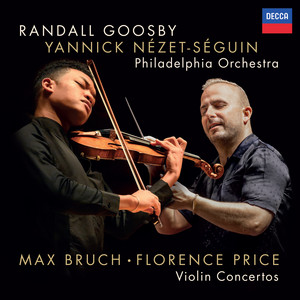 | Adoration (Arr. Gray for Violin & Orchestra) | Florence Beatrice Price, Randall Goosby, Philadelphia Orchestra, Yannick Nézet-Séguin | D Major | 3 | 10B | 74 BPM | |
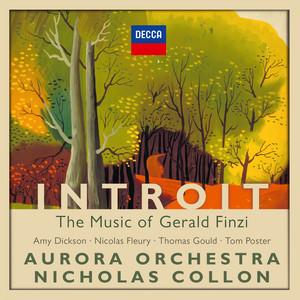 | Love's Labour's Lost, Op. 28: 1. Soliloquy 1: So sweet a kiss the golden sun gives not - Instrumental | Gerald Finzi, Aurora Orchestra, Nicholas Collon | C Minor | 1 | 5A | 99 BPM | |
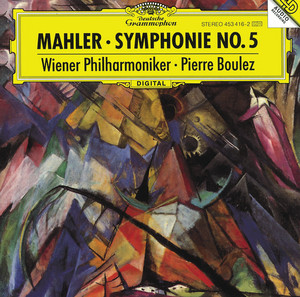 | Symphony No. 5: IV. Adagietto. Sehr langsam | Gustav Mahler, Wiener Philharmoniker, Pierre Boulez | F Major | 0 | 7B | 87 BPM |
- ISRC
- GBAYC9201762
- Label
- L-M Records/RCA Records