- BPM
- 74
- Key
- A♭ Major
- Camelot
- 4B
Piano Sonata No. 21, Op. 53 "Waldstein": III. Rondo. Allegretto Moderato - Welte-Mignon 373 by Ludwig van Beethoven, Teresa Carreño, Peter Phillips Song Details
"Piano Sonata No. 21, Op. 53 "Waldstein": III. Rondo. Allegretto Moderato - Welte-Mignon 373" by Ludwig van Beethoven, Teresa Carreño, Peter Phillips had its release date on September 10, 2024. Since This song is still less than 10 minute long, it is still considered a pretty long duration song compared to the average song length. This song does not appear to be explicit due to the lack of the "E" tag. There are a total of 36 in the song's album "Rendezvous. Piano Revelations from the Golden Age (Extended Edition)". In this album, this song's track order is #19. Furthermore, we believe that the track originated from Germany. Piano Sonata No. 21, Op. 53 "Waldstein": III. Rondo. Allegretto Moderato - Welte-Mignon 373 is not that popular right now. In our opinion, the overall tone is not very danceable and projects negative sounds, such as being sad, depressed, or angry.
BPM and Tempo
With Piano Sonata No. 21, Op. 53 "Waldstein": III. Rondo. Allegretto Moderato - Welte-Mignon 373 by Ludwig van Beethoven, Teresa Carreño, Peter Phillips having a BPM of 74 with a half-time of 37 BPM and a double-time of 148 BPM, we would consider this track to have a Adagio (slowly with great expression) tempo marking. Because of this, we believe that the song has an overall slow tempo. The time signature for this track is 4/4.
Music Key
This song is in the music key of A♭ Major. Or for those who are familiar with the camelot wheel, this song has a camelot key of 4B. So, the perfect camelot match for 4B would be either 4B or 5A. While, 5B can give you a low energy boost. For moderate energy boost, you would use 1B and a high energy boost can either be 6B or 11B. Though, if you want a low energy drop, you should looking for songs with either a camelot key of 4A or 3B will give you a low energy drop, 7B would be a moderate one, and 2B or 9B would be a high energy drop. Lastly, 1A allows you to change the mood.
Want to find the BPM and music key for other songs? Check out our BPM and Key Finder page!
- Popularity
- 8%
- Loudness
- -21.472 dB
- Acousticness
- 99%
- Danceability
- 28%
- Energy
- 5%
- Instrumentalness
- 92%
- Liveness
- 30%
- Loudness
- 64%
- Speechiness
- 4%
- Valence
- 6%
Recommendations
| Track | Artist | Key | Energy | Camelot | BPM | ||
|---|---|---|---|---|---|---|---|
 | Ständchen, S. 560 (Trans. from Schwanengesang No. 4, D. 957) | Franz Schubert, Franz Liszt, Khatia Buniatishvili | D Major | 0 | 10B | 67 BPM | |
 | Wind Quintet in E-Flat Major, Hess 19: II. Adagio maestoso | Ludwig van Beethoven, Ottó Rácz, Jozsef Vajda, Sándor Berki, János Keveházi, Jeno Kevehazi | E♭ Major | 0 | 5B | 62 BPM | |
 | Prelude In C Major, BWV 924 : Praeambulum In C Major, BWV 924 | Janos Sebestyen, Johann Sebastian Bach | C Major | 2 | 8B | 139 BPM | |
 | Piano Concerto No. 5 in E Flat, Op.73 'Emperor': II. Adagio un poco mosso | Wolfgang Sawallisch, Philharmonia Orchestra, Youri Egorov | B Major | 0 | 1B | 132 BPM | |
 | J.S. Bach: J.S. Bach: Orchestral Suite No. 3 in D Major, BWV 1068: 2. Air | Johann Sebastian Bach, Orpheus Chamber Orchestra | D Major | 3 | 10B | 65 BPM | |
 | Symphony No. 9 in D Minor, Op. 125 "Choral": III. Adagio molto e cantabile | Ludwig van Beethoven, Gewandhausorchester, Riccardo Chailly | D Major | 3 | 10B | 78 BPM | |
 | Nocturne No. 1 in E-Flat Major, H. 24 | John Field, Elizabeth Joy Roe | E♭ Major | 0 | 5B | 75 BPM | |
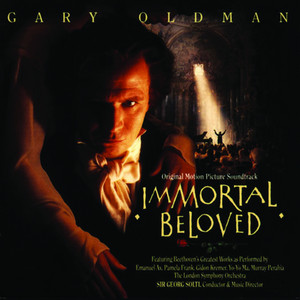 | II. Adagio cantabile from Piano Sonata No. 8 in C minor, Op. 13 "Pathetique" - Instrumental | Ludwig van Beethoven, Murray Perahia | A♭ Major | 0 | 4B | 62 BPM | |
 | Wiegenlied, Op. 49, No. 4 | Johannes Brahms, Leonidas Kavakos, Yuja Wang | E♭ Major | 0 | 5B | 74 BPM | |
 | Ständchen (From Schwanengesang, D957) | Franz Liszt, Evgeny Kissin | D Major | 0 | 10B | 68 BPM | |
 | Polovetsian Dances from Prince Igor: Introduzione | Alexander Borodin, George Szell, The Cleveland Orchestra | A Major | 1 | 11B | 83 BPM | |
 | Piano Sonata No. 12 in F Major, K. 332: II. Adagio | Wolfgang Amadeus Mozart, Maria João Pires | F Major | 0 | 7B | 73 BPM | |
 | Kinderszenen | Robert Schumann, Ivan Moravec | F Major | 0 | 7B | 131 BPM | |
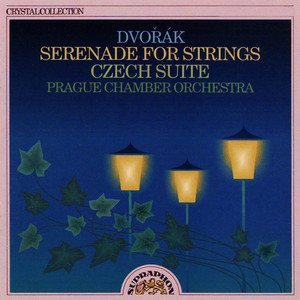 | Serenade for Strings in E Major, Op. 22, B. 52: I. Moderato | Antonín Dvořák, Prague Chamber Orchestra, Petr Skvor | E Major | 1 | 12B | 83 BPM | |
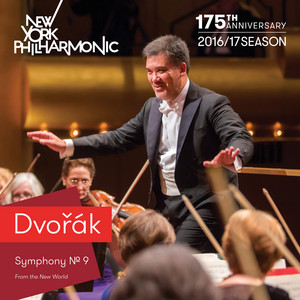 | Symphony No. 9 in E Minor, Op. 95 "From the New World": I. Adagio — Allegro molto | Antonín Dvořák, New York Philharmonic, Alan Gilbert | E Minor | 1 | 9A | 125 BPM | |
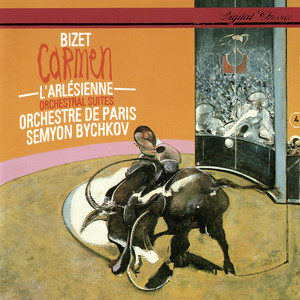 | Carmen Suite No. 1: 5. Les toréadors | Georges Bizet, Orchestre de Paris, Semyon Bychkov | F Major | 4 | 7B | 127 BPM | |
 | No. 2 in E Minor, Dumka (Arr. P. Breiner for Piano) | Antonín Dvořák, Peter Breiner | G Major | 0 | 9B | 70 BPM | |
 | Lohengrin: Prelude | Richard Wagner, Slovak Philharmonic Orchestra, Michael Halasz | A Major | 0 | 11B | 65 BPM | |
 | Die Walküre, Act III: Ride of the Valkyries | Richard Wagner, Budapest Symphony Orchestra, György Lehel | D♭ Major | 1 | 3B | 72 BPM | |
 | Piano Concerto No. 2 in F Major, Op. 102: II. Andante | Dmitri Shostakovich, Boris Giltburg, Royal Liverpool Philharmonic Orchestra, Vasily Petrenko | C Minor | 0 | 5A | 80 BPM | |
 | Piano Concerto in A Minor, Op. 16: I. Allegro molto moderato - Radio Edit | Edvard Grieg, Alexandra Dariescu, Philharmonia Orchestra, Tianyi Lu | A Minor | 1 | 8A | 129 BPM | |
 | Symphony No. 5 in C Minor, Op. 67: I. Allegro con brio | Ludwig van Beethoven, Wiener Philharmoniker, Carlos Kleiber | C Major | 3 | 8B | 86 BPM | |
 | Carmen Suite No. 1 (Arr. E. Guiraud): III. Intermezzo | Georges Bizet, Orquestra Simfònica de Barcelona i Nacional de Catalunya, Pablo González | E♭ Major | 0 | 5B | 81 BPM | |
 | Lieder ohne Worte (Songs without Words), Book 2, Op. 30: No. 7 in E-Flat Major, Op. 30, No. 1, MWV U103 | Felix Mendelssohn, Péter Nagy | E♭ Major | 0 | 5B | 65 BPM | |
 | Violin Concerto BWV 1042 in E Major: Violin Concerto BWV 1042 in E Major: I. Allegro | Johann Sebastian Bach, Freiburger Barockorchester, Gottfried Von Der Goltz | E♭ Major | 3 | 5B | 99 BPM |
- ISRC
- DEPI82400394
- Label
- L-M Records/RCA Records