- BPM
- 70
- Key
- E Major
- Camelot
- 12B
Semele, HWV 58: O sleep, why dost thou leave me? (Recorded 1920) by George Frideric Handel, John McCormack Song Details
"Semele, HWV 58: O sleep, why dost thou leave me? (Recorded 1920)" by George Frideric Handel, John McCormack had its release date on January 1, 1991. With this song being around four minutes long, at 3:31, the duration of this song is pretty average compared to other songs. This track is safe for children and doesn't appear to contain any foul language, since the "Explicit" tag was not present in this track. The track order of this song in John McCormack, Mario Sammarco, edward Schneider's "Mccormack in Opera" album is number 20 out of 21. On top of that, United Kingdom appears to be the country where this track was created. Semele, HWV 58: O sleep, why dost thou leave me? (Recorded 1920) is not that popular right now. In our opinion, the overall tone is not very danceable and projects negative sounds, such as being sad, depressed, or angry.
BPM and Tempo
We consider the tempo marking of Semele, HWV 58: O sleep, why dost thou leave me? (Recorded 1920) by George Frideric Handel, John McCormack to be Adagio (slowly with great expression) because the track has a tempo of 70 BPM, a half-time of 35BPM, and a double-time of 140 BPM. Based on that, the speed of the song's tempo is slow. The time signature for this track is 4/4.
Music Key
This song is in the music key of E Major. This also means that this song has a camelot key of 12B. So, the perfect camelot match for 12B would be either 12B or 1A. While, 1B can give you a low energy boost. For moderate energy boost, you would use 9B and a high energy boost can either be 2B or 7B. Though, if you want a low energy drop, you should looking for songs with either a camelot key of 12A or 11B will give you a low energy drop, 3B would be a moderate one, and 10B or 5B would be a high energy drop. Lastly, 9A allows you to change the mood.
Want to find the BPM and music key for other songs? Check out our BPM and Key Finder page!
- Popularity
- 4%
- Loudness
- -21.792 dB
- Acousticness
- 99%
- Danceability
- 12%
- Energy
- 8%
- Instrumentalness
- 0%
- Liveness
- 36%
- Loudness
- 64%
- Speechiness
- 4%
- Valence
- 6%
Recommendations
| Track | Artist | Key | Energy | Camelot | BPM | ||
|---|---|---|---|---|---|---|---|
 | Concerto Per Oboe, Archi E Continuo In Re Minore: I. Andante Spiccato | Alessandro Marcello, Venice Baroque Orchestra | D♭ Minor | 0 | 12A | 79 BPM | |
 | Viola Concerto in C Minor: I. Allegro molto ma maestoso | Johann Christian Bach, Henri Casadesus, Nemanja Radulović, Double Sens | C Minor | 2 | 5A | 96 BPM | |
 | Monteverdi: Sì dolce è'l tormento, SV 332 | Claudio Monteverdi, Christina Pluhar, Philippe Jaroussky | G Major | 0 | 9B | 134 BPM | |
 | Trumpet Concerto in D Major, G. 28: I. Allegro | Giuseppe Torelli, Niklas Eklund, Wasa Baroque Ensemble, Edward Tarr | A♭ Major | 2 | 4B | 95 BPM | |
 | Capriol Suite: 2. Pavane | Peter Warlock, Academy of St. Martin in the Fields, Sir Neville Marriner | B♭ Major | 0 | 6B | 160 BPM | |
 | Handel: Music for the Royal Fireworks, HWV 351: II. Allegro - Lentement - Allegro | George Frideric Handel, Alison Balsom, Balsom Ensemble, Simon Wright | D♭ Major | 4 | 3B | 135 BPM | |
 | Dixit Dominus, HWV 232: 8. De torrente in via bibet | George Frideric Handel, Arleen Auger, Lynne Dawson, Orchestra of Westminster Abbey, Simon Preston | D Major | 4 | 10B | 77 BPM | |
 | Consolations, S. 172: No. 3 in D-Flat Major. Lento placido | Franz Liszt, Jean-Yves Thibaudet | D♭ Major | 0 | 3B | 134 BPM | |
 | Requiem in C Minor, MH 559: Kyrie | Michael Haydn, Cantemus, German Chamber Academy Neuss, Werner Ehrhardt | C Minor | 2 | 5A | 78 BPM | |
 | Overture No. 6 in B-Flat Major: I. Allegro | Francesco Maria Veracini, L'Arte dell' Arco, Federico Guglielmo | F♯ Minor | 3 | 11A | 178 BPM | |
 | Kol Nidrei, Op. 47 | Max Bruch, Jan Vogler, Helmut Branny | D Major | 1 | 10B | 136 BPM | |
 | Elgar: Cello Concerto in E Minor, Op. 85: I. Adagio - Moderato | Edward Elgar, Jacqueline du Pré, London Symphony Orchestra, Sir John Barbirolli | E Minor | 1 | 9A | 96 BPM | |
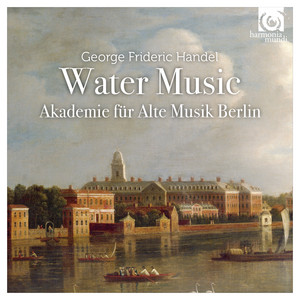 | Water Music, Suite No. 1, HWV 348: No. 2, Adagio e staccato | George Frideric Handel, Akademie für Alte Musik Berlin | A Major | 0 | 11B | 35 BPM | |
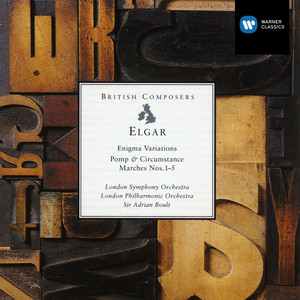 | Elgar: Variations on an Original Theme, Op. 36 "Enigma": Variation IX. Nimrod | Edward Elgar, London Symphony Orchestra, Sir Adrian Boult | E♭ Major | 1 | 5B | 70 BPM | |
 | Lieder ohne Worte (Songs without Words), Book 2, Op. 30: No. 7 in E-Flat Major, Op. 30, No. 1, MWV U103 | Felix Mendelssohn, Péter Nagy | E♭ Major | 0 | 5B | 65 BPM | |
 | Suite Les Boréades, RCT 31: 9. Entrée d' Albaris, Polimnie, les Muses, Zéphirs, Saisons, Les Heures et Les Arts | Jean-Philippe Rameau, Orchestra Of The 18th Century, Frans Brüggen | D♭ Major | 2 | 3B | 85 BPM | |
 | Trio Sonata in B Minor, H. 567: III. Presto | Carl Philipp Emanuel Bach, Lisa Batiashvili, Emmanuel Pahud, Sebastian Klinger, Peter Kofler | A Major | 2 | 11B | 110 BPM | |
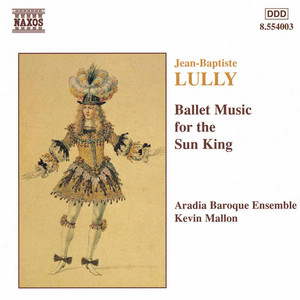 | Le bourgeois gentilhomme: Chaconne des Scaramouches, Frivelins et Arlequins | Jean-Baptiste Lully, Mary Enid Haines, Sharla Nafziger, Aradia Ensemble, Kevin Mallon | F♯ Major | 0 | 2B | 0 BPM | |
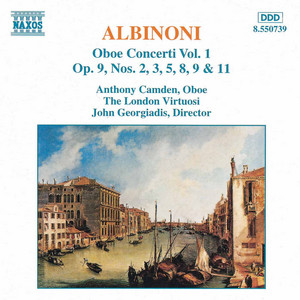 | Concerto a 5 in C Major, Op. 9, No. 9: II. Adagio (non troppo) | Tomaso Albinoni, Anthony Camden, London Virtuosi, John Georgiadis | A Minor | 2 | 8A | 66 BPM | |
 | Water Music Suite No. 1 (Excerpts): 5. Air | George Frideric Handel, New York Philharmonic, Pierre Boulez | F Major | 1 | 7B | 85 BPM | |
 | Gigues en rondeau I & II | Jean-Philippe Rameau, Víkingur Ólafsson | E Major | 1 | 12B | 128 BPM | |
 | Concerto Grosso in D Major, Op. 1, No. 5: I. Largo | Pietro Locatelli, Capella Istropolitana, Jaroslav Krcek | F Major | 1 | 7B | 71 BPM | |
 | Water Music Suite No. 1 in F: Adagio e staccato | Berliner Philharmoniker, Riccardo Muti | D Minor | 1 | 7A | 77 BPM | |
 | Viola Concerto In G Major, TWV 51:g9: IV. Presto | Ladislav Kyselák, Capella Istropolitana, Georg Philipp Telemann | D Major | 0 | 10B | 91 BPM | |
 | Polifemo: Alto giove (Air d'Acio) - Instrumental Version | Christophe Rousset, Les Talens Lyriques, Ewa Mallas-godlewska, Derek Lee Ragin | E♭ Minor | 0 | 2A | 141 BPM |
- ISRC
- GBAJU9100501
- Label
- L-M Records/RCA Records